The short version
- Pope Leo XIV is scheduled for surgery to remove a small lung nodule detected during routine testing, marking the first health intervention of his papacy.
- Medical experts describe the prognosis as excellent given the early detection and the pope's overall fitness, though recovery may impact his planned November trip to South America.
- The procedure underscores ongoing debates within the Catholic Church regarding legal frameworks for papal incapacity, despite recent appointments strengthening leadership continuity.
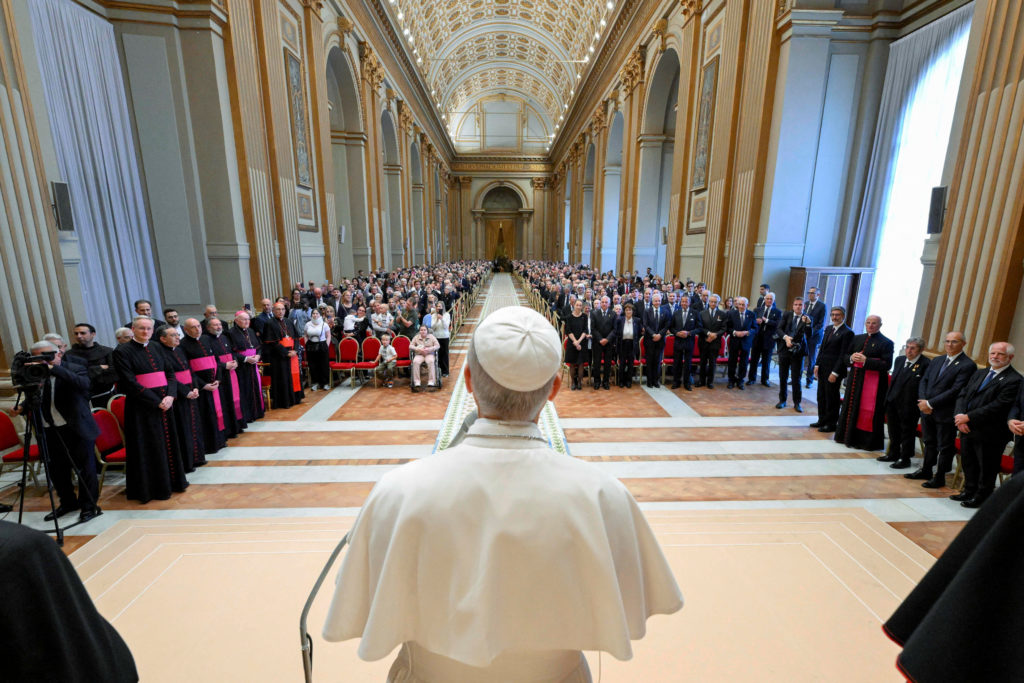
Pope Leo XIV is set to undergo a surgical procedure this week to remove a small abnormality in his lung, marking the first significant medical event of his seventeen-month tenure. The Vatican announced that the pontiff will be admitted to Rome’s Gemelli hospital on Tuesday for what officials describe as a routine intervention. The nodule was identified during recent standard medical examinations rather than due to any specific symptoms or health complaints. Hospital administrators anticipate a recovery period of approximately one week, with discharge likely occurring after just a few days of inpatient care.
Medical specialists note that lung nodules are small growths measuring less than three centimeters across and can be either benign or malignant. According to the American Cancer Society, these abnormalities are often discovered incidentally during scans performed for other reasons. Dr. Stephen Liu, a lung cancer expert at Georgetown University, emphasized that early detection is critical. If the nodule proves to be cancerous, removal at this stage typically yields an excellent prognosis, with surgery alone often serving as sufficient treatment. The pope’s age of seventy-one and his generally robust physical condition are viewed as positive indicators for a swift recovery.
The choice of Gemelli hospital, formally known as the Agostino Gemelli Polyclinic, carries historical weight within the Catholic Church. This nonprofit teaching facility has treated previous pontiffs, including Pope Francis, who passed away there in May 2025 after a prolonged respiratory illness. Saint John Paul II also spent considerable time at the institution, referring to it affectionately as 'Vatican III.' The hospital features a dedicated apartment on the tenth floor equipped with a private chapel, designed specifically to accommodate the needs of visiting popes while maintaining their spiritual routines.
The timing of the surgery coincides with a busy schedule for the pontiff. Leo had planned to celebrate a public Mass on Wednesday to conclude a weeklong conference focused on family ministry. It remains unclear whether this liturgical duty will be transferred to another cleric or postponed. More significantly, the procedure precedes an ambitious international itinerary scheduled for November 6 through 17. The trip includes visits to Uruguay, Argentina, and Peru, involving numerous flights, helicopter transfers, and significant changes in altitude. While Leo previously expressed his intention to proceed with the journey, the physical demands of the travel plan may require adjustments following his recovery.
This medical episode has reignited discussions about the lack of specific canonical rules governing papal incapacitation. Unlike secular governments, the Vatican does not have a clear mechanism for transferring authority if a pope becomes unable to govern due to illness or unconsciousness. Historically, both Pope Francis and Saint John Paul II retained their official duties during hospitalizations, issuing statements and making appointments from their bedsides. A team of officials manages daily operations, but there is no formal succession protocol for temporary incapacity, leaving the church without a defined process for decision-making in such scenarios.
Advances in medical care have extended the lifespans of recent popes, thereby increasing the likelihood of prolonged health issues during their tenures. This reality has prompted calls from within and outside the church for the Vatican to establish clearer guidelines for handling periods of papal unavailability. While the current system relies on the pope’s ability to function despite illness, experts argue that preparing for total incapacitation would provide greater stability for the Holy See. The absence of such rules means that even during surgery, Leo remains the sole authority figure, with no designated interim leader.
In a move to strengthen institutional continuity, Leo confirmed a significant appointment just days before announcing his surgery. He approved Filipino Cardinal Luis Antonio Tagle as the new dean of the College of Cardinals, replacing the ninety-two-year-old Cardinal Giovanni Battista Re. The dean plays a crucial role in papal transitions, presiding over funerals and leading discussions among cardinals during conclaves. If under eighty years old, the dean also oversees the election of a new pope. This appointment ensures that experienced leadership is in place should a transition become necessary in the future.
Leo issued a letter to Cardinal Re expressing gratitude for his lifelong service, particularly highlighting Re’s role in organizing the funeral for Pope Francis. The pontiff praised Re as one of the Holy See’s most esteemed servants, acknowledging the importance of his contributions during recent periods of change. This gesture underscores the personal and institutional bonds that sustain the church’s hierarchy. As Leo prepares for surgery, the Vatican continues to balance routine governance with the need for adaptability in the face of unexpected health challenges.
Sources behind this briefing
Go to the original reporting
- PBS NewsHour↗What to know about Pope Leo's planned lung nodule surgery