The short version
- Pope Leo XIV told reporters on his plane that they were welcome and emphasized the necessity of comprehensive media coverage for public figures.
- The pontiff's comments coincided with a legal reprieve allowing CNN, MS NOW, and Politico to return to the White House after being barred by the Trump administration.
- During his visit to France, Leo visited UNESCO, an organization from which the United States has withdrawn, reinforcing his support for multilateral institutions.
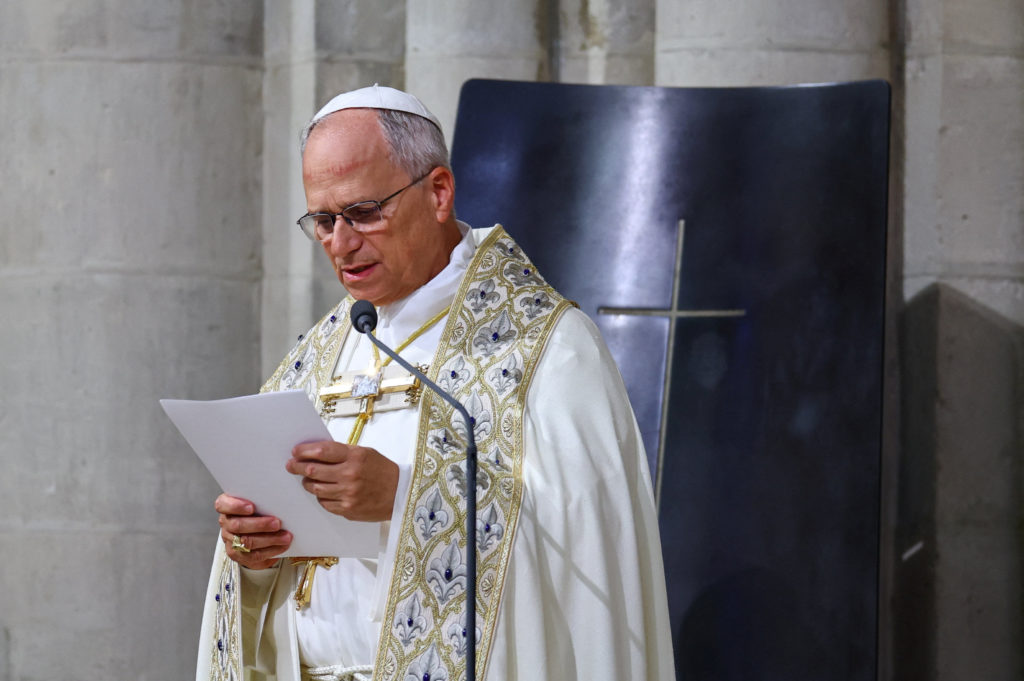
Pope Leo XIV offered a pointed defense of press freedom while traveling to France, directly addressing the ongoing conflict between the Trump administration and major American news organizations. Speaking to journalists aboard the papal plane on Friday, the pontiff affirmed that media representatives were welcome in his presence and stressed the critical role of independent reporting in democratic societies. His remarks served as a stark contrast to the recent exclusion of several prominent outlets from the White House, highlighting a growing divergence between the Vatican’s stance on information access and current U.S. executive policies.
The Pope’s comments came shortly after a federal judge issued a temporary reprieve allowing CNN, MS NOW, and Politico to resume coverage at the White House. These organizations had been barred by President Donald Trump in a move that sparked significant legal and political controversy. The restriction prevented major networks from providing live coverage of high-profile events, including the state dinner for Chinese leader Xi Jinping. While the judge’s order restored access, the incident underscored the fragility of press credentials and the escalating tension between the executive branch and the Fourth Estate.
During the airborne press conference, Leo responded to a question from a CNN reporter regarding the administration’s attempt to block coverage. He stated that he was pleased the journalists were present and emphasized that good media coverage is essential for everyone. The Pope noted that access should be available all around, implying a universal standard for transparency. This open approach stands in opposition to the selective access granted by the White House, which has drawn criticism from press freedom advocates who argue that such restrictions echo tactics used by authoritarian regimes.
Leo’s commitment to a free press is not new; he has consistently advocated for independent journalism since his election in 2025. In one of his first audiences as pope, he called for the release of imprisoned journalists and described free speech as a precious gift. However, the Vatican maintains certain restrictions on media access, particularly regarding private audiences and photo opportunities inside the Pope’s studio during state visits. These limitations have been in place since the COVID-19 pandemic, reflecting a balance between security, privacy, and public engagement.
The pontiff’s visit to France included a stop at UNESCO, the United Nations agency for education, science, and culture. The United States has withdrawn from UNESCO as part of a broader retreat from international organizations under the current administration. Leo toured the facility, met with staff, and delivered a speech promoting peace through cultural and educational exchange. His presence at UNESCO signaled continued support for multilateral diplomacy and global cooperation, areas where the U.S. government has recently reduced its involvement.
Public reaction in France to the Pope’s stance on press freedom and his previous criticisms of Trump’s policies was largely positive. Many attendees at his events expressed appreciation for his willingness to oppose the American president on matters of principle. One retiree noted that Leo’s actions demonstrated a commitment to preventing political systems from becoming more dictatorial. This sentiment reflects a broader concern among some international observers about the direction of U.S. domestic politics and its impact on global democratic norms.
In addition to his diplomatic engagements, Leo addressed logistical issues affecting press coverage. He apologized for missing a previous opportunity to speak with reporters when a technical failure forced him to return to Rome alone on a private jet. The incident left many journalists disappointed and unable to conduct their usual interviews. By acknowledging this oversight, the Pope sought to rebuild trust with the media corps that had been stranded at the airport in Spain’s Canary Islands.
The Pope also shared lighter moments during the flight, expressing confidence in Villanova University’s basketball team ahead of an upcoming game against Notre Dame in Rome. He joked that the majority of fans would support Villanova, suggesting a strong showing for his alma mater. These personal touches helped humanize the pontiff and provided a break from the serious political discussions dominating his itinerary. As he continues his four-day visit to France, Leo’s actions and words will likely remain under scrutiny for their implications on global press freedom and international relations.
The intersection of religious leadership and political commentary remains a sensitive area for the Vatican. While Leo has maintained a degree of distance from direct partisan politics, his public statements on press freedom and multilateralism carry significant weight. The contrast between his open engagement with journalists and the restrictive measures imposed by the Trump administration highlights a broader debate about the role of media in holding power to account. As the legal battle over White House access continues, the Pope’s stance serves as a reminder of the universal importance of an informed public.
Sources behind this briefing
Go to the original reporting
- PBS NewsHour↗Pope Leo XIV affirms need for media to cover public figures when asked about Trump ban

