The short version
- Officers Jakub Kulik and Artur Morański were critically wounded while detaining the gunman responsible for six deaths in Kraków.
- Government officials credited the rapid police response with limiting the casualty count during the attack on Saturday.
- Both men have been removed from medically induced comas following emergency surgeries, prompting a national blood donation appeal.
Two Polish law enforcement officers who sustained serious injuries while confronting a gunman in Kraków have been recognized by government leaders for their decisive actions during the attack. The incident, which occurred on Saturday, resulted in six fatalities and seventeen additional injuries before the suspect was neutralized. Officials stated that the swift intervention of the officers likely prevented a higher death toll, marking a critical moment in the unfolding crisis.
The two men involved in the confrontation are Jakub Kulik and Artur Morański, both of whom are under thirty years old. Kulik, a former paratrooper and volunteer firefighter from Bielsko-Biala, was struck by three bullets during a close-range exchange of fire with the suspect. Morański, who hails from Powroźnik, a village near the Slovak border, was shot in the chest area. Both officers required immediate surgical intervention after the altercation ended.
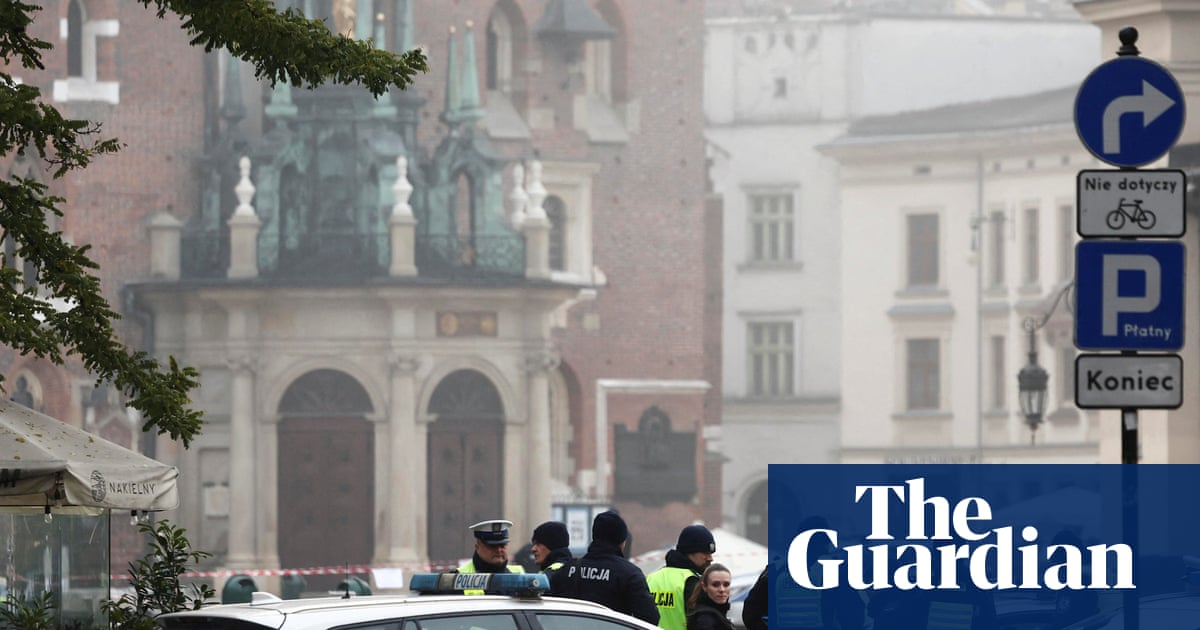
Footage released on Sunday depicted the intensity of the encounter. The video showed the officers engaging the gunman, who had been firing randomly from his vehicle in Kraków’s main square. One officer managed to apprehend the suspect on the ground before discharging his weapon multiple times. During this sequence, the officer appeared to fall, sustaining injuries that required medical attention. The visual evidence underscored the chaotic nature of the response.
Police units arrived at the scene just twenty-three seconds after receiving the initial emergency call from the square. This rapid deployment was highlighted by Justice Minister Waldemar Żurek, who emphasized that the speed and bravery of the officers were instrumental in stopping further harm. Prime Minister Donald Tusk also commented on the situation via social media, noting that the officers disregarded personal risk to potentially save numerous lives.
Following their surgeries on Saturday, both Kulik and Morański were placed in medically induced comas to aid their recovery. By Sunday, medical teams had successfully brought them out of these states. The condition of the officers has sparked a national appeal for blood donors, reflecting widespread public concern and support. Local communities have rallied around the men, with volunteer firefighters from Kulik’s hometown expressing pride in his service.
The suspect involved in the shooting is identified as a twenty-four-year-old Polish national. Authorities believe the attack was motivated by far-right ideologies, though further details regarding the specific planning or broader network involvement remain under investigation. The location of the attack, Kraków’s main square, is a central hub for both locals and tourists, amplifying the shock and disruption caused by the violence.
In Powroźnik, Morański’s home village, a mass was held on Sunday to pray for his recovery. This local response highlights the personal impact of the event beyond the immediate scene in Kraków. The community’s reaction mirrors the national sentiment, with many viewing the officers’ actions as heroic despite the severe consequences they faced.
As investigations continue, authorities are working to piece together the full timeline of events leading up to the shooting. The focus remains on understanding how the suspect acquired the weapons and executed the plan in such a densely populated area. Meanwhile, the recovery of Kulik and Morański stands as a central narrative, symbolizing resilience in the face of targeted violence.
The incident has reignited discussions about public safety and police preparedness in urban centers across Poland. While the immediate threat was neutralized, the long-term implications for security protocols and community response strategies are still being assessed. The bravery of the two officers serves as a focal point for these broader conversations about protecting citizens from sudden acts of terror.
Looking ahead, the Polish government is expected to review emergency response times and tactical procedures in light of this event. The rapid arrival of police units was praised, but questions may arise regarding equipment and training adequacy for such high-stakes confrontations. The outcome of Kulik and Morański’s recovery will also influence public perception of law enforcement capabilities and support systems.
Sources behind this briefing
Go to the original reporting
- The Guardian World↗Two police officers hailed as heroes for confronting Kraków gunman


