The short version
- Bleached coral fragments fully recovered within seven weeks after physical contact with genetically identical healthy clones in controlled lab settings.
- The healing process involves the transfer of beneficial algae and nutrients through aligned tissue channels, allowing rapid replication independent of continuous contact.
- Researchers caution that this method is not currently feasible for widespread reef restoration and emphasize that reducing greenhouse gas emissions remains the primary solution.
New laboratory research indicates that bleached corals can recover their color and vitality significantly faster than previously understood when they come into direct physical contact with healthy, genetically identical fragments. Published in Science Advances on October 14, the study challenges the prevailing view that coral recovery from heat stress is a slow process taking months or years. Instead, the findings suggest that brief interaction between clones can trigger a rapid biological response, potentially opening new avenues for understanding reef resilience.
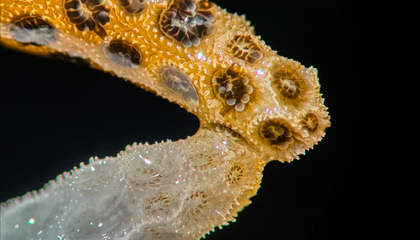
The discovery originated from an accidental observation in 2025 by Stanford University marine scientist Steve Palumbi. While monitoring laboratory tanks, he noticed a healthy piece of coral had tipped over and touched a bleached fragment from the same colony. At the point of contact, the pale tissue began to regain its color, indicating a return of beneficial algae. This unexpected event prompted lead author Danny Collins, also at Stanford, to investigate whether physical contact could be leveraged to reintroduce healthy symbionts to stressed corals, similar to how harmful bacteria can enter through contamination.
To test this hypothesis, the research team conducted experiments using ten pairs of coral fragments from the same colony. Each pair consisted of one bleached piece and one colorful, healthy piece, both approximately 1.5 inches long. Half of the pairs were arranged so the fragments touched, while the other half were separated by a small gap. The results showed a stark contrast: all bleached corals in contact with their healthy clones fully healed within seven weeks. In contrast, the isolated bleached fragments struggled to recover, and some died entirely.
Microscopic analysis revealed the mechanism behind this rapid healing. Physical contact allowed the tissues of the two coral clones to align tiny channels, facilitating the transfer of beneficial algae and nutrients from the healthy fragment to the stressed one. Researchers observed transferred material in the sick corals after just three days of contact. Surprisingly, continuous contact was not required for full recovery. After about one week, the bleached fragments could be separated and continued to heal at the same rate as those that remained connected.
The speed of recovery appears driven largely by the rapid replication of algae within the stressed coral itself, rather than a constant supply from the healthy donor. Once the initial transfer occurred, the algae multiplied at record-setting rates inside the bleached tissue. This finding highlights the latent potential for recovery in corals that are often considered lost causes once they lose their symbiotic partners due to rising water temperatures.
Despite the promising results, researchers emphasize that this method is not a direct solution for restoring wild reefs. Collins noted that it is impractical to create healthy clones of all corals before bleaching events occur or to manually touch corals together on vast reef systems. The experiment was conducted in controlled laboratory conditions, which differ significantly from the complex and variable environments of natural marine ecosystems. Therefore, the findings are viewed more as a proof of concept for coral resilience rather than an immediate restoration technique.
Independent experts have weighed in on the significance and limitations of the study. Terry Hughes, a marine biologist at James Cook University who was not involved in the research, pointed out that the method would not help corals that have already died. He reiterated that the most effective way to protect coral reefs remains the reduction of planet-warming greenhouse gas emissions. Andrea Grottoli, a coral researcher at Ohio State University, described the findings as super interesting and suggested they could pave the way for more organic approaches to aiding coral health.
The broader context of coral reef conservation is critical. Reefs cover only about 0.01 percent of the ocean floor but support approximately a quarter of all marine life. Recent reports from this summer indicated that more than 64,000 square miles of coral reefs may be more resilient to warming oceans than previously thought. This new research adds nuance to that understanding by demonstrating specific biological mechanisms for rapid recovery under certain conditions. While not a silver bullet, the study offers hope and new data for scientists working to preserve these invaluable marine habitats.
The implications of this work extend beyond immediate restoration efforts. By understanding how corals can rapidly recover through clone interaction, researchers may develop new strategies to enhance reef resilience in the face of climate change. The study underscores the importance of preserving genetic diversity and healthy coral populations, as they may hold the key to aiding stressed individuals. Future research will likely focus on translating these laboratory findings into practical applications that can support reef ecosystems without disrupting their natural balance.
Sources behind this briefing
Go to the original reporting
- Smithsonian Magazine↗Sick Corals Can Heal With the Help of a 'Magic Touch' From Healthy Ones, Offering Hope for Heat-Damaged Marine Ecosystems