The short version
- Washington Post photographer Heidi Levine suffered severe injuries including fractured vertebrae and puncture wounds during an attack by masked settlers in the West Bank.
- Local Palestinian youths intervened to protect Levine, allowing other journalists to assist her, while Israeli security forces reportedly pursued the rescuers rather than the attackers.
- Prime Minister Benjamin Netanyahu cast doubt on witness accounts of the assault, contrasting with President Isaac Herzog who expressed regret and condemned the violence.
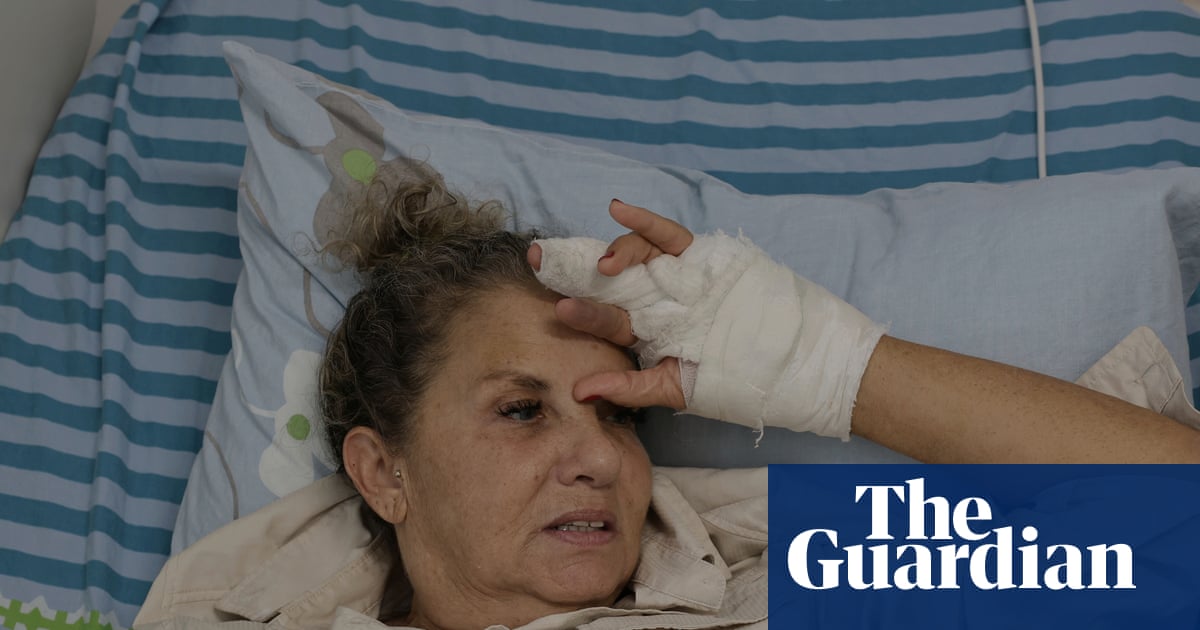
A prominent American photojournalist has survived a violent assault in the West Bank, an incident that has drawn sharp contrasts between official Israeli responses and eyewitness accounts. Heidi Levine, a photographer for The Washington Post, was severely beaten by a group of masked settlers while covering the olive harvest in the Palestinian village of Abu Falah, located north of Ramallah. The attack occurred on Friday, resulting in significant physical trauma for Levine, who had recently returned from an assignment in Ukraine. She sustained four fractured vertebrae, two broken ribs, and four puncture wounds after being knocked to the ground and repeatedly struck by a crowd.
Levine, 64, described the scene as chaotic and terrifying. She noted that the harvesting had begun peacefully until a group of young masked settlers appeared on a nearby hilltop. The violence erupted shortly after the arrival of Israeli army personnel. Levine reported hearing machine gun fire and seeing tear gas before being charged by approximately a dozen individuals. She attempted to protect herself by keeping her face to the ground, a position she believes prevented more severe head trauma or brain damage. Despite trying to play dead, she was kicked and beaten with sticks numerous times.
The nature of the weapons used remains partially unclear. While Levine did not confirm whether the puncture wounds were caused by knives, a witness reported seeing nails protruding from some of the wooden clubs wielded by the attackers. Levine stated that her survival was largely due to wearing protective body armor and a helmet. Without this equipment, she believes she likely would have died from the blows to her head. The severity of the injuries underscores the extreme danger faced by media personnel in the region.
Crucial to Levine’s survival was the intervention of local Palestinian youths. Witnesses and fellow journalists reported that young men used slingshots to fire stones at the settlers, forcing them back and creating a protective shield. This action allowed another American journalist, Jasper Nathaniel, to reach Levine and help her to safety. Nathaniel emphasized that without this intervention, Levine might have been killed. He noted that these youths risked their own lives, facing potential retaliation from both settlers and Israeli soldiers.
The aftermath of the incident revealed a troubling dynamic in law enforcement response. According to reports, Israeli army forces pursued the young Palestinians who had intervened to save Levine, rather than focusing on the settlers who carried out the attack. This pattern reflects broader concerns about the safety of Palestinians resisting settler violence. Individuals who attempt to defend themselves or others can face detention without charge or lethal force from security forces, adding another layer of risk to an already volatile environment.
Levine highlighted the disparity in protection between herself and the local population. She pointed out that while she had access to body armor, Palestinians do not have such safeguards. This year alone, more than 20 Palestinians have been killed in settler attacks across the West Bank. Israeli security leaders have described this escalating campaign of aggression as terrorism, aimed at driving Palestinians from their land. Levine expressed deep sorrow over the funerals she has attended for Palestinians killed by settlers, noting that every journalist present at her attack was aware of this grim context.
Official reactions to the incident have been sharply divided. President Isaac Herzog called Levine to express his regret, describing the attackers as thugs and a dark stain on the country. He offered personal condolences and emphasized that such actions do not represent the nation. In contrast, Prime Minister Benjamin Netanyahu’s office issued a statement questioning the validity of witness and video accounts. Netanyahu referred to the incident as an alleged attack and suggested that footage showed Levine being helped up by an unidentified individual immediately after being knocked down.
Levine strongly rejected Netanyahu’s characterization of events. She clarified that individuals helped her up only because they were unable to remove her belongings, which had been stolen during the assault. The attackers took her documents, American passport, credit card, camera disk, and a small bag containing additional lenses. Despite the physical pain and loss of property, Levine vowed to return to reporting in the West Bank once she recovers. She stated that while her bones were broken, her spirit remained uncracked, underscoring her commitment to documenting the ongoing conflict.
The incident has sparked wider discussion about safety for journalists and civilians in the region. Levine received letters from Israelis expressing regret over the attack, indicating a segment of the population that distances itself from such violence. However, the conflicting narratives between high-level officials highlight the deep polarization surrounding settler activity in the West Bank. As Levine begins her recovery, the question of accountability for both the attackers and the security forces’ response remains unresolved.
This event serves as a stark reminder of the escalating tensions in the West Bank. The combination of violent settler actions, inadequate protection for Palestinian civilians, and mixed signals from Israeli leadership creates an unpredictable and dangerous environment. Levine’s experience illustrates not only the physical risks faced by those on the ground but also the complex political dynamics that shape responses to violence. Her determination to continue her work reflects a broader commitment to bearing witness despite significant personal cost.
Sources behind this briefing
Go to the original reporting
- The Guardian US↗Heidi Levine recounts how Palestinian youths helped save her in settler attack