The short version
- Helen Haines remains in serious but stable condition after losing both legs in an alleged ramming attack outside her electorate office.
- Prime Minister Anthony Albanese led tributes and highlighted a broader rise in aggression, while opposition figures rejected links between parliamentary debate style and violence.
- A civility pledge is being circulated among MPs as investigators continue to probe the unknown motivation behind the assault.
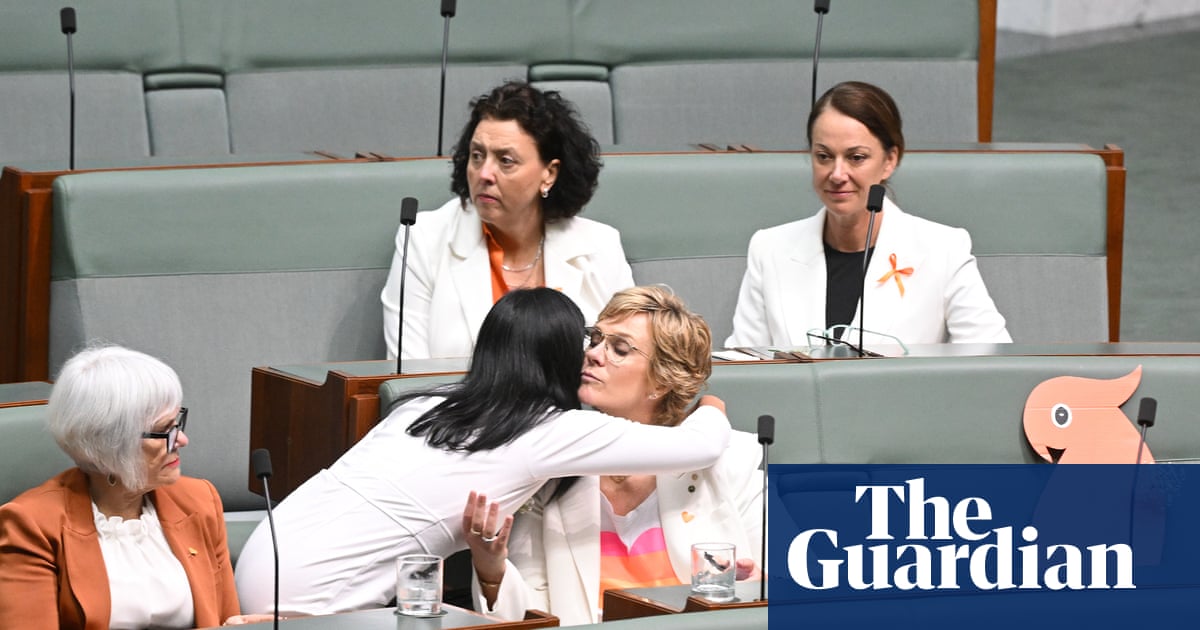
The Australian federal parliament suspended its regular legislative agenda on Monday to offer formal tributes to Helen Haines, the independent member for Indi. The pause in proceedings came one week after Haines was allegedly targeted in a violent incident outside her local office. She remains hospitalized at Alfred Hospital in Melbourne, where medical staff describe her condition as serious but stable. The attack resulted in the amputation of both her legs. Authorities have charged a 43-year-old man in connection with the incident, though the specific motivation for the assault remains under active investigation and has not been publicly disclosed.
Prime Minister Anthony Albanese opened the session by describing the national shock surrounding the event as feeling like a heavy weight on the collective conscience of the country. He characterized Haines as a resilient figure who demonstrated a profound commitment to her constituents. The Prime Minister used the platform to address what he described as a disturbing trend in public discourse. He argued that social media platforms, with their speed and anonymity, have contributed to a normalization of aggressive language and grievance. According to Albanese, this corrosive anger is not confined to political circles but has spilled over into interactions with essential workers, educators, healthcare providers, and law enforcement officers.
Despite the gravity of the situation, significant disagreement emerged regarding the appropriate response within the parliamentary institution itself. Calls for procedural changes designed to de-escalate political rhetoric were firmly rejected by senior opposition figures. Angus Taylor, the opposition leader, explicitly denied any causal link between the vigorous nature of Westminster-style debate and acts of political violence. He emphasized that while adversarial discussion is a cornerstone of the democratic system, it must never cross the threshold into intimidation or physical harm. Taylor argued that violence represents a fundamental rejection of democratic traditions and a failure to accommodate differing viewpoints.
Taylor further suggested that the focus should shift toward strengthening judicial responses to those found guilty of intimidation. He also touched on broader cultural narratives, suggesting that some Australians have been conditioned to feel excessive shame regarding their national history. He posited that this perceived guilt might contribute to animosity toward democratic institutions. Barnaby Joyce, a One Nation MP, echoed the sentiment that parliamentary reform alone would not solve the underlying issues. He described the attack as fundamentally uncharacteristic of Australian values and pointed to broader societal tensions, including public protests and harsh rhetoric in the media, as part of a changing dynamic that extends beyond the walls of parliament.
The Speaker of the House, Milton Dick, conveyed the collective hope of his colleagues for Haines’ recovery. He expressed anticipation for her eventual return to the chamber, noting the personal significance of once again calling on her to speak. Crossbench member Zali Steggall highlighted Haines’ advocacy for a political culture that prioritizes kindness over hostility. Steggall urged lawmakers to consider how their words resonate with the broader community and called for a defusing of current tensions. These remarks underscored a growing awareness among some legislators that the tone of political engagement has tangible consequences for public safety and social cohesion.
In response to the heightened concerns about political safety, a civility pledge is currently being circulated among members of parliament. The document asks signatories to commit to acting with honesty, respect, and compassion in their professional conduct. This initiative reflects an attempt by some lawmakers to model better behavior amidst rising public anger. However, the effectiveness of such symbolic gestures remains uncertain, particularly given the strong resistance from opposition leaders who view structural changes to debate rules as unnecessary or ineffective solutions to complex societal problems.
The incident has reignited a broader conversation about the safety of elected officials and the health of the political environment in Australia. While Albanese framed the attack as part of a wider pattern of increasing aggression enabled by digital platforms, critics argue that conflating robust debate with violence undermines democratic norms. The divergence in perspective highlights a deep rift in how different political factions interpret the causes of social unrest. As investigations continue, the focus remains on Haines’ recovery and the legal proceedings against the accused.
The coming weeks will likely see continued scrutiny of both the specific case and the general climate of political discourse. Lawmakers are divided on whether institutional reforms can mitigate the risks faced by public figures. Some argue for stricter penalties and cultural shifts, while others maintain that the current system of adversarial debate is sufficient and necessary. The outcome of these discussions may influence future parliamentary practices and the broader approach to managing political conflict in a polarized era.
For now, the parliament has chosen to honor Haines’ resilience rather than enact immediate procedural changes. The tributes served as a moment of unity in a divided chamber, acknowledging the personal cost of public service. Yet, the underlying questions about safety, rhetoric, and responsibility remain unresolved. The incident stands as a stark reminder of the vulnerabilities inherent in democratic representation and the challenges of maintaining civil discourse in an increasingly fragmented information landscape.
Sources behind this briefing
Go to the original reporting
- The Guardian World↗‘Like a stone in our hearts’: PM leads Helen Haines tributes as parliament pauses to praise ‘fighter’