The short version
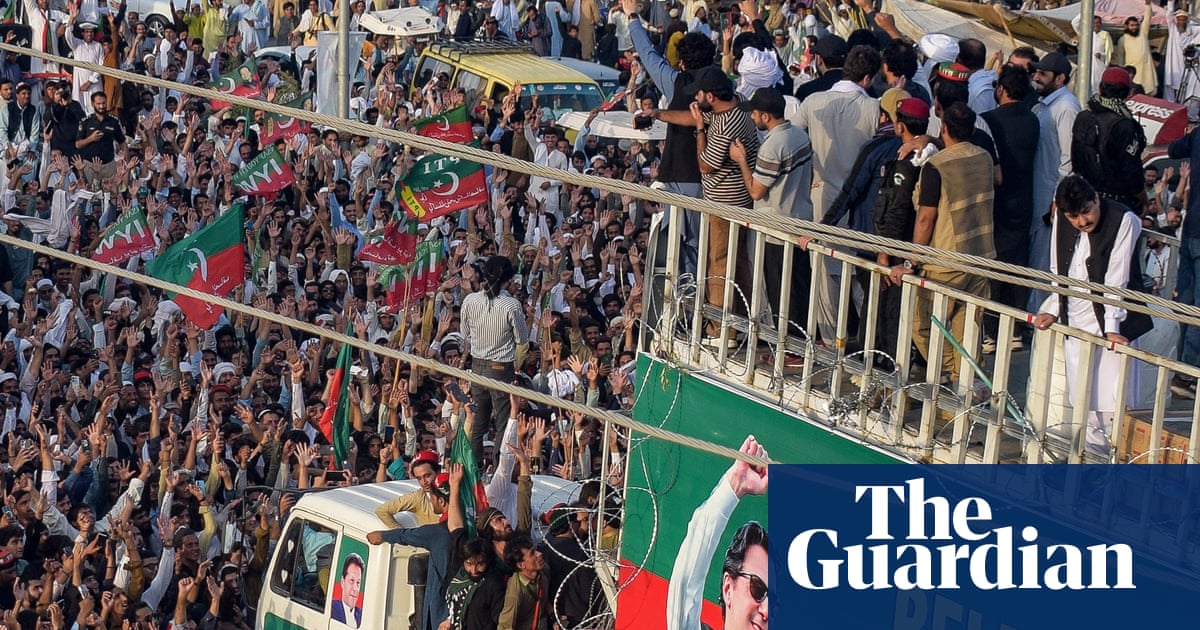
- Supporters of Imran Khan have initiated a march from Khyber Pakhtunkhwa toward Islamabad, defying government attempts to block the protest.
- The ruling coalition has fortified the capital with barriers and deployed thousands of security forces, while accusing opposition leaders of hypocrisy.
- Concerns regarding Khan’s health persist as his family alleges he is denied medical access and held in solitary confinement.
A significant political confrontation has unfolded in Pakistan as supporters of former Prime Minister Imran Khan launched a march toward the capital, Islamabad. The protest began on Sunday in Khyber Pakhtunkhwa, a region widely considered Khan’s political stronghold in north-western Pakistan. Leaders of his party, the Pakistan Tehreek-e-Insaf (PTI), stated that the demonstration proceeded despite concerted efforts by the government to halt it. By Monday afternoon, thousands of participants had joined the movement, with crowds expected to swell as they travel toward Peshawar, the provincial capital, which marchers aim to reach by Wednesday.
The central demand of the protest is the immediate release of Khan from prison. The 74-year-old former cricket captain has been incarcerated since 2023, following a period of intense political pressure that began after his ousting via a parliamentary vote of no confidence in 2022. Since his arrest, Khan and his party have faced sustained state scrutiny. His allies argue that the current detention conditions are severe, claiming he is being held in solitary confinement. They further allege that he has been denied visits from relatives and his personal physician, despite suffering from a serious eye condition and high blood pressure.
Government officials have responded with aggressive measures to prevent the marchers from reaching Islamabad. Authorities have barricaded the entrances to the capital using shipping containers and sandbags, effectively locking down the city. Tens of thousands of police and paramilitary personnel were deployed across Islamabad and Khyber Pakhtunkhwa in the days leading up to the protest. Ministers have declared the march illegal and vowed to take all necessary steps to ensure it does not breach the capital’s boundaries. These heavy security deployments have raised concerns among opposition figures that state violence may be used against the demonstrators.
Diplomatic efforts to resolve the standoff failed over the weekend. Two rounds of negotiations between government representatives and PTI leaders collapsed when Khan’s allies insisted that he must be included in any political dialogue. Attaullah Tarar, the information minister, criticized the opposition party for what he described as double standards and hypocrisy. The breakdown of talks has hardened positions on both sides, with the government maintaining that the protest is unlawful and the opposition viewing the detention of their leader as a political persecution.
The march is being led by Sohail Afridi, the chief minister of Khyber Pakhtunkhwa. He has framed the participants as soldiers loyal to Khan, urging young people to join the cause for their imprisoned leader. The mobilization highlights the enduring popularity of Khan, who remains one of the country’s most recognized political figures. His supporters view the march as a necessary response to what they perceive as an illegitimate crackdown on democratic opposition.
The ruling coalition government, which enjoys backing from the military establishment, is currently navigating multiple crises. Beyond the political unrest sparked by Khan’s detention, the administration faces growing public discontent over a severe economic downturn and a recent surge in terrorism. These challenges have weakened the government’s standing, making the PTI’s mobilization particularly threatening to its stability. The intersection of economic hardship and security concerns has created a volatile environment in which political protests can quickly escalate.
Tensions are further exacerbated by accusations leveled against the opposition. Government politicians have falsely claimed that militant groups, including the Pakistan Taliban, are being allowed to participate in the march. These allegations appear designed to delegitimize the protest and justify harsh security measures. Meanwhile, opposition leaders fear that the prime minister may impose emergency rule in Khyber Pakhtunkhwa to forcibly stop the advance of the marchers. Such a move would represent a significant escalation in the government’s response to dissent.
The situation remains fluid as the march progresses. While authorities insist the protesters will not reach Islamabad, the sheer number of participants and their determination suggest that the standoff could intensify. The health of Imran Khan remains a focal point for his supporters, with ongoing reports of his deteriorating condition fueling anger among his base. As the week unfolds, the interaction between the advancing crowds and the fortified security perimeter will likely determine whether this protest leads to further political instability or is contained by state force.
This event underscores the deep polarization within Pakistani politics. The conflict between the ruling coalition and the PTI has moved beyond electoral competition into a struggle for survival, with both sides employing extreme measures. The government’s reliance on security apparatuses to manage political dissent contrasts sharply with the opposition’s use of mass mobilization. The outcome of this march will have significant implications for the future of democratic processes in Pakistan and the balance of power between civilian institutions and the military-backed administration.
International observers are watching closely as the potential for violence looms. The deployment of such a large security force indicates that the government is prepared to use significant force if necessary. However, the risk of backlash from heavy-handed tactics remains high. As the marchers approach Peshawar and eventually aim for Islamabad, the coming days will test the resilience of both the protest movement and the state’s ability to maintain order without triggering a broader crisis.
Sources behind this briefing
Go to the original reporting
- The Guardian US↗Supporters of Imran Khan start march on locked-down Islamabad

