The short version
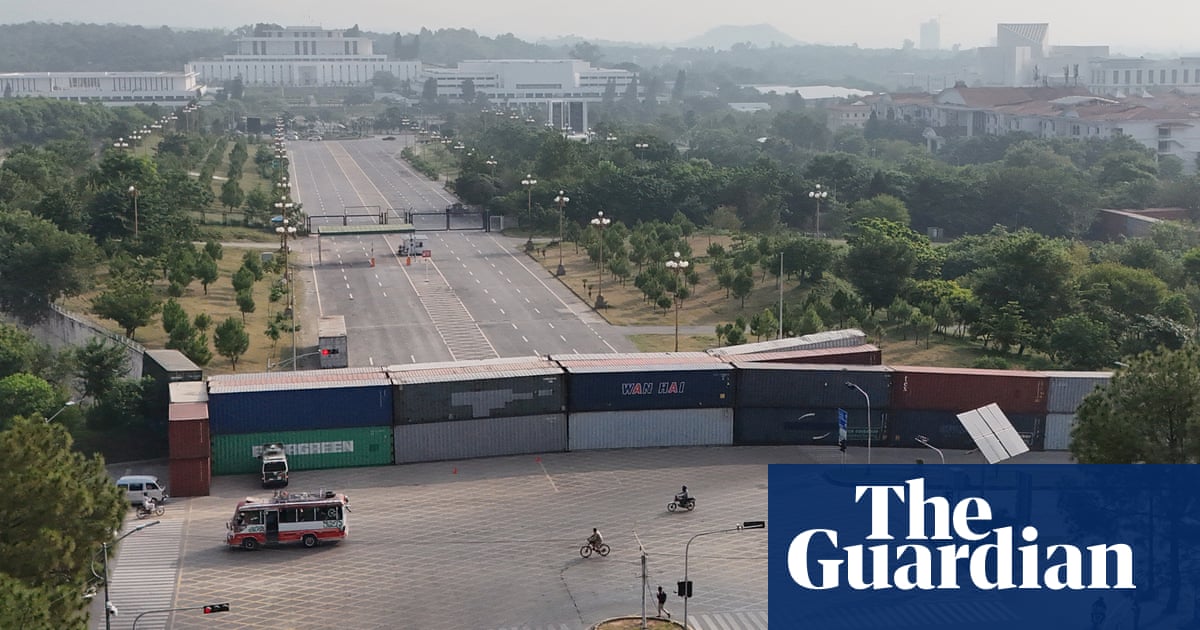
- The government has barricaded Islamabad with shipping containers and deployed over twenty thousand security personnel to stop a planned march by Imran Khan's party.
- PTI leaders vow to proceed with the demonstration despite arrest warrants and detentions, arguing that public support for the former prime minister remains strong.
- Analysts warn that the heavy-handed security response risks further destabilizing an already unpopular administration facing comparisons to recent political upheavals in neighboring countries.
The Pakistani government has enacted severe restrictions on movement and assembly in Islamabad, transforming the capital into a fortified zone as it attempts to block a nationwide demonstration organized by supporters of former Prime Minister Imran Khan. Tens of thousands of police officers have been deployed across the city, while major highways leading into the capital have been barricaded with sandbags and more than one thousand shipping containers, many reinforced with spikes. These measures were implemented in response to vows from the Pakistan Tehreek-e-Insaf (PTI) party to march on Islamabad over the weekend to demand Khan’s release from custody.
Khan has been imprisoned since 2023 on corruption charges that he denies, alleging instead that his detention is politically motivated and designed to neutralize a threat to the current regime. His party claims he is being held in solitary confinement without adequate medical care or access to family and legal counsel. While nearly all previous court rulings against him have been overturned, he remains incarcerated, fueling ongoing grievances among his base. The ruling coalition, led by Prime Minister Shehbaz Sharif but widely viewed as operating under the influence of Army Chief Field Marshal Asim Munir, has moved aggressively to suppress any large-scale public gathering.
In the days leading up to the planned protest, authorities issued arrest warrants for dozens of PTI leaders and ministers. Khan’s three sisters were detained on Monday on charges of posing a grave threat to national security. Sohail Afridi, the chief minister of Khyber Pakhtunkhwa province and a key figure in Khan’s political stronghold, also faces an arrest warrant. Despite these detentions, Afridi stated that the party intends to proceed with the march unless the government makes significant concessions regarding Khan’s treatment and ensures fair hearings for his legal cases.
Strategic disagreements within the PTI leadership have emerged regarding the timing and method of the protest. Some leaders debated whether to begin the march on Sunday and advance slowly toward Islamabad to exhaust government resources, or to delay the action until the following week. Afridi expressed confidence that the sheer volume of public support would overwhelm security forces, asserting that authorities could not use lethal force against a massive crowd without facing severe consequences. He characterized the government’s actions as panic-driven attempts to abduct ministers and besiege the capital.
The security apparatus has taken extensive precautions to prevent demonstrators from entering Islamabad. The main highway connecting Peshawar, the provincial capital of Khyber Pakhtunkhwa, to the national capital has been closed. Faisal Karim Kundi, the federally appointed governor of Khyber Pakhtunkhwa, defended these measures as necessary precautions against a group he accused of seeking to create instability and violence. He emphasized that the state cannot permit any violent entity to march on Islamabad, framing the crackdown as a defensive measure rather than political repression.
The lockdown has caused significant disruption to daily life in Islamabad, drawing criticism from residents who feel abandoned by the government. Businesses have struggled to receive supplies due to road closures, and public gatherings have been banned entirely. Shahid, a seventy-six-year-old retired businessman, described the situation as unprecedented, noting that citizens are suffering from joblessness, inflation, and insecurity while the government focuses on shutting down the city rather than addressing economic hardships. The heavy security presence has created an atmosphere of tension and frustration among ordinary residents who find themselves caught in the crossfire of political conflict.
Analysts suggest that the current standoff presents a major challenge to the military-backed government, which is widely regarded as weak and illegitimate by many observers. Khan remains a popular rallying figure despite efforts by media organizations, instructed not to refer to him by name, to remove him from public consciousness. The fear among ruling elites is that the PTI protest could escalate into a broader movement capable of toppling the administration, similar to recent political upheavals in Bangladesh, Nepal, and Sri Lanka. The government’s reliance on brute force to suppress dissent risks further eroding its already fragile legitimacy.
As deliberations continue within the PTI leadership, the situation remains volatile. The government has shown willingness to use extensive security resources to prevent the march, while party officials insist that public power will ultimately prevail. The coming days will likely reveal whether the state’s heavy-handed tactics can contain the protest or if they will instead galvanize further opposition against a regime already struggling with widespread unpopularity. The outcome of this confrontation could have profound implications for Pakistan’s political stability and the future of its democratic institutions.
Sources behind this briefing
Go to the original reporting
- The Guardian World↗Pakistan locks down Islamabad as Imran Khan’s party vows to march on capital

