The short version
- Alexander Ovechkin appeared in a video supporting United Russia, prompting renewed scrutiny of his political alignment despite claims of neutrality.
- The Washington Capitals issued a statement framing the appearance as a civic duty for a Russian citizen living abroad, avoiding moral judgment on the content.
- Critics argue that silence or deflection fails to address the ethical implications of endorsing figures associated with the war in Ukraine.
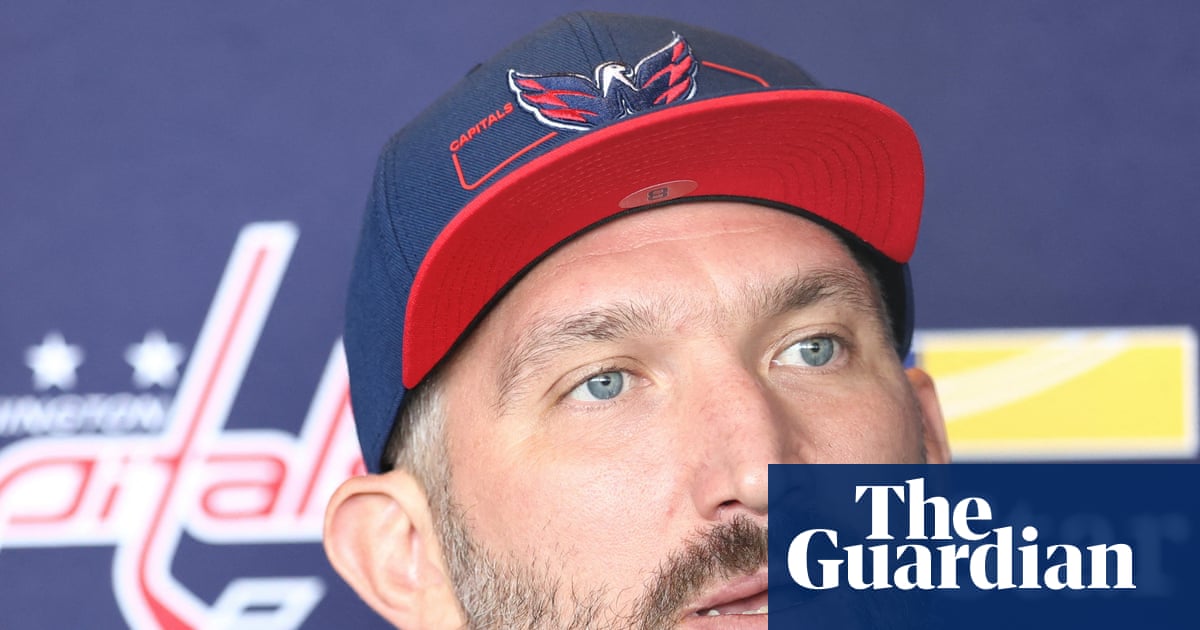
The long-standing assertion by Washington Capitals captain Alexander Ovechkin that he remains outside the realm of politics has been challenged by his recent participation in a video campaign for United Russia. The group, which supports President Vladimir Putin, released the footage ahead of parliamentary elections, featuring Ovechkin alongside prominent Russian officials including Foreign Minister Sergei Lavrov and Margarita Simonyan, head of state-controlled media outlet RT. This appearance marks a significant shift from his previous stance, where he consistently maintained that his role was strictly athletic, even while acknowledging personal ties to the Russian leadership.
During a press interaction following the release, Ovechkin attempted to reframe the narrative by emphasizing his identity as a Russian citizen and his desire for global peace. He stated that his participation was driven by national affiliation rather than political endorsement, urging observers to focus on universal hopes for stability. However, this explanation did little to quell concerns among critics who view the association with United Russia as an implicit validation of the Kremlin’s policies, particularly regarding the ongoing conflict in Ukraine. The disconnect between his claimed neutrality and the overtly political nature of the campaign has intensified debates about the boundaries of athlete activism.
The Washington Capitals responded to the controversy with a statement that sought to normalize Ovechkin’s actions without endorsing them. The team highlighted his status as a Russian national residing in Moscow during the offseason and noted that he was asked to participate in the campaign while in his home country. By framing the incident as a routine civic engagement, the organization avoided taking a definitive moral stand on the implications of supporting a party aligned with Putin. This approach reflects a broader institutional reluctance to confront the political dimensions of player affiliations, prioritizing continuity and community impact over explicit ethical positioning.
Critics have pointed out that such neutrality may inadvertently shield controversial figures from accountability. Former NHL goaltender Dominik Hasek, known for his vocal opposition to Putin, criticized the Capitals’ response as insufficient given the human cost of the war in Ukraine. He argued that Ovechkin’s public stance carries weight and that ignoring its consequences fails to acknowledge the suffering caused by the conflict. While attributing direct responsibility to an athlete may be contentious, Hasek’s comments underscore a growing expectation for sports organizations to address the ethical ramifications of their members’ political associations.
The timing of these developments coincides with heightened tensions between Russia and Western nations, including recent legal actions in the United States targeting alleged networks planning harm against Russian dissidents. These events serve as stark reminders of the geopolitical realities that underpin Ovechkin’s visibility in a pro-Putin campaign. For fans and observers, the situation presents an unwieldy ethical dilemma: continuing to support Ovechkin may be interpreted as tacit approval of repressive regimes, while boycotting him risks accusations of politicizing sports. This polarization leaves audiences without clear guidance on how to reconcile their appreciation for athletic excellence with their political convictions.
Ovechkin’s handling of media inquiries further illustrates the difficulty of navigating this terrain. When pressed about the video and the invasion of Ukraine, he reiterated his position that he is not involved in politics and declined to judge right or wrong before abruptly ending the interview. This deflection strategy, while common among athletes seeking to avoid controversy, has drawn criticism for lacking substantive engagement with the issues at hand. Reporters noted a swift return to lighter topics, such as birthday celebrations, which some viewed as an attempt to restore normalcy without addressing underlying concerns.
The broader implications extend beyond individual accountability to encompass the responsibilities of sports franchises and leagues. If organizations like the Capitals wish to maintain credibility, they may need to consider more proactive measures than neutral statements. Options could range from charitable contributions to Ukrainian relief efforts to reevaluating leadership roles within teams. However, such steps require a willingness to confront uncomfortable truths rather than treating political associations as mere inconveniences to be endured until public attention wanes.
As the NHL season approaches, the focus will likely shift back to on-ice performance, but the questions raised by Ovechkin’s video are unlikely to disappear entirely. The incident highlights the increasing intersection of sports and geopolitics, where athlete actions can no longer be easily separated from their political contexts. For fans, players, and organizations alike, navigating this landscape demands careful consideration of how personal beliefs align with public responsibilities, especially when those beliefs intersect with global conflicts.
Ultimately, the debate surrounding Ovechkin’s involvement underscores a larger cultural shift in how society views the role of athletes in political discourse. While traditional norms encouraged separation between sports and politics, contemporary expectations often demand greater transparency and accountability. Whether through explicit statements or silent complicity, every action—or inaction—carries meaning in an era where digital footprints amplify individual voices far beyond their immediate circles.
Looking ahead, the resolution of this controversy may depend less on definitive answers than on ongoing dialogue about values and responsibilities. As Ovechkin continues his career and potentially transitions into retirement, the legacy of his political associations will remain part of his public narrative. For the Capitals and the NHL, maintaining relevance requires balancing respect for individual rights with acknowledgment of collective impacts, ensuring that sports remain a unifying force rather than a mirror reflecting societal divisions.
Sources behind this briefing
Go to the original reporting
- The Guardian US↗Alex Ovechkin claims he’s ‘not in politics’. His pro-Putin video says the opposite

