The short version
- Mykhailo Fedorov, recently dismissed as defense minister, released a video accusing the Zelenskyy administration of systemic governance failures and corruption that hinder the war effort.
- Public demonstrations in Kyiv have rallied behind Fedorov, reflecting broader societal frustration with loyalist appointments and stalled reforms despite ongoing martial law.
- While parliament has approved a successor to Fedorov, pressure mounts for democratic mechanisms such as wartime elections, though constitutional barriers and presidential resistance remain significant obstacles.
Political tensions in Ukraine have intensified following the dismissal of Mykhailo Fedorov from his post as defense minister, an event that has transformed a former ally of President Volodymyr Zelenskyy into a vocal critic of the current administration. For more than a month, demonstrators have gathered near the presidential office in Kyiv, chanting not for the president but for the ousted official. On Sunday evening, approximately 2,000 people marched along Khreshchatyk, the city’s main boulevard, displaying banners in support of Fedorov. This sustained public mobilization underscores a growing demand for democratic renewal and accountability within the government.
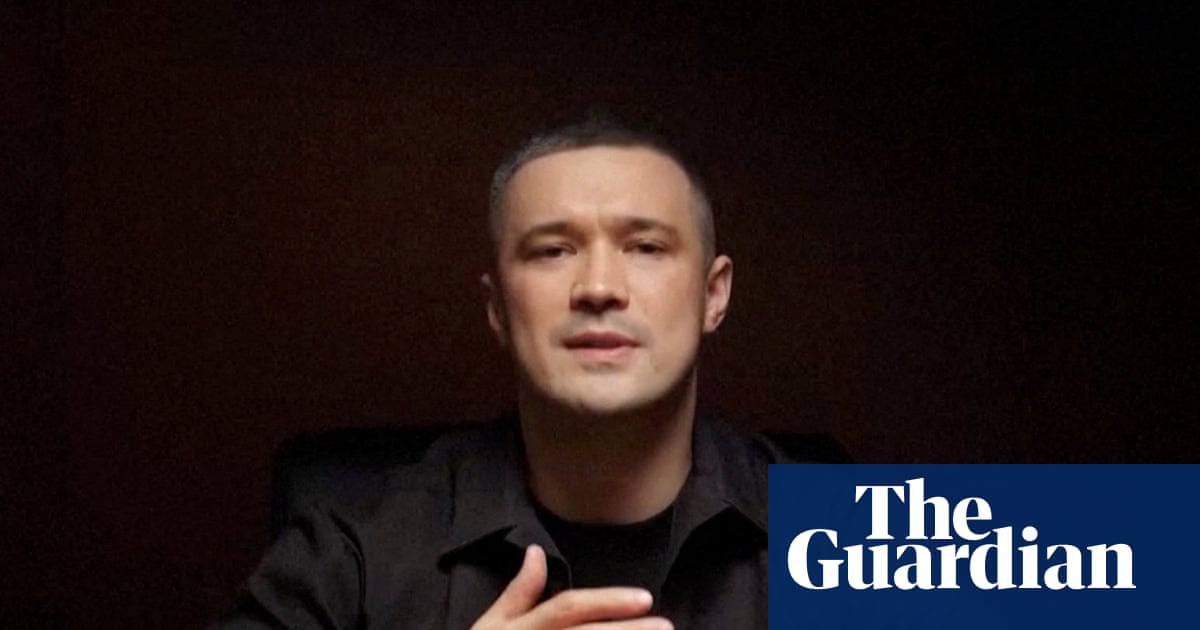
Fedorov formally broke with his former patron on Tuesday by releasing a nine-minute video address on YouTube. In the recording, he called for the organization of wartime elections, arguing that democracy should not be held hostage by Russia. He urged the establishment of a legal, safe, and realistic mechanism to renew Ukraine’s democratic processes even under the conditions of prolonged conflict. Fedorov asserted that ultimate power resides with the people, challenging the administration’s stance on maintaining the status quo during martial law.
The former defense minister offered a sharp critique of the current leadership, describing a systemic crisis of governance. He alleged that corruption within the defense ministry is actively damaging the war effort by stymying reforms and promoting loyalists over competent professionals. Fedorov suggested that his own attempts to root out corruption in procurement processes contributed to his removal from office. He characterized the existing political structure as self-protective and resistant to necessary changes, implying that entrenched interests are prioritizing their own survival over national security needs.
Civil society experts largely agree with this broader assessment of institutional dysfunction. Orysia Lutsevych of Chatham House noted that the system often appears outdated, slow to innovate, and overly focused on loyalty rather than merit. She observed that personal and vested interests sometimes influence official decision-making in ways that do not serve Ukraine’s best interests, a dynamic she described as a form of corruption. While acknowledging that corruption has historically existed in post-Soviet states, experts emphasize that its impact is far more severe during wartime.
The stakes of these governance failures are particularly high given the ongoing conflict. Unlike peacetime embezzlement, which might divert funds from schools or hospitals, current schemes directly affect military capabilities. Fedorov highlighted that corruption now translates into drones that are not purchased, ammunition that fails to reach the front lines, and technology that remains unproduced. He included imagery in his video referencing Andriy Yermak, Zelenskyy’s former chief of staff, who resigned last year amid a scandal involving other senior figures such as Timur Mindich. Both Yermak’s legal team and Mindich have denied any wrongdoing.
Public engagement remains high, with students, veterans, journalists, and anti-corruption bodies actively participating in political discourse. Lutsevych described the street protests as a check on presidential power, noting that parliamentarians are also active participants in this pluralistic space. However, she warned that public exhaustion and Zelenskyy’s failure to adequately explain his actions have created a volatile situation. The combination of nervous fatigue among the populace and unresolved political grievances has turned the environment into what she termed a perfect powder box.
The administration has faced additional scrutiny recently when Zelenskyy dismissed deputy chief of staff Iryna Mudra following a raid by the National Anti-Corruption Bureau. Investigators suspected Mudra and a parliamentarian of laundering $3.4 million. This incident echoes previous controversies, including last year’s attempt to strip the anti-corruption bureau of its independence, which sparked widespread protests before Zelenskyy reversed course under domestic and international pressure. Olena Tregub of the Independent Defence Anti-Corruption Commission argued that bad governance is the root cause, with corruption serving as a symptom.
Despite the mounting pressure, there is little indication that Zelenskyy will soon hold elections or adopt Fedorov’s proposal for smartphone-based voting. Ukraine’s constitution prohibits polls during wartime, creating a significant legal barrier to immediate democratic renewal. Nevertheless, the demand for some form of political refreshment continues to grow. The parliament’s recent vote to approve Yevhen Khmara as the new defense minister confirms that Fedorov has been permanently shut out of government, solidifying his transition from insider to opponent.
The situation remains fluid as Zelenskyy has yet to respond publicly to Fedorov’s accusations. The conflict between the need for stable wartime leadership and the demand for democratic accountability poses a complex challenge for Kyiv. As external partners monitor developments, the internal political landscape is defined by competing narratives regarding loyalty, competence, and the future of Ukrainian democracy. The coming weeks will likely reveal whether these tensions can be managed or if they will further destabilize the administration’s standing.
Observers note that while outside bodies have occasionally stopped dubious military purchases, the systemic issues persist. Tregub pointed out that individuals from within the established system frequently occupy top posts, often at the expense of talented professionals. The shades of grey in military contracting continue to draw criticism, highlighting the difficulty of balancing security needs with transparency. As the war drags on, the pressure for a resolution to these governance crises is unlikely to diminish.
Sources behind this briefing
Go to the original reporting
- The Guardian US↗Sacking turns former Zelenskyy loyalist into potent political opponent

