The short version
- Former ambassador Kyaw Zwar Minn pleaded not guilty to trespassing charges for remaining in a London diplomatic residence after being locked out by the Myanmar military regime in 2021.
- Defense attorneys contend that General Min Aung Hlaing’s government is illegitimate and therefore had no legal authority to terminate the diplomat's housing license or demand he surrender state property.
- Prosecutors maintain that regardless of political views, Minn’s continued occupation of the premises after his removal from office violates UK law regarding diplomatic trespass.
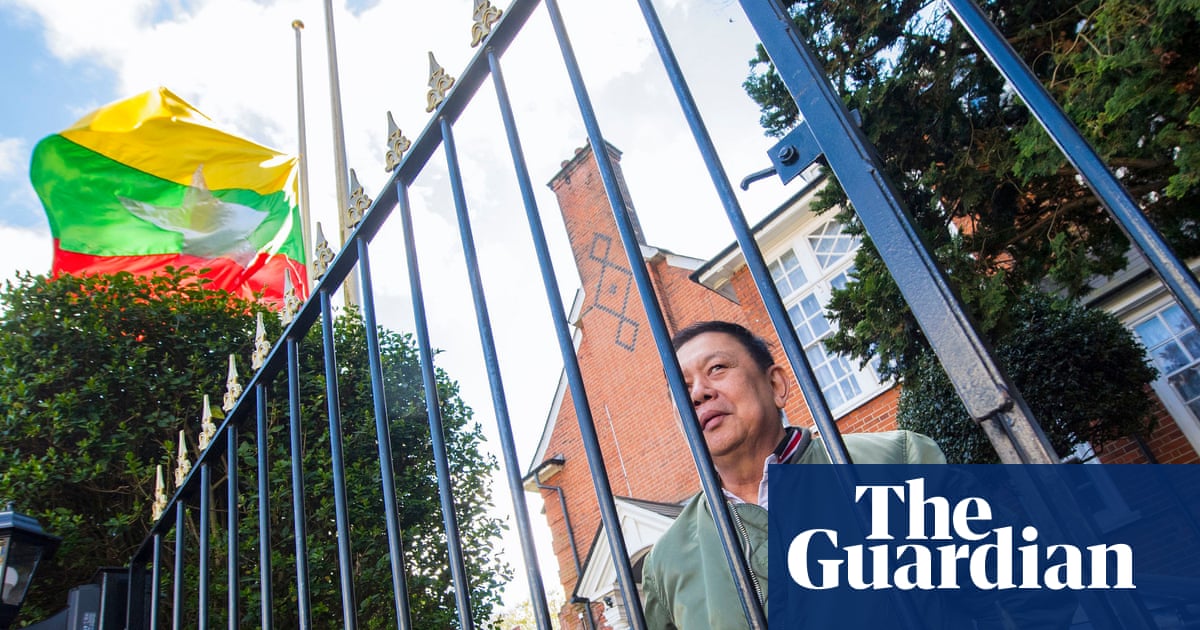
A former ambassador of Myanmar to the United Kingdom has appeared in a London court to face charges of trespassing at a diplomatic residence. Kyaw Zwar Minn, who was ousted from his post following the military coup in February 2021, entered a plea of not guilty during proceedings on Wednesday. The case centers on his refusal to vacate the ambassador’s official residence in north-west London after being locked out of the embassy building by regime loyalists.
The charges allege that Minn committed diplomatic trespass between May 2021 and November 2024. Prosecutors argue that despite his removal from office, he continued to occupy state-owned property without authorization. Louise Oakley, representing the prosecution, stated that Myanmar’s authorities instructed the former diplomat to hand over properties in April 2021. She noted that the UK Foreign Office also directed him to leave the residence, but he failed to comply with these orders.
The defense challenges the legal basis of the eviction entirely. David Perry, Minn’s attorney, argued that the military authorities could not lawfully terminate his license at the address. He contended that the current leadership, headed by General Min Aung Hlaing, is illegitimate and therefore lacked the power to demand he surrender the property. The defense maintains that the regime cannot legitimately use or control the diplomatic assets in question.
Minn was removed from his position shortly after declaring loyalty to Aung San Suu Kyi, the deposed civilian leader who had been detained by the junta. In April 2021, Minn found himself locked out of the embassy by his then-deputy, Chit Win, and a military attaché named Soe Aung. He spent a night in his car outside the building before returning to the residence where he still lives. At the time, he expressed fear for his safety and contacted police after former staff delivered a letter ordering him to move.
The prosecution rejected the political defense offered by Minn’s team. Oakley told the court that the former ambassador’s view of the Myanmar government does not provide a legal defense against trespassing charges. She emphasized that permission to reside at Myanmar House was granted specifically because he held the position of ambassador. Once removed from that role, his refusal to vacate the premises constituted an offense under UK law, regardless of whether Britain formally recognizes the military regime.
The trial unfolds against a backdrop of escalating conflict in Myanmar. The war has now entered its sixth year, resulting in significant humanitarian consequences. According to the Council on Foreign Relations, more than 100,000 people have been killed and over five million displaced since the coup. General Min Aung Hlaing’s pro-military party recently secured a landslide victory in elections that were widely condemned as sham processes by international observers.
Min Aung Hlaing faces serious international scrutiny beyond the domestic crisis. He is wanted by the International Criminal Court for crimes against humanity committed against the Muslim Rohingya minority. Minn, who served as a diplomat under Aung San Suu Kyi after a long career in the army, has previously highlighted the importance of the Rohingya issue. Before his removal, he alleged that staff within Myanmar’s foreign ministry were spying on him.
Aung San Suu Kyi remains detained on various charges since the military seized power. Her status as an international figure is complex; she was awarded the Nobel Peace Prize in 1991 for her democratic activism but later became a pariah for leading a regime that excused genocide and jailed critics. Minn had anticipated the current crisis would lead to civil war, warning that the military government would not step back and that the economy would collapse.
Friends and relatives of Minn in Myanmar have been forced into hiding due to fears of reprisals resulting from his public stance against the junta. The legal battle in London highlights the complex intersection of international law, diplomatic immunity, and political legitimacy. As the trial proceeds, it tests how UK courts handle disputes involving unrecognized regimes and the rights of ousted diplomats.
The outcome of this case may set a precedent for how other nations handle similar situations involving diplomatic properties controlled by contested governments. While the UK does not formally recognize the military junta, the prosecution insists that property rights and trespass laws apply regardless of political recognition. The court must now determine whether Minn’s occupation constitutes a criminal act or a legitimate protest against an illegitimate authority.
Sources behind this briefing
Go to the original reporting
- The Guardian World↗Ex-Myanmar ambassador to UK on trial for trespassing in diplomatic residence

