The short version
- One Nation MP David Farley stated the party's net overseas migration target of 130,000 is comparable to Labor's figures when excluding rural and skilled workers.
- Farley advocated for an additional 100,000 migrant workers in agriculture and aged care, separate from the core migration cap.
- Party leader Pauline Hanson counseled Farley regarding his comments, while Barnaby Joyce characterized them as a campaign slip-up.
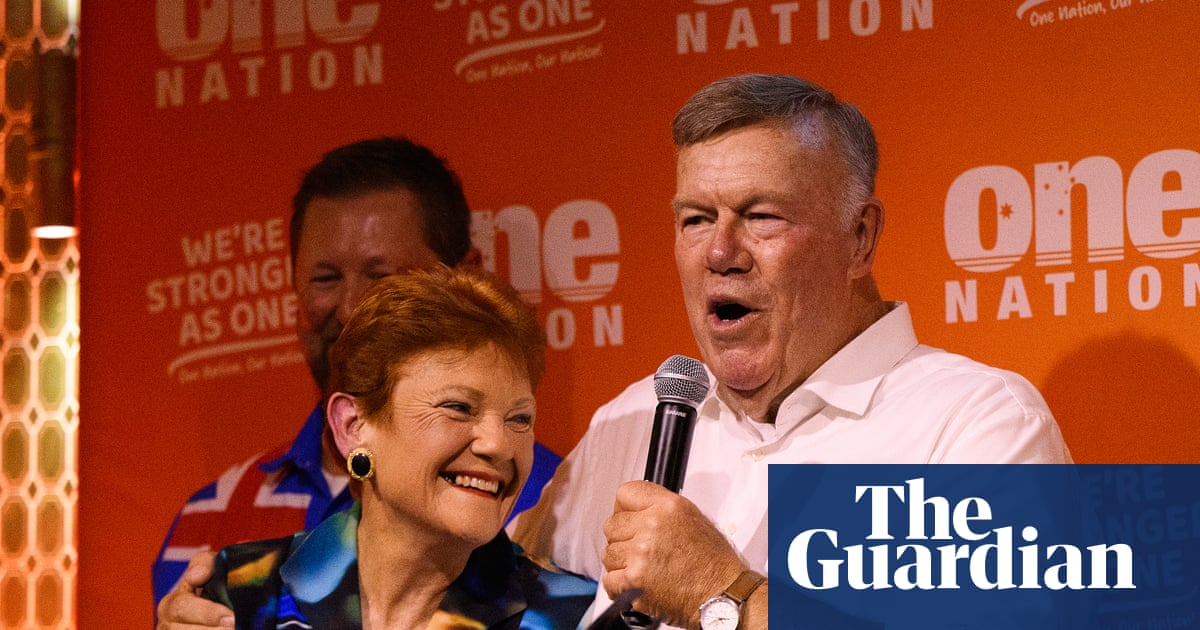
A senior member of Australia’s One Nation party has publicly acknowledged that the minor rightwing group’s net overseas migration target is substantially similar to that of the governing Labor Party, provided certain categories of workers are excluded from the calculation. David Farley, the member for Farrer in New South Wales, made these remarks during an appearance on ABC’s Insiders program, suggesting that the political divide on immigration numbers may be narrower than previously portrayed when specific labor needs are accounted for separately.
Farley maintained that One Nation’s official net overseas migration target remains at 130,000 individuals annually. However, he argued that this figure should be viewed as the 'true' baseline for migration in its traditional sense. He contended that skilled workers, backpackers, and participants in the Pacific Australia Labour Mobility scheme are essential for maintaining national food security and should therefore be categorized distinctly from standard migration metrics.
Under this framework, Farley proposed allowing a minimum of 100,000 additional migrant workers to support critical industries. This supplementary group would include approximately 40,000 workers under the Palm scheme and roughly 70,000 skilled professionals, such as aged care nurses. He emphasized that the primary distinction between One Nation’s approach and the government’s lies not in the raw numbers but in geographic distribution and economic utility.
The MP stressed that migrant labor is vital for productivity in agriculture, engineering, and mining sectors rather than urban centers. In his electorate of Farrer, located in southwestern New South Wales, more than two-thirds of workers in slaughterhouses and food processing facilities are migrants. Farley noted that the region relies heavily on this workforce for both aged care services and food production, arguing that a flexible migration system is critical to sustaining these industries.
These comments echo earlier statements by Farley regarding migration levels, which reportedly drew counsel from One Nation leader Pauline Hanson. Hanson later confirmed she had advised him on his public remarks, while Barnaby Joyce, a former Nationals MP who joined One Nation in December, described the comments as a slip-up made under campaign pressure. The party has faced scrutiny over inconsistent messaging regarding whether its 130,000 target refers to net overseas migration or permanent migration.
Net overseas migration is calculated by subtracting the number of people leaving Australia from those entering, excluding short-term visitors like tourists. It includes Australians returning from abroad and differs from permanent migration, which tracks longer-term visas for skilled workers and family members. For the current financial year, there are 185,000 permanent places available, while net overseas migration figures have fluctuated significantly since the pandemic era.
The Albanese government is currently preparing to announce adjustments to the migration system to meet its own targets. Home Affairs Minister Tony Burke recently canceled a planned address at the National Press Club amid internal disagreements over final policy details. Meanwhile, the Coalition has declined to specify an exact net overseas migration target, though opposition leader Angus Taylor indicated it would be well below 200,000.
One Nation’s official policy lists a hard visa cap of 130,000 per year, a measure that analysts suggest could result in negative net overseas migration if strictly enforced. Farley also addressed Prime Minister Anthony Albanese’s personal reassurance regarding a planned bailout for rice mills in his electorate, expressing satisfaction with the government’s attention to local economic concerns. Additionally, he was asked about Hanson’s high court appeal against a racial discrimination finding concerning Greens senator Mehreen Faruqi, stating he was not convinced changes to discrimination laws were necessary at this time.
Sources behind this briefing
Go to the original reporting
- The Guardian World↗One Nation MP concedes party’s migration target ‘not too different’ from Labor’s once rural workforce included

