The short version
- Teddy Riner has announced his candidacy for the French presidency, aiming to bridge deep societal divisions without aligning with established political parties.
- Analysts view his bid as a long shot due to his lack of political experience and the absence of a formal party structure or detailed policy platform.
- The entry occurs against a backdrop of rising cost-of-living protests and concerns over the growing influence of far-right movements in France.
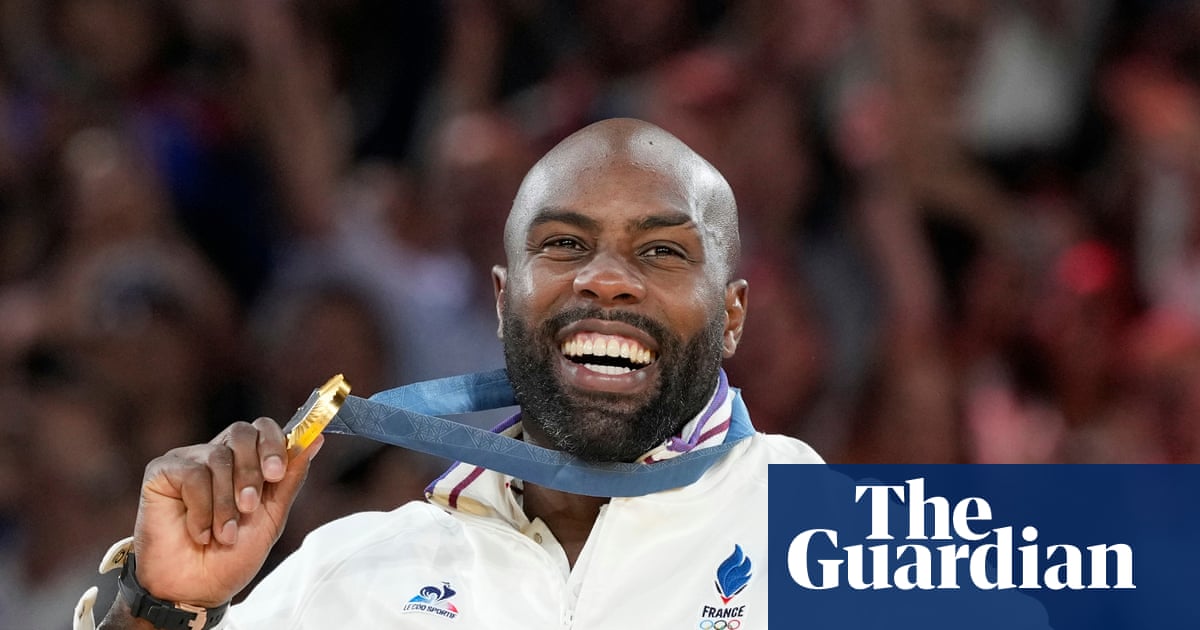
Teddy Riner, the celebrated French judoka and five-time Olympic gold medalist, has formally declared his intention to compete in next year’s presidential election. In a social media video released on Monday, the thirty-seven-year-old athlete described himself as standing apart from conventional left-wing or right-wing ideologies. Instead, he framed his campaign around a mission to unite a fractured nation and restore a sense of common sense and justice to public life. His announcement marks a significant shift in the early stages of the race to succeed Emmanuel Macron, introducing a high-profile outsider into a field already dominated by established political figures.
The timing of Riner’s entry coincides with a period of intense social tension in France. The country has recently been shaken by widespread protests regarding the rising cost of living, which have overlapped with demonstrations by students demanding better conditions in overcrowded and deteriorating schools. Additionally, Riner’s decision follows a wave of online harassment and racist abuse he endured approximately six weeks prior. That backlash occurred after he expressed anxiety on a television sports program about the increasing prominence of far-right political forces in France. He cited these experiences as part of his motivation to seek office, noting that many citizens feel unable to envision a positive future for themselves.
Riner acknowledged the skepticism surrounding his candidacy, anticipating criticism regarding his lack of political background and unfamiliarity with institutional norms. He addressed these concerns directly, stating that he is aware critics will label him as eccentric or unqualified because he does not belong to the political establishment. However, he argued that this outsider status is precisely what France needs at a time when professional politicians are perceived as engaging in endless quarrels rather than solving problems. He drew parallels between his athletic career and political ambition, suggesting that the resilience required to compete in judo—falling down and getting back up—is applicable to governing.
In interviews with French media outlets, Riner emphasized the deep divisions currently affecting the country. He criticized existing candidates for failing to offer a credible vision that brings people together, arguing that current political discourse is characterized by opposition rather than hope. He highlighted specific economic challenges facing ordinary citizens, including soaring national debt and increasing grocery prices. Furthermore, he pointed to systemic inequalities that disadvantage individuals who lack influential family connections, social networks, or favorable racial backgrounds. His platform appears focused on restoring ambition and optimism to a populace he believes has become disillusioned.
Despite his popularity as one of France’s most recognized athletes, political analysts remain doubtful about Riner’s viability as a serious contender. Dani Podgoretskaya, an analyst at Eurasia Group, noted that the French electorate takes the presidency seriously due to the extensive powers held by the office. She highlighted Riner’s lack of elected experience, absence of party backing, and failure to present a detailed policy program as significant hurdles. While she acknowledged the theoretical possibility of a unifying figure emerging to consolidate anti-populist votes, she expressed skepticism that Riner would fulfill that role. Polling data currently suggests a hollowing out of the political center, with Marine Le Pen of the National Rally and Jean-Luc Mélenchon of the radical left appearing as frontrunners.
To qualify for the ballot, Riner must now gather five hundred sponsorship signatures from elected officials, a legal requirement known as parrainage. This process will serve as an early test of his political support and ability to navigate institutional structures. He has indicated that if elected, he intends to balance his presidential duties with his athletic career, specifically aiming to compete in the 2028 Los Angeles Olympics. This dual ambition raises questions about how he would manage the demands of the presidency while maintaining elite-level physical training and competition schedules.
Riner is not the first judo practitioner to enter French politics. David Douillet, another Olympic champion, was elected to the French parliament in 2009 after retiring from sport and later served as sports minister. However, Riner’s path differs significantly given his active status as a competing athlete and his entry into the race without party affiliation. His campaign represents an attempt to transcend traditional political categorizations, appealing directly to voters’ frustrations with the current system. Whether this approach can translate into electoral success remains uncertain in a landscape increasingly defined by ideological extremes.
On the international stage, Riner has already begun to engage with global figures, joking about a potential handshake with U.S. President Donald Trump. This lighthearted comment underscores his attempt to project confidence and charisma on the world stage. As the election approaches in April and May, Riner’s campaign will likely face intense scrutiny regarding his policy specifics and governance capabilities. His ability to convert athletic fame into political capital will depend on whether voters are willing to embrace an unconventional candidate during a time of significant national uncertainty.
Sources behind this briefing
Go to the original reporting
- The Guardian World↗Judo star Teddy Riner announces plan to run in France’s presidential election


