The short version
- Oklahoma Republicans face a runoff between Attorney General Gentner Drummond and former Senator Mike Mazzei to determine the nominee for governor.
- Democratic candidates N'Kiyla Jasmine Thomas and Jim Priest will compete in a U.S. Senate primary runoff marked by stark fundraising differences.
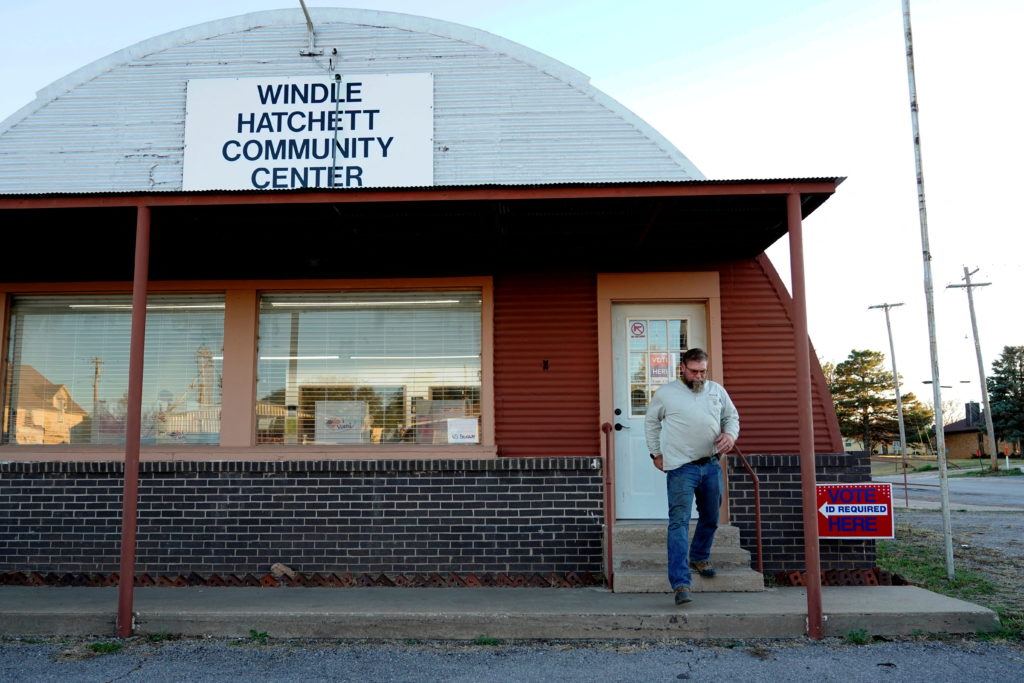
- Voters also decide on two statewide ballot measures, including one that would constitutionally mandate voter identification.
Oklahoma voters are heading to the polls for midterm primary runoffs that will determine key nominees for the fall general election. The most prominent contest is the Republican race for governor, which remains undecided after an initial primary in June failed to produce a majority winner. This runoff carries significant weight because it identifies the candidate who will succeed term-limited Governor Kevin Stitt. The outcome also serves as a notable test of President Donald Trump’s influence within the party, given his explicit endorsement of one of the finalists.
State Attorney General Gentner Drummond and former state Senator Mike Mazzei are the two candidates competing for the Republican gubernatorial nomination. In the June 16 primary, nine candidates vied for support, with Drummond securing 26.25 percent of the vote and Mazzei capturing 25.97 percent. Neither candidate achieved the majority threshold required to win outright, triggering this Tuesday runoff. The geographic split in the initial voting reflected regional divisions, with Drummond performing slightly better in Oklahoma and Cleveland counties near Oklahoma City, while Mazzei held a narrow edge in Tulsa County.
The financial dynamics of the gubernatorial race reveal contrasting strategies between the two contenders. Mazzei has relied heavily on personal funds, loaning his campaign more than $11 million and spending approximately $12.3 million overall. Drummond, by comparison, has loaned about $3 million to his campaign and spent roughly $9.1 million. However, when looking at outside contributions, Drummond has significantly outraised Mazzei, collecting $7.1 million in donations compared to Mazzei’s $1.5 million. This disparity highlights different approaches to funding a high-profile state race.
President Trump endorsed Mazzei ahead of the primary and publicly criticized Drummond. While the president’s endorsements have generally correlated with success in 2026 elections, they are not infallible, particularly in gubernatorial primaries. Recent examples include losses for Trump-endorsed candidates in Iowa and Georgia governor races, as well as a South Carolina candidate who faced a runoff and ultimately lost the nomination after Trump also endorsed her opponent. The Oklahoma result will add another data point to the ongoing assessment of presidential endorsement efficacy.
In the Democratic primary for U.S. Senate, nurse N'Kiyla Jasmine Thomas received approximately 45 percent of the vote in June, falling short of the majority needed to avoid a runoff. Attorney and minister Jim Priest placed second with about 24 percent of the vote. The race is characterized by a massive fundraising gap, with Priest raising nearly six times more money than Thomas heading into the primary. As of early August, Thomas’s campaign reported having only $455 in its bank account, while Priest had approximately $56,000. This financial imbalance persists as they head into the runoff.
The winner of the Democratic Senate primary will face Republican U.S. Representative Kevin Hern in the general election. Hern secured his nomination decisively in a five-way primary, capturing about 70 percent of the vote. Oklahoma has not elected a Democrat to the U.S. Senate since 1990, making the path to victory for any Democratic nominee historically steep. The upcoming runoff will determine which candidate attempts to challenge this long-standing Republican hold on the seat.
Beyond the partisan races, Oklahoma voters are deciding two statewide ballot measures. State Question 846 seeks to amend the state constitution to require voters to provide proof of identity to cast a ballot. This requirement is already mandated under existing state law, meaning the measure would codify current practice into the constitution. State Question 844 addresses fiscal policy regarding local governments, specifically affecting reimbursements for lost property tax revenue associated with an incentive program for manufacturing companies.
Election administration details indicate that only registered party members can participate in their respective primary runoffs. Independent or unaffiliated voters are excluded from the partisan contests but may vote on the statewide ballot measures. As of late July, Oklahoma had approximately 2.4 million registered voters, including 1.3 million Republicans and 616,000 Democrats. Early voting has already begun, with about 32,000 ballots cast by Friday. Polls close at 7 p.m. Central Time, and results will be tallied for various offices including school superintendent, labor commissioner, and insurance commissioner.
The Associated Press is monitoring the vote counts to declare winners in these primary runoffs and on the ballot measures. The data team is tracking early in-person and mail-in voting patterns, noting that roughly 11 percent of Republican ballots and 12 percent of Democratic ballots were cast early or by mail in the June primaries. Most counties release their early voting results in the first update of election night, providing an initial snapshot of voter behavior before all precincts report. The final outcomes will shape the political landscape for Oklahoma’s fall elections.
Sources behind this briefing
Go to the original reporting
- PBS NewsHour↗Live Results: Oklahoma's midterm primary runoff

