The short version
- Los Angeles County officials determined that electrical arcing on an inactive Southern California Edison tower caused the Eaton Fire, which killed nineteen people and destroyed thousands of structures.
- The utility company has acknowledged its equipment likely started the fire but maintains in court filings that local agencies failed to issue timely evacuation warnings or provide adequate water resources.
- This finding arrives as a separate arson case regarding the concurrent Palisades Fire faces a retrial, highlighting the complex origins of the devastating January 2025 wildfire season.
Los Angeles County fire officials have released a comprehensive report concluding that equipment owned by Southern California Edison was responsible for igniting the deadly Eaton Fire in early 2025. The investigation, which spanned eighteen months and involved specialized electrical and metallurgical experts, determined that electrical arcing occurred on a high-voltage tower that was not currently in service. This finding provides a definitive cause for one of the most destructive wildfires in recent Los Angeles history, which scorched twenty-two square miles and resulted in nineteen fatalities.
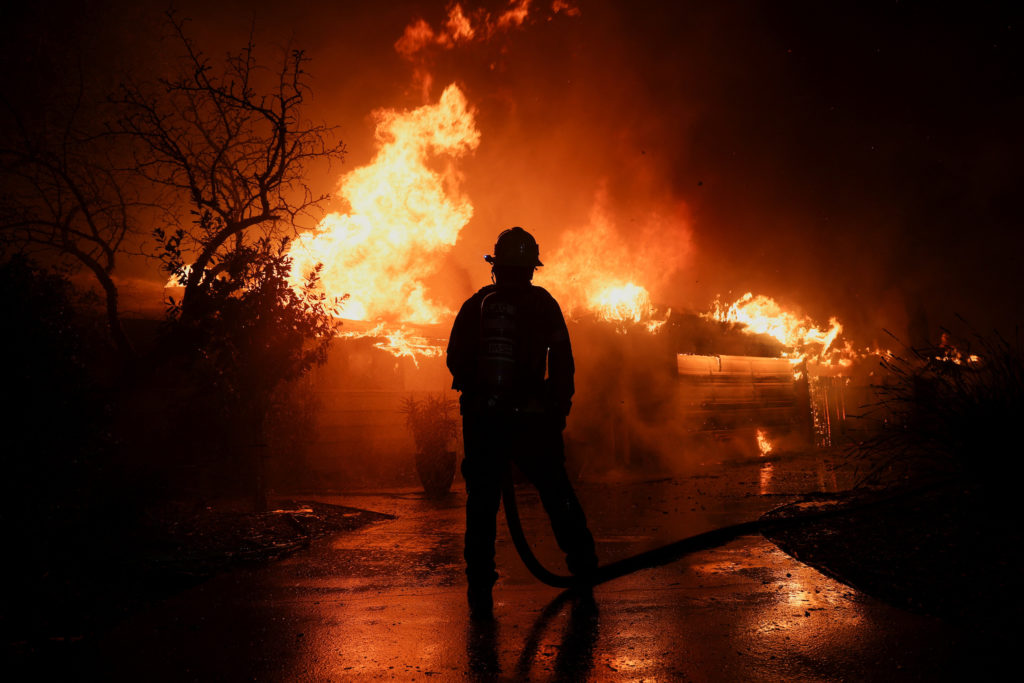
The report details how two distinct electrical arcing events happened in rapid succession on the utility structure. These discharges caused an unidentified burning material to fall from the tower onto dry brush below. Within twelve seconds of the material hitting the ground, the vegetation ignited. The fire quickly escalated into a massive conflagration that engulfed neighborhoods in the San Gabriel Mountains, including Altadena, Pasadena, Sierra Madre, and La Canada Flintridge. Firefighters worked for nearly a month to fully extinguish the blaze, which destroyed or damaged more than nine thousand homes and businesses.
Southern California Edison has stated that it is reviewing the official findings. A company spokesperson noted that the utility had previously acknowledged its equipment was likely associated with the ignition of the fire. The utility emphasized that it has taken its potential role seriously from the outset and continues to support community recovery efforts. However, the release of this report does not resolve ongoing legal disputes between the utility and local government agencies regarding the response to the disaster.
In lawsuits filed earlier this year, Southern California Edison argued that Los Angeles County agencies failed to send timely evacuation warnings to residents in east and west Altadena. Eighteen of the nineteen victims of the Eaton Fire lived in west Altadena. The utility also claimed that water agencies, including Pasadena Water and Power, did not provide sufficient water pressure as the fire spread, thereby limiting the resources available to firefighters. Los Angeles County officials declined to comment on these specific court filings following the release of the investigation report.
The investigation was conducted jointly by the Los Angeles County Arson Fire Investigation Unit and the California Department of Forestry and Fire Protection. The agencies found that the utility is responsible for maintaining and operating its electrical lines in a manner that minimizes the risk of catastrophic wildfires. The report cites an interview with a Pasadena resident who called emergency services on January 7 after spotting flames from his rear window. The caller described seeing a ten-by-ten-foot fire at the base of the high-voltage tower, marking one of the earliest observations of the blaze.
The Eaton Fire burned simultaneously with the Palisades Fire, which remains the most destructive wildfire in Los Angeles history and ranks among the five worst in California. The Palisades Fire killed twelve people and destroyed more than six thousand eight hundred homes and buildings in Pacific Palisades. While the Eaton Fire was caused by utility equipment, the origin of the Palisades Fire involves a different set of circumstances. Prosecutors allege that Jonathan Rinderknecht used a barbecue lighter to start a fire on January 1, which burned undetected in root systems before flaring up again on January 7.
The legal proceedings for the Palisades Fire suspect are ongoing. Rinderknecht is scheduled to face trial again this fall after his initial federal arson case ended in a mistrial in June. The concurrent nature of these two major fires created an unprecedented strain on emergency resources across the region. The Eaton Fire’s rapid development was fueled by extreme weather conditions, including high temperatures, low humidity, and powerful winds that helped spread the flames quickly through dry vegetation.
The release of this report marks a significant milestone in understanding the January 2025 wildfire season. While the cause of the Eaton Fire is now officially attributed to utility equipment, questions regarding emergency response protocols and resource allocation remain subjects of litigation. The findings underscore the challenges faced by utilities and local governments in preventing and responding to wildfires in densely populated areas surrounded by wildland interfaces. As recovery efforts continue, the distinction between accidental ignition and operational failures will likely remain central to future policy discussions and legal outcomes.
Sources behind this briefing
Go to the original reporting
- PBS NewsHour↗Southern California Edison equipment blamed for 2025 Eaton fire in Los Angeles

