The short version
- Barack Obama campaigned in Ohio and Michigan to counter aggressive Republican advertising strategies that have drawn bipartisan criticism.
- The former president defended Amy Acton against ads featuring her estranged mother and supported Abdul El-Sayed amid attacks on his character and faith.
- Donald Trump endorsed the controversial tactics, arguing that personal references from family members provide valid insight into a candidate's character.
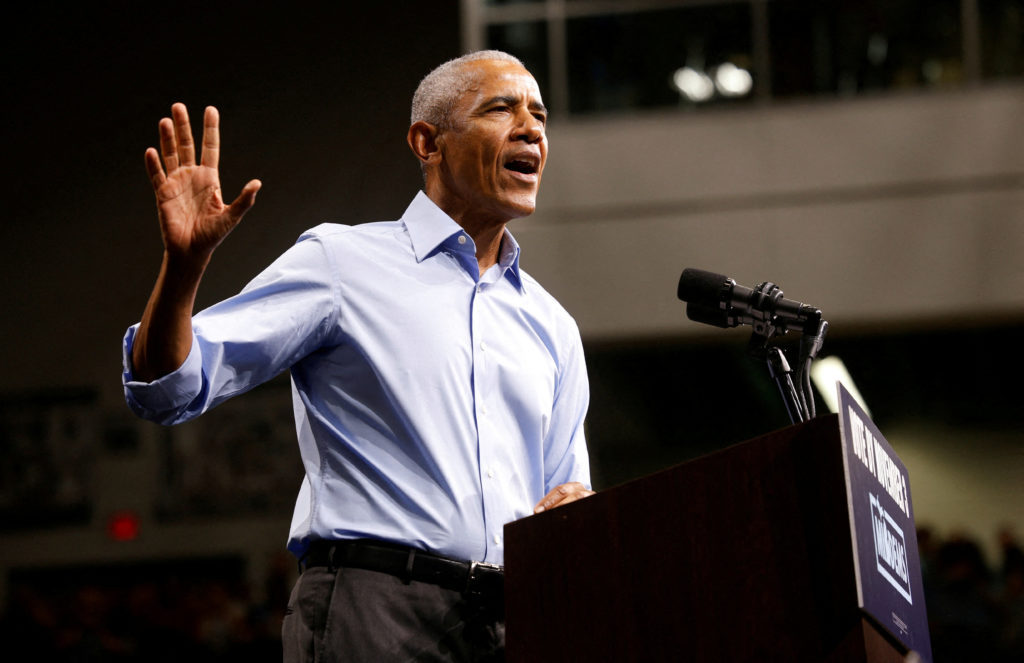
Former President Barack Obama entered the final stretch of the midterm election cycle by focusing on two critical Midwestern states, Ohio and Michigan, where he sought to mobilize Democratic voters against what he characterized as cruel and indecent campaign tactics. His appearances came as national attention fixed on a contentious gubernatorial race in Ohio and a high-stakes Senate contest in Michigan, both marked by aggressive personal attacks that have intensified the political atmosphere.
In Ohio, Obama directed his criticism toward Republican gubernatorial candidate Vivek Ramaswamy, who has utilized an advertising campaign featuring Donna Arthur, the estranged birth mother of Democratic nominee Dr. Amy Acton. The video includes Arthur calling Acton a liar and suggesting she suffers from mental health issues. This strategy has sparked widespread debate, with even some Republican leaders, including Ohio Governor Mike DeWine, urging for the ad's removal due to its nature.
Obama described Ramaswamy’s approach as crossing ethical lines, noting that Acton has been open about her difficult childhood, which included abuse, neglect, and homelessness. He emphasized that exploiting these personal hardships was a low point in political discourse. Acton herself addressed the controversy directly, stating that her opponent was intentionally using her past to salvage a struggling campaign, while asserting that decency remains a vital value in public service.
The controversy has drawn support from President Donald Trump and Vice President JD Vance, who have defended the ad as legitimate political messaging. Trump argued that statements from a parent provide a strong reference for evaluating a candidate’s character. This endorsement from the top of the Republican ticket has elevated the issue beyond state politics, making it a focal point in the national midterm narrative just days before Election Day.
Shifting to Michigan, Obama focused on defending Senate candidate Abdul El-Sayed against critics who have questioned his loyalty and faith. El-Sayed, a former public health official, is running against former Representative Mike Rogers in a race that has seen intense scrutiny of both candidates’ backgrounds. Obama acknowledged past criticisms of his own presidency by El-Sayed, using humor to deflect concerns about intra-party disagreements.
The former president highlighted that disagreement within the Democratic coalition does not equate to disloyalty, comparing El-Sayed’s critiques to those he receives from his wife, Michelle Obama. This rhetorical move aimed to reassure voters that El-Sayed shares core Democratic values despite previous policy differences. The appearance in Detroit, a city with a significant Black population, was also intended to bolster support among Black voters who have been pivotal in past elections.
Both Ohio and Michigan remain competitive battlegrounds where the balance of power could shift significantly. In Ohio, the state has trended Republican in recent years but remains hotly contested this cycle, with Trump and Vance making multiple visits to rally support for their party’s candidates. The controversy surrounding Ramaswamy’s ad has added volatility to an already tense race, potentially influencing voter turnout and engagement.
In Michigan, the Senate race is equally critical, with El-Sayed facing challenges in consolidating support across diverse demographic groups. His primary opponent had performed well in Wayne County, indicating that securing Black voter support is essential for his general election prospects. Obama’s intervention underscores the high stakes involved and the Democratic Party’s reliance on its most recognizable figures to drive turnout in key districts.
As Election Day approaches, the strategies employed by both parties reflect a broader trend toward personal attacks and emotional appeals. The effectiveness of these tactics remains uncertain, with some arguing they energize bases while others warn they may alienate moderate voters. The coming days will reveal whether these controversial methods translate into electoral gains or backlash.
The midterm elections will determine the direction of American politics for the next two years, influencing legislative priorities and executive actions. With both parties investing heavily in these Midwestern states, the outcomes could reshape the political landscape significantly. Voters in Ohio and Michigan face a choice that extends beyond individual candidates, reflecting deeper ideological divides within the country.
Sources behind this briefing
Go to the original reporting
- PBS NewsHour↗Obama, in Midwest, assails 'cruelty' and indecency from Trump and his allies in the midterm campaign