The short version
- Investigators determined that fragments from a broken fan blade in the right engine struck the fuselage, causing a window to shatter and a passenger to be partially ejected.
- Evidence suggests a bird strike may have initiated the failure, though maintenance records show no prior damage was detected during scheduled inspections.
- The incident has renewed scrutiny on FAA mandates requiring strengthened engine coverings, with experts suggesting the compliance deadline may need to be accelerated.
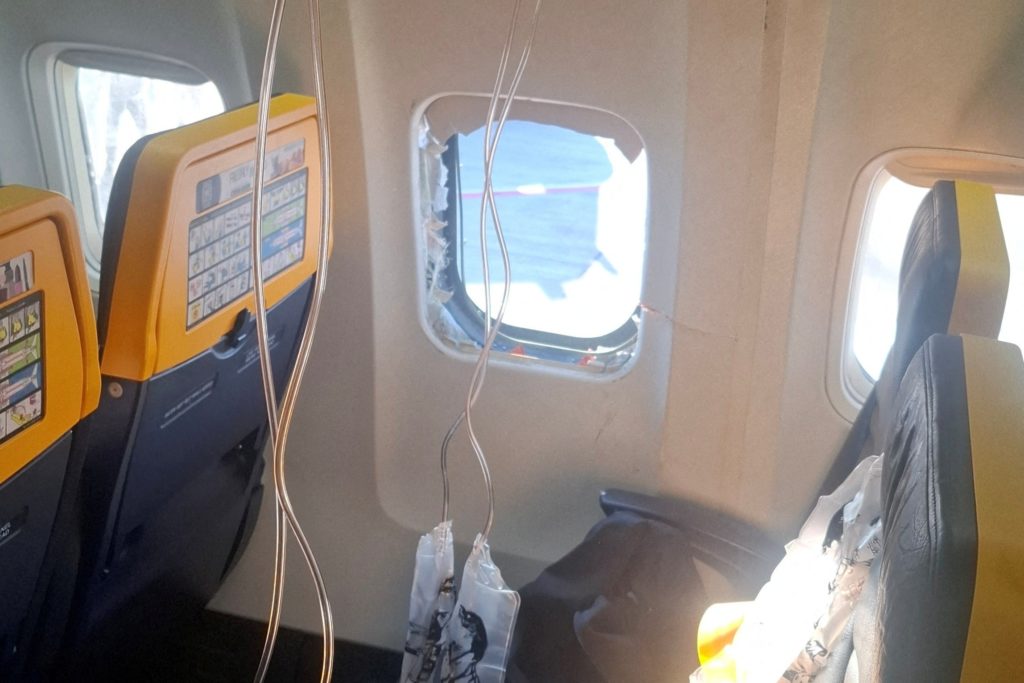
U.S. aviation investigators have identified a broken fan blade as the cause of a dramatic cabin breach on a Ryanair flight departing from Greece last month. According to a preliminary report released by the National Transportation Safety Board, fragments ejected from the Boeing 737-800’s right engine struck the aircraft’s fuselage shortly after takeoff. The impact shattered a passenger window in row 11, creating an opening that caused rapid decompression and resulted in a man being partially sucked out of the cabin before fellow travelers pulled him back inside.
The accident occurred on July 10 following departure from Thessaloniki. Flight attendants reported hearing loud, continuous vibrations and observing smoke or fog filling the cabin before oxygen masks deployed. Video footage shared by local media shows passengers wearing masks and first responders attending to the scene after landing. The injured passenger, a 61-year-old man, sustained neck and shoulder injuries along with friction burns. A doctor aboard the flight provided immediate care while other passengers attempted to block the window opening using a metal box retrieved from the crew.
Investigators found bird remains inside the engine, leading them to suspect that the aircraft may have struck birds during takeoff. This potential bird strike is believed to have caused the fan blade to break loose, sending debris flying outward. However, the NTSB has not yet determined the precise mechanism that led to the blade’s failure. The agency noted that while bird strikes are a known hazard, the specific sequence of events leading to the structural breach remains under detailed examination.
Maintenance records indicate that the engine underwent ultrasonic inspections in November 2025 and May 2026, with no damage detected at those times. Despite these clearances, flight crews had reported four suspected bird strikes to the same engine over the preceding year. Remains were confirmed after two of those incidents. Experts suggest that investigators will likely focus on whether previous impacts contributed to preexisting damage that went undetected during routine checks. The adequacy of the inspection methods themselves may also come under scrutiny.
The incident has drawn attention to existing Federal Aviation Administration directives aimed at preventing similar accidents. Last year, the FAA issued orders requiring airlines to strengthen parts of the engine coverings on Boeing 737s following two previous fan blade failures. One such failure in 2018 resulted in a fatal injury to a Southwest Airlines passenger when debris struck the fuselage and knocked out a window. The new regulations require replacing certain fasteners and spacers that attach the engine’s inlet covering, as well as revising maintenance programs.
These modifications were designed to keep pieces of the engine covering from breaking away and striking the plane if a fan blade fails. Airlines were given until July 2028 to complete the major changes. The NTSB report notes that the required upgrades had not yet been installed on the Ryanair aircraft involved in this incident. This timing has prompted questions about whether the current compliance window is sufficient to ensure safety.
Jeff Guzzetti, a former investigator with the NTSB and FAA, indicated that while the required maintenance appeared to have been performed on schedule, the latest accident could influence regulatory timelines. He suggested that the risk assessment which allowed for a longer implementation period may need to be reconsidered in light of this event. The FAA declined to comment on whether the deadline would change, stating only that it supports the NTSB and will take necessary safety actions based on evidence.
Ryanair stated it would not provide further comment until the investigation is complete. Both Boeing and CFM International, the manufacturer of the engine, are assisting with the inquiry. The agency had previously reprimanded Ryanair’s CEO for suggesting the investigation was focused solely on foreign object damage rather than the plane’s age or maintenance history. Investigators maintain that no factors have been ruled out as they work to determine the full scope of the failure.
The aircraft involved was delivered new to Ryanair in 2008 and is capable of seating up to 189 passengers. As the investigation continues, aviation authorities are expected to analyze whether existing inspection protocols adequately detect subtle damage from bird strikes. The outcome may lead to stricter maintenance requirements or accelerated implementation of safety modifications across the fleet.
For now, the focus remains on understanding how a component that passed recent inspections failed catastrophically in flight. The incident underscores the complex interplay between mechanical integrity, environmental hazards, and regulatory compliance in modern aviation. Passengers and industry observers alike are watching closely to see how regulators respond to these findings.
Sources behind this briefing
Go to the original reporting
- PBS NewsHour↗NTSB says broken engine parts shattered Ryanair plane window that a man's head got sucked into

