The short version
- Education Minister Paul Givan has introduced amendments that would grant him authority to determine the timing of holiday food payments for eligible families.
- Campaigners argue these changes effectively undermine the legislation by removing guarantees that financial support will be provided during school breaks.
- The proposed scheme, modeled on pandemic-era grants, faces budgetary scrutiny as the Department of Education warns of significant annual costs.
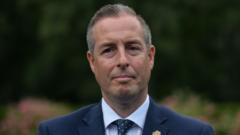
A legislative dispute has emerged in Northern Ireland regarding a proposal to provide financial assistance to low-income families during school holidays. The controversy centers on amendments introduced by Paul Givan, the Democratic Unionist Party member serving as education minister. These changes would grant the minister discretionary power to decide when any payments under the new law would actually begin. Critics argue that this mechanism effectively neutralizes the intent of the legislation, which is designed to help children access food during periods when school meal programs are unavailable.
The bill in question, known as the Holiday Meals Payment Bill, was brought forward by Sinn Féin assembly member Danny Baker. Its primary objective is to establish a recurring payment for families whose children currently qualify for free school meals. The financial support would be distributed specifically during school holiday periods to offset the increased cost of feeding children when they are not in the classroom. Proponents view this as a necessary safety net to prevent food insecurity among vulnerable households.
Givan has been openly critical of the legislation from its inception, citing severe fiscal constraints within his department. He has warned that implementing the scheme would immediately impose an annual cost of approximately £20 million on the Department of Education. This figure is particularly contentious given that the department is already struggling to balance its budget. In April, Givan cautioned other members of the legislative assembly that supporting the bill without additional funding would effectively mean voting to cut existing education spending.
The proposed payment structure mirrors a scheme introduced during the pandemic known as the School Holiday Food Grant. That earlier program provided qualifying families with £27 per child every two weeks. The current bill seeks to institutionalize this support rather than treating it as a temporary emergency measure. Because eligibility is tied to school meal status, the financial responsibility falls squarely on the education portfolio, intensifying the debate over resource allocation.
For the amendments proposed by Givan to succeed, he requires support from other political parties in the assembly. It remains unclear whether he will secure the necessary backing. The Ulster Unionist Party has expressed reservations about the proposal, suggesting that consensus may be difficult to achieve. The matter is scheduled for discussion in the assembly on Monday, where lawmakers will debate both the original bill and the minister's proposed changes.
A coalition of campaign groups, including the National Society for the Prevention of Cruelty to Children and Save the Children, has strongly opposed Givan's amendments. They argue that granting the minister discretion over implementation timing removes any guarantee that payments will ever begin. These organizations are calling on all political parties and assembly members to reject the amendments and support the bill in its current form. They emphasize that uncertainty about when or if funds will be distributed fails to address the immediate needs of struggling families.
The debate highlights broader tensions regarding social welfare spending in Northern Ireland. While advocates stress the moral imperative of ensuring children have access to food, officials point to the rigid realities of public finance. The outcome of this vote could set a precedent for how future social support measures are funded and administered. It also underscores the political friction between parties with differing priorities on fiscal responsibility versus social intervention.
Families affected by these policy decisions face ongoing challenges in managing food costs during school breaks. Without guaranteed support, many rely on charitable organizations or personal savings to bridge the gap. The resolution of this legislative standoff will determine whether a structured government payment becomes a reliable resource for these households or remains a contested political issue. The coming days will reveal whether the assembly prioritizes immediate fiscal caution or long-term social stability.
As the assembly prepares to vote, the focus remains on the balance between ministerial discretion and legislative guarantee. Givan's position reflects a concern for budgetary integrity, while campaigners insist that vague promises do not alleviate hunger. The final decision will likely depend on cross-party negotiations and the willingness of other members to support either the original bill or the amended version. This case illustrates the complex interplay between policy design, political ideology, and practical governance in Northern Ireland.
Sources behind this briefing
Go to the original reporting
- BBC Business↗Campaigners claim minister attempting to undermine 'Holiday Hunger Bill'


