The short version
- Commercial air traffic at Newark Liberty International Airport resumed Tuesday following a near-total standstill on Monday caused by simultaneous failures in primary and backup communication lines at an FAA facility in Philadelphia.
- The outage, which left controllers without radar or voice communications for hours, resulted in hundreds of cancellations across the Northeast, including more than 600 flights involving Newark and over 200 at Philadelphia International Airport.
- Conflicting accounts emerged regarding responsibility for the severed backup fiber optic line, with federal officials blaming Amtrak construction while the railroad pointed to New Jersey Transit crews working nearby.
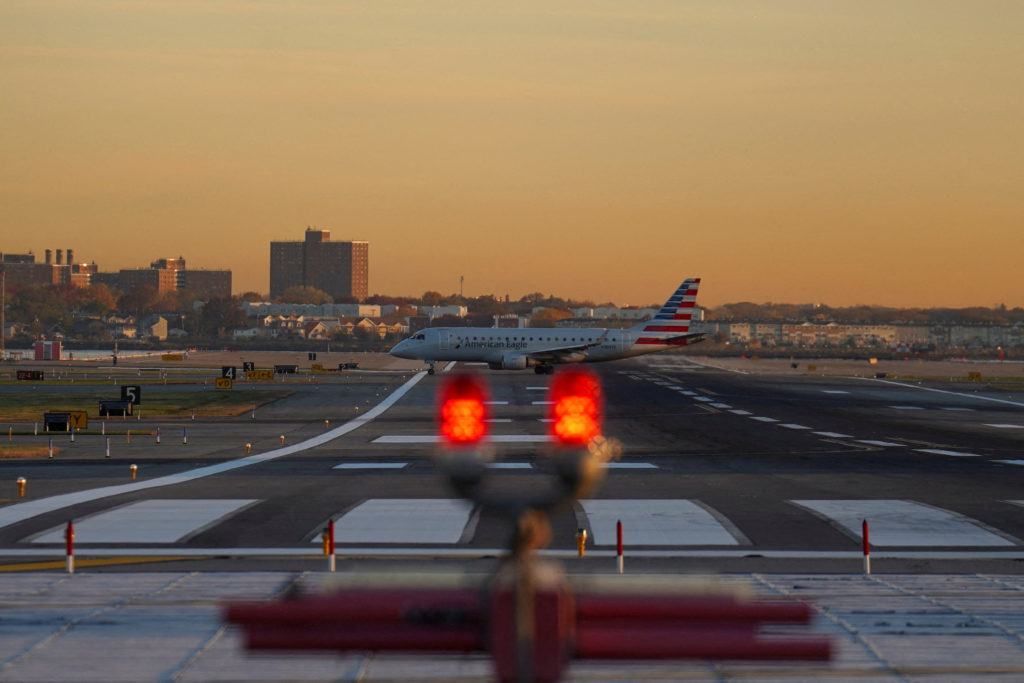
Commercial aviation operations across the Northeast began to normalize on Tuesday, following a severe disruption that grounded flights at major hubs in New York and New Jersey for much of Monday. The incident centered on a critical Federal Aviation Administration facility in Philadelphia, where technical failures stripped air traffic controllers of both radar data and voice communications. Although repairs were completed late Monday, the backlog of delayed aircraft meant that travelers still faced significant wait times and cancellations into Tuesday morning.
The scale of the disruption was substantial, particularly at Newark Liberty International Airport. Flight tracking data indicated that commercial landings ceased entirely between approximately 9:40 a.m. and 5:20 p.m. local time on Monday. During this window, more than 600 flights scheduled to arrive or depart from Newark were canceled. The ripple effects extended to other major gateways, with LaGuardia and John F. Kennedy International Airports in New York experiencing widespread delays, and Philadelphia International Airport canceling more than 200 flights.
The root cause of the outage involved a rare convergence of two infrastructure failures at the same control center. According to the FAA, a circuit on the primary communication line failed early Monday morning. Under normal circumstances, the system would have automatically switched to a backup fiber optic line. However, that secondary line had been inadvertently severed by construction workers in the area. This double failure left the facility unable to transmit or receive essential air traffic control data for several hours.
Disputes over liability for the damaged backup line emerged quickly. Transportation Secretary Sean Duffy stated in an online post that an Amtrak construction crew was responsible for cutting the fiber optic cable. Amtrak disputed this claim, asserting that a New Jersey Transit construction crew working on projects between Newark and New Brunswick, New Jersey, was the party at fault. The conflicting attributions highlight the complexity of coordinating infrastructure maintenance in densely populated corridors where multiple transportation networks intersect.
The timing of the outage proved particularly inconvenient for international diplomacy. The disruption coincided with the arrival of President Donald Trump and numerous foreign leaders in New York City for the United Nations General Assembly. Canadian Prime Minister Mark Carney was forced to miss a scheduled event on the sidelines of the assembly due to the flight cancellations. His office confirmed that he eventually arrived in New York by Monday night, but the incident underscored the vulnerability of high-profile travel schedules to regional infrastructure failures.
This event marks the second major disruption linked to this specific Philadelphia facility in recent months. Similar technical problems at the same center caused significant issues at Newark airport earlier in the spring. The recurrence suggests systemic vulnerabilities in the region's air traffic control infrastructure, particularly regarding the redundancy of communication lines. Regional control centers rely on two distinct lines for data transmission; when both fail simultaneously, as they did Monday, the operational capacity of the entire airspace sector collapses.
As operations resumed, airlines began offering passengers flexibility to mitigate the impact of the chaos. Several carriers allowed customers to change their flight itineraries without incurring additional fees. The FAA advised travelers to verify the status of their flights before departing for airports, noting that clearing the existing delays would take time. Early Tuesday data from Flightaware.com showed approximately 40 delays and nearly 60 cancellations at Newark, a significant reduction from Monday's figures but still indicative of a system struggling to return to baseline efficiency.
The incident raises questions about the resilience of critical aviation infrastructure against external construction activities. While backup systems are designed to prevent single points of failure, they remain vulnerable if maintenance work on primary and secondary lines occurs in close proximity or without adequate coordination. The FAA has not yet announced specific investigations into the construction oversight failures that led to the severed cable, but the dual nature of the outage suggests a need for stricter protocols regarding infrastructure protection in high-traffic zones.
Looking ahead, the focus shifts to restoring full capacity and addressing passenger compensation. While the immediate crisis has passed, the lingering delays serve as a reminder of the fragility of the Northeast's air travel network. Stakeholders, including airport authorities and federal regulators, will likely review the incident to determine how such a complete loss of communication could occur again. For now, travelers are urged to remain flexible as the region works through the residual effects of Monday's technical collapse.
The broader implications extend beyond immediate inconvenience. As air traffic density continues to grow, the margin for error in control systems shrinks. The Philadelphia facility serves as a hub for a vast portion of the Northeast's airspace; its temporary incapacitation demonstrated how quickly regional travel can grind to a halt when digital and physical infrastructure intersects poorly. Future upgrades may need to prioritize not just redundancy, but also isolation from external construction risks.
Sources behind this briefing
Go to the original reporting
- PBS NewsHour↗New York airport operations resume after technical disruptions affecting Northeast

