The short version
- North Korea fired two short-range ballistic missiles from its eastern coast, with ranges exceeding 370 miles, signaling continued defiance despite recent U.S. diplomatic gestures.
- Kim Yo Jong dismissed the reduction in joint military exercises as provocative, asserting that North Korea will continue to strengthen its nuclear deterrent capabilities.
- South Korean officials urged an immediate halt to the launches while maintaining readiness with U.S. allies, even as President Lee Jae Myung advocates for renewed dialogue.
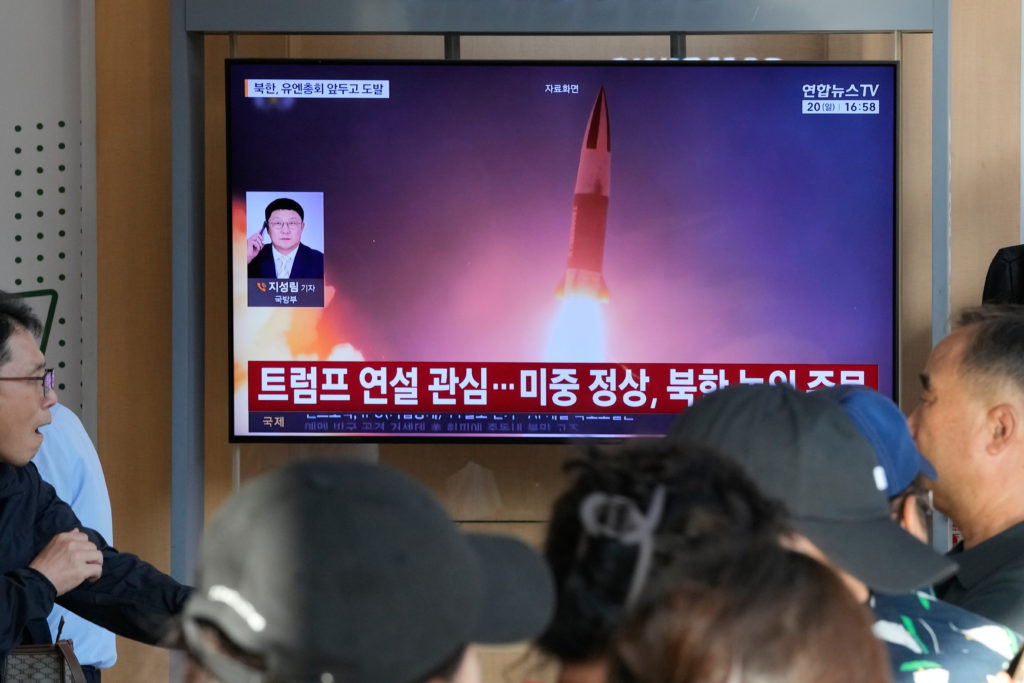
North Korea conducted two separate ballistic missile launches on Sunday, marking the latest escalation in a series of weapons tests that continue despite recent attempts by the United States to lower tensions on the Korean Peninsula. South Korea’s military confirmed that the projectiles were fired from the Wonsan area along the eastern coast, landing in international waters after traveling significant distances. The first missile covered approximately 280 miles, while the second traveled more than 370 miles, with the two events separated by roughly three hours.
The timing of these launches appears directly linked to ongoing diplomatic maneuvering between Washington and Pyongyang. Earlier this month, U.S. President Donald Trump ordered a substantial reduction in the annual Ulchi Freedom Shield joint military exercise with South Korea. This move was widely interpreted as an effort to revive stalled diplomacy with North Korean leader Kim Jong Un, who has long characterized such drills as invasion rehearsals. However, the missile tests suggest that Pyongyang does not view this scaling back of military activity as a sufficient concession.
Kim Yo Jong, the sister of Kim Jong Un and a senior official in the North Korean regime, explicitly rejected the notion that the reduced drill size alters the fundamental nature of U.S. policy. She described the ongoing military presence and exercises as provocative and aggressive, arguing that they serve only to prolong American hegemony in the Asia-Pacific region. Her comments underscore a deep-seated skepticism in Pyongyang regarding U.S. intentions, regardless of tactical adjustments made by the Trump administration.
Beyond the bilateral dynamic between Washington and Pyongyang, North Korea also criticized broader multilateral military activities in the region. Kim Yo Jong condemned the recent Pacific Vanguard exercise, which involved the United States, South Korea, Japan, Australia, New Zealand, and Canada, labeling it a frantic military move designed to sustain regional dominance. This criticism highlights how North Korea perceives its security environment not just through the lens of U.S.-South Korean relations, but as part of a larger network of allied military cooperation that it views as threatening.
The current wave of missile tests follows a pattern of increased military posturing by North Korea throughout 2026. Earlier this month, the regime conducted a joint live-fire drill involving missiles, artillery, and drones. This exercise occurred shortly after the conclusion of a five-day trilateral military drill involving the United States, South Korea, and Japan. Analysts suggest that these simultaneous weapon firings are intended to demonstrate North Korea’s ability to overwhelm air defense systems operated by its adversaries.
Strategic shifts in Kim Jong Un’s approach appear to be driven by confidence in his country’s advancing nuclear arsenal. Since high-stakes diplomacy with Trump collapsed in 2019, the North Korean leader has focused heavily on expanding his nuclear capabilities. Experts note that deepening ties with Russia and China have further emboldened Kim, providing him with greater leverage in potential future negotiations. He has previously indicated a willingness to return to talks if the United States abandons what he describes as a hostile policy and acknowledges North Korea’s status as a nuclear state.
In response to the latest launches, South Korean officials maintained a firm stance while leaving the door open for dialogue. The presidential office urged North Korea to immediately cease ballistic missile tests, citing violations of United Nations Security Council resolutions. Simultaneously, the South Korean military affirmed its readiness to repel any provocations, relying on its solid alliance with the United States. Japan’s Defense Ministry also reported detecting a suspected missile launch but confirmed that no debris landed in its territorial waters.
Despite the heightened rhetoric and military activity, there are indications that diplomatic channels have not been entirely closed. South Korean President Lee Jae Myung, who advocates for improved relations with the North, stated that a resumption of talks between Washington and Pyongyang would be a crucial step toward peace on the peninsula. He noted that he has encouraged Trump to seek dialogue with Kim, suggesting that both Seoul and Washington remain interested in de-escalation, even as Pyongyang continues to test its weapons systems.
The situation remains volatile, with North Korea asserting that its will to defend sovereignty will be expressed through clearer action and intensified nuclear deterrence. The contrast between the U.S. attempt to signal openness through reduced military exercises and North Korea’s response with missile tests illustrates the fragility of current diplomatic efforts. As both sides navigate this complex landscape, the risk of miscalculation persists, underscoring the need for careful management of tensions in one of the world’s most dangerous flashpoints.
Sources behind this briefing
Go to the original reporting
- PBS NewsHour↗North Korea launches 2 ballistic missiles toward the sea and dials up pressure on the U.S.

