The short version
- North Korea launched approximately ten short-range ballistic missiles toward the East Sea after dismissing recent U.S. efforts to ease tensions through scaled-back military exercises.
- Kim Yo Jong stated that reducing the duration and size of drills does not alter their provocative nature, rejecting the premise that this constitutes a gesture of good faith.
- Despite the rejection, Pyongyang maintained that personal relations between Kim Jong Un and Donald Trump remain strong, suggesting talks may resume only if further concessions are made.
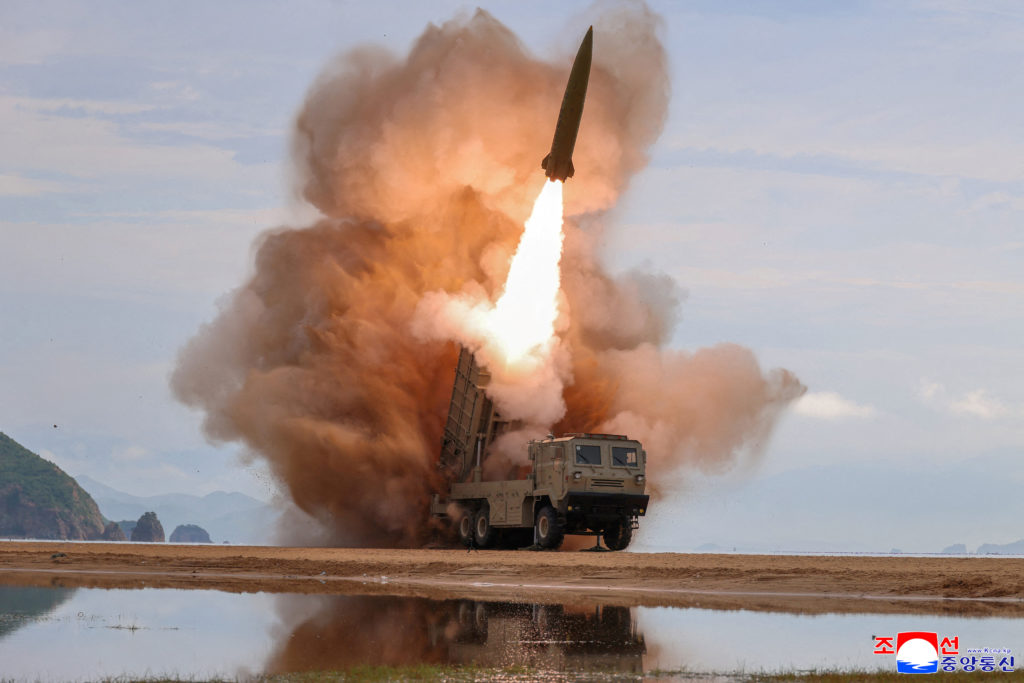
North Korea conducted a significant weapons test on Thursday, launching a barrage of ballistic missiles toward the sea in what appears to be a direct response to recent diplomatic overtures from the United States. South Korea’s military confirmed that approximately ten short-range ballistic missiles were fired from the capital region around 5 p.m. local time. The projectiles traveled roughly 300 kilometers before descending into North Korea’s eastern waters. This launch occurred just one day after Pyongyang publicly dismissed a U.S. decision to reduce the scope of joint military exercises with South Korea, an action intended by Washington as a bid to revive stalled diplomacy.
The missile test underscores the fragility of current relations between Seoul and Pyongyang. In response to the launches, South Korea’s presidential national security council issued a statement urging North Korea to cease its ballistic missile activities immediately. The Joint Chiefs of Staff reported that they have heightened surveillance measures and are closely coordinating intelligence sharing with both the United States and Japan. Japanese officials also confirmed detecting suspected missile launches earlier in the day, highlighting the regional alarm triggered by these actions.
The backdrop for this escalation involves a significant shift in U.S. military posture on the peninsula. President Donald Trump ordered the Pentagon to substantially reduce the Ulchi Freedom Shield exercises just before they were scheduled to begin. These annual drills are among the most prominent joint training operations conducted by U.S. and South Korean forces, designed to enhance their ability to respond to potential aggression from the North. Washington and Seoul maintain that these exercises are purely defensive in nature, while North Korea consistently characterizes them as rehearsals for invasion.
The reduction of the drills was substantial, with the duration cut by approximately half and several field training components canceled entirely. This decision raised concerns among some allies regarding the robustness of the joint defense posture. Trump cited a positive relationship with Kim Jong Un and South Korea’s refusal to support U.S. positions on the war in Iran as factors influencing his decision to scale back the operations. The administration viewed this reduction as a gesture of goodwill intended to create space for renewed dialogue.
However, North Korean leadership rejected this interpretation outright. Kim Yo Jong, the influential sister of leader Kim Jong Un, issued a statement dismissing the scaled-back drills as insufficient. She argued that the provocative and aggressive nature of the exercises remains unchanged regardless of their reduced size or duration. According to her assessment, if the United States believes it can propagate these measures as acts of good faith, it will not receive the desired diplomatic response. This hardline stance indicates that Pyongyang does not view partial reductions in military activity as meaningful concessions.
Despite the sharp rhetoric regarding the drills, Kim Yo Jong notably avoided the fiery language typically associated with North Korean responses to perceived provocations. She emphasized that personal relations between her brother and President Trump remain excellent. This nuanced position suggests that North Korea may be waiting for more significant concessions from Washington before agreeing to return to the negotiating table. The absence of extreme hostility implies that the door to diplomacy is not entirely closed, but the threshold for engagement has been raised.
President Trump maintained an optimistic outlook on future interactions with Kim Jong Un. When asked by reporters whether he expected to meet with the North Korean leader this year, Trump affirmed that such a meeting would occur. He declined to specify whether letters were being exchanged but reiterated that he gets along well with Kim. This personal dynamic continues to play a central role in U.S.-North Korea relations, even as formal diplomatic channels remain dormant.
The current standoff reflects a broader shift in North Korea’s strategic calculus. Previous negotiations between Trump and Kim collapsed in 2019 due to disagreements over the extent of sanctions relief required for denuclearization steps. Since then, Kim has shunned talks with the U.S., focused on modernizing his weapons arsenal, and expanded cooperation with Russia. Experts note that Kim now possesses more leverage than during the initial summits in 2018 and 2019. He appears to be pursuing international recognition as a nuclear state and extensive sanctions relief in exchange for only limited denuclearization measures.
Looking ahead, the immediate future of diplomacy remains uncertain. North Korea has stated it will not place its nuclear program back on the negotiating table under current conditions. The recent missile launch serves as a clear signal that Pyongyang expects more than just reduced military drills to justify re-engagement. As both sides assess their positions, the risk of further provocations persists, particularly if diplomatic efforts fail to yield tangible concessions from Washington.
The situation highlights the complex interplay between military posturing and diplomatic negotiation on the Korean Peninsula. While the U.S. seeks to de-escalate tensions through reduced exercises, North Korea views these actions as insufficient without broader policy changes. The coming weeks will likely reveal whether Trump’s personal rapport with Kim can overcome these structural disagreements or if the region faces continued instability.
Sources behind this briefing
Go to the original reporting
- PBS NewsHour↗North Korea fires barrage of missiles toward the sea after dismissing overture from Trump

