The short version
- North Korea’s representative delivered a speech characterized by relative restraint, omitting specific threats that usually accompany its United Nations appearances.
- The official highlighted the nation's commitment to self-reliance and criticized perceived collusion among regional rivals while asserting the strength of its military deterrent.
- Despite the calm tone of the address, Pyongyang recently conducted missile tests, underscoring the ongoing tension between diplomatic posturing and military activity.
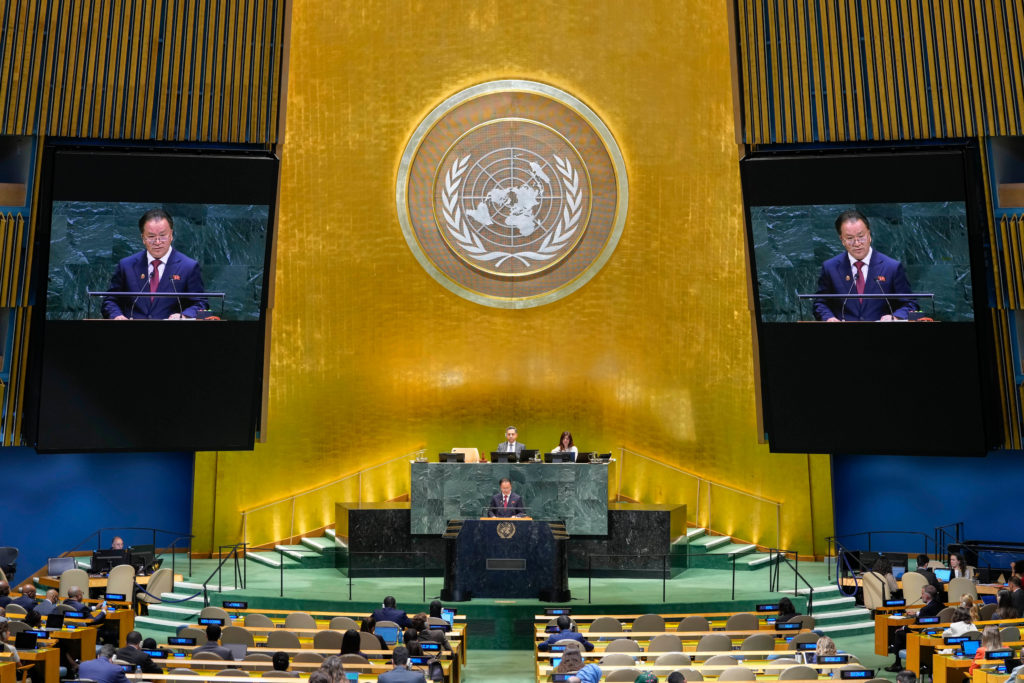
North Korea utilized its annual platform at the United Nations General Assembly to present a narrative of resilience and self-sufficiency, adopting a tone that observers described as notably mild compared to previous years. Vice Foreign Minister Kim Son Gyong, representing the Democratic People's Republic of Korea, addressed world leaders on Monday, warning of a global environment defined by deep mutual distrust and confrontation. Rather than issuing direct threats or outlining specific aggressive actions, the official focused on the nation’s determination to withstand external pressures through internal strength.
The speech emphasized the shift toward multilateralism and multipolarization in international relations, framing these trends as inevitable movements toward justice and equity. Kim argued that the era of unilateral dominance by individual states has ended, suggesting that the current geopolitical landscape requires a more balanced approach. This rhetorical stance aligned with broader diplomatic norms at the United Nations, yet it was distinctly colored by Pyongyang’s insistence on its ability to operate independently if necessary.
Central to the address was the assertion that North Korea possesses a robust war deterrent capable of neutralizing any potential aggression. The official claimed that the security index on the Korean Peninsula remains high due to this defensive capability, which effectively contains hostile intentions from rival nations. This narrative seeks to reassure domestic audiences and international observers alike that the regime is secure and unyielding in the face of external challenges.
Kim criticized what he described as a more offensive military bloc with nuclear elements, accusing Tokyo, Seoul, and Washington of colluding against Pyongyang. He portrayed these actions as destabilizing forces in East Asia, while carefully avoiding any admission of North Korea’s own role in regional tensions. This selective framing allows the regime to position itself as a victim of external aggression rather than a contributor to instability.
The absence of specific threats or calls for immediate action marked a significant departure from the overheated rhetoric often associated with North Korean diplomatic engagements. Analysts noted that the speech felt pro forma, lacking the dramatic flourishes or explicit warnings that typically prompt heightened alertness among neighboring countries. This measured approach may reflect a strategic calculation to maintain diplomatic engagement while preserving the regime’s hardline stance.
Despite the calm delivery of the speech, recent military activities by North Korea suggest a complex interplay between diplomatic messaging and actual capabilities. Just two days prior to the United Nations meeting, the country launched two short-range ballistic missiles toward the sea. These tests followed earlier threats to enhance nuclear deterrent capabilities, indicating that while the verbal tone was subdued, the underlying military posture remains assertive.
Kim Son Gyong’s role as a mid-level official in Kim Jong Un’s third-generation government placed him among the final speakers of the General Debate. His position allowed for a representation of state policy without the direct authority of the supreme leader, potentially contributing to the more restrained nature of the address. The speech covered a range of national priorities, with a consistent emphasis on defense and sovereignty.
The Korean Peninsula remains technically at war following the armistice that ended the conflict between North and South Korea from 1950 to 1953. The heavily fortified Demilitarized Zone continues to symbolize the division, while security alliances in East Asia remain tightly aligned against Pyongyang. This historical context underscores the significance of any shift in diplomatic tone, even if temporary or superficial.
The broader implications of this address lie in its potential to signal a strategic pause or recalibration in North Korea’s foreign policy approach. By avoiding direct provocations while reaffirming military strength, the regime may be seeking to manage international perceptions without compromising its core objectives. The coming months will reveal whether this measured rhetoric translates into tangible diplomatic progress or remains a tactical maneuver.
As the United Nations General Assembly concludes its annual session, the contrast between North Korea’s verbal restraint and its recent missile tests highlights the enduring complexity of regional security dynamics. The international community continues to monitor these developments closely, aware that diplomatic language may not always reflect underlying intentions. The situation remains fluid, with significant stakes for stability in East Asia.
Sources behind this briefing
Go to the original reporting
- PBS NewsHour↗In a relatively mild speech, North Korea uses UN platform to lament 'mutual distrust' and tension