The short version
- North Korea has significantly expanded minefields and physical barriers in the demilitarized zone since April 2024, signaling a permanent separation from the South.
- Disagreements over the precise location of the military demarcation line have led to increased border crossings by North Korean troops and recent injuries to South Korean soldiers.
- Seoul’s diplomatic efforts to restore communication channels and clarify border boundaries have been ignored by Pyongyang, which now views the South as a hostile foreign state.
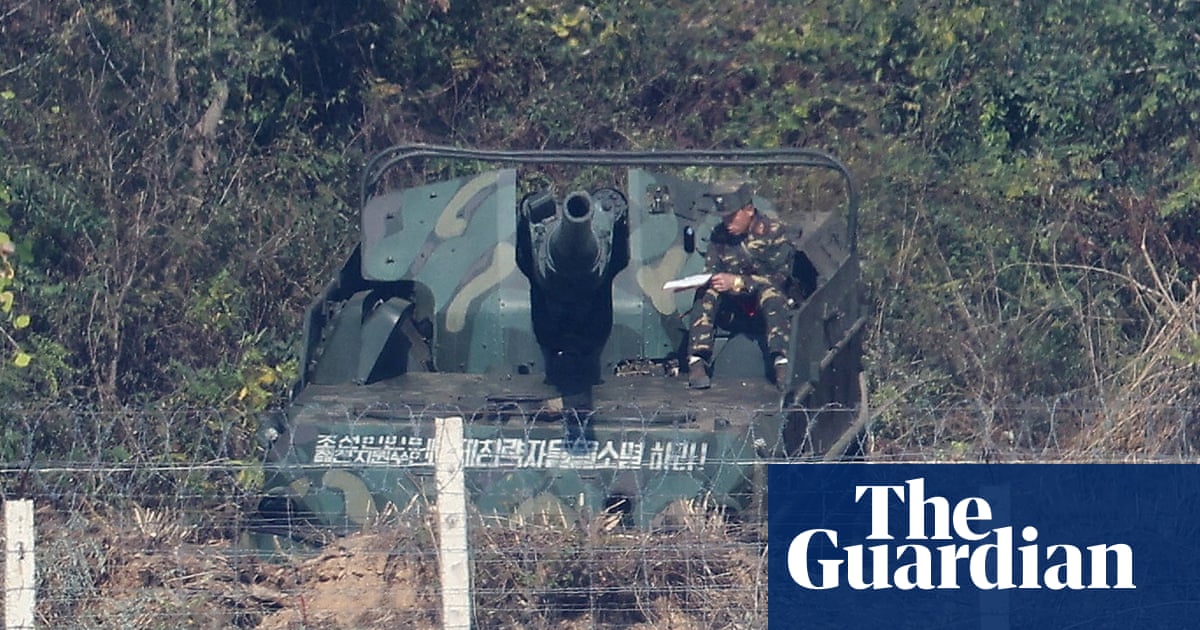
The security landscape along the Korean Peninsula is undergoing a fundamental transformation as North Korea accelerates the militarization of its border with the South. What was once a buffer zone defined by the 1953 armistice is being converted into a hardened, permanent frontier. This shift marks a decisive departure from previous diplomatic overtures and reflects Pyongyang’s broader strategic reorientation. The construction efforts, which have intensified since April 2024, involve laying extensive minefields and erecting physical barriers that fundamentally alter the nature of the demilitarized zone.
The scale of this fortification is substantial. Intelligence assessments indicate that North Korea has deployed approximately 960,000 landmines within the zone since early 2024. This figure represents nearly half of all mines currently estimated to be in an area already known as one of the most heavily mined regions on Earth. In addition to these explosive hazards, Pyongyang is constructing a continuous physical barrier along its side of the border. This infrastructure includes wire fencing, tactical roads for troop movement, and anti-tank obstacles installed on ground that has been stripped of vegetation to eliminate cover.
South Korean military officials estimate that construction progress stands between 40% and 60%, with ground-clearing operations nearing completion. Projections suggest the project could be fully realized by the second half of 2028. This timeline underscores the long-term commitment to sealing the border. The physical changes are accompanied by a rhetorical hardening from North Korean leadership. Kim Yo-jong, sister of leader Kim Jong-un, has issued numerous statements in recent weeks criticizing Seoul and threatening the resumption of loudspeaker propaganda broadcasts, signaling a return to aggressive psychological warfare tactics.
The driving force behind this construction is a profound ideological shift in Pyongyang. As recently as 2018, inter-Korean relations featured high-level summits and joint athletic displays at the Winter Olympics. However, in December 2023, Kim Jong-un redefined South Korea not as a compatriot society but as a separate, hostile state. Analysts in Seoul interpret this U-turn as removing the internal contradiction of threatening nuclear war against people previously considered fellow citizens. With engagement collapsed and Moscow emerging as a key patron, North Korea is now pressing for recognition as a distinct nuclear state, using border fortification to cement that separation.
The practical implications of these changes are immediate and dangerous. The new infrastructure aims to prevent defections, slow potential South Korean advances in the event of conflict, and establish a functional international border. However, experts warn that the installation of new artillery and missile units near the frontier may increase the likelihood of accidental clashes escalating into broader conflict. Kim Yo-jong has claimed the work will eliminate border dangers, but analysts argue the opposite is true, citing the heightened sensitivity and militarization of the zone.
A critical complicating factor is the ambiguity surrounding the exact location of the military demarcation line. The original armistice maps were drawn at a scale where a millimeter represented 50 meters of ground, leading to significant discrepancies in modern interpretations. While 1,292 markers were originally planted to fix the line, only about 200 remain identifiable today. Each side now reconstructs the border using different methodologies. South Korea relies on mapping aligned with US intelligence agencies, while North Korea appears to connect remaining visible markers. These differing approaches result in disagreements at approximately 60% of compared points, with variations reaching tens of meters in some locations.
These mapping disputes have tangible consequences on the ground. North Korean troops reportedly crossed the border roughly 50 times during August and September of this year, a sharp increase from just 17 instances in 2025. On September 21, three South Korean soldiers were injured by a landmine blast while clearing a path inside the DMZ, with one soldier losing a foot. Seoul concluded the mine was placed south of the border and demanded an apology, but Pyongyang denied responsibility, dismissing the incident as a staged provocation. Such incidents highlight the volatility created by unclear boundaries and increased military activity.
Diplomatic efforts to de-escalate the situation have thus far failed. South Korea has proposed talks to jointly confirm the location of the demarcation line, restore severed military communication channels, and agree on measures to avoid accidental clashes. This is the second such offer in a year, following an ignored proposal earlier in 2025. Pyongyang’s refusal to engage leaves Seoul with limited options for crisis management. As construction continues and rhetoric hardens, the risk of miscalculation grows, turning the DMZ from a symbol of frozen conflict into an active zone of contention.
Sources behind this briefing
Go to the original reporting
- The Guardian US↗Why is North Korea fortifying its border with South Korea?


