The short version
- A powerful nor'easter has caused significant coastal flooding and power outages affecting more than 130,000 people across the Northeast and Mid-Atlantic regions.
- Emergency response centers are operating at an enhanced posture while forecasters warn that dangerous surf and high tides will persist through Sunday evening.
- The storm system has disrupted travel extensively, including hundreds of flight cancellations and highway closures, while also resulting in at least one fatality.
A potent nor'easter continued to batter the Northeastern United States on Sunday, bringing heavy rainfall, strong winds, and dangerous surf conditions that have left tens of thousands of residents without electricity. The slow-moving weather system remained positioned just south of Long Island and east of northern New Jersey in the early hours of the day, with meteorologists predicting it would linger in the area for approximately another twenty-four hours. This persistence has exacerbated flooding risks along coastal communities from New Jersey through New England.
The immediate impact on infrastructure has been severe. According to data from PowerOutage.us, more than 130,000 customers across the Northeast and Mid-Atlantic were without power as of Sunday morning. The most widespread disruptions occurred along the New Jersey shore, on Long Island in New York, and in coastal counties throughout Connecticut. Toppled trees have damaged homes and vehicles, blocked major thoroughfares, and severed numerous utility lines, complicating restoration efforts for local providers.
National Weather Service officials indicated that while the storm was gradually weakening, the threat of tidal flooding remained significant. Bob Oravec, a lead forecaster based in College Park, Maryland, noted that the most impactful elements of the system would likely be the high winds and the inundation caused by high tides. These tidal cycles were expected to peak on Sunday morning and again in the evening, posing continued risks to vulnerable shorelines even as the intensity of the wind and rain diminished.
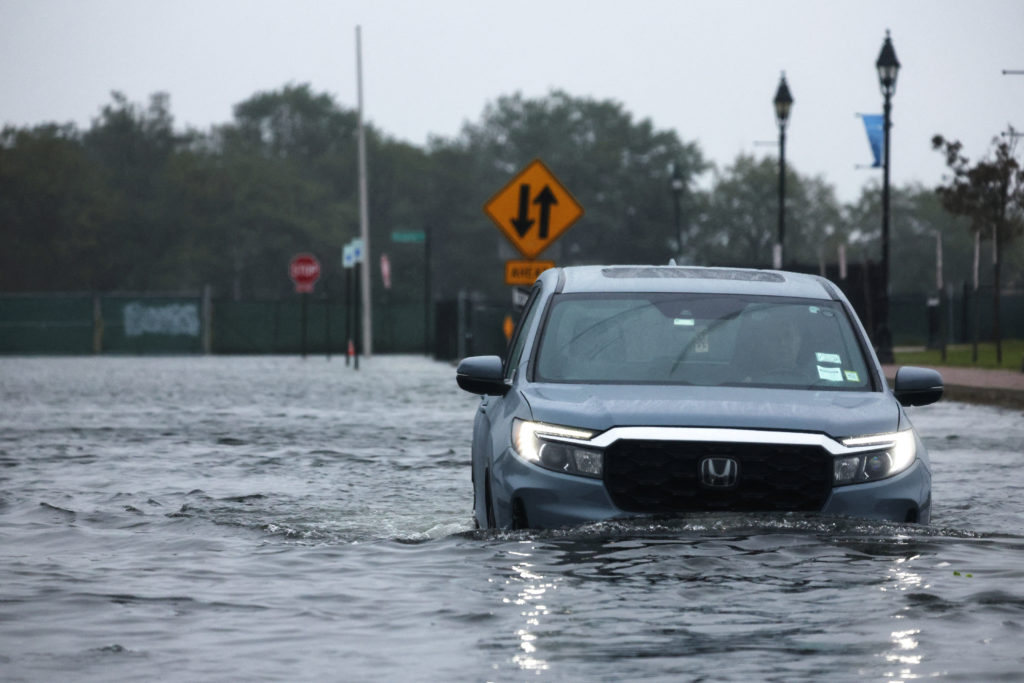
The storm has already claimed at least one life. A New York City Housing Authority worker died on Saturday after a tree fell during the severe weather conditions. In other areas, emergency crews responded to numerous incidents involving trapped vehicles and rising waters. In Sea Bright, New Jersey, rescuers saved a woman and her dog after their car became stuck in floodwaters. Meanwhile, in Surf City, water levels rose inside a marina, leading to reports of boats and personal watercraft being blown from their lifts despite workers moving equipment to higher ground.
Federal Emergency Management Agency officials stated that response coordination centers in the impacted regions were operating at an enhanced posture. Teams were placed on standby in New England to assist with potential widespread outages or other emergencies. This elevated readiness reflects concerns about the storm's duration and its ability to overwhelm local resources, particularly given the combination of wind damage and water intrusion.
Travel disruptions have been extensive across the region. Hundreds of flights were canceled at Boston Logan International Airport, causing significant delays for passengers. On the ground, flooding cut off highway access to Hatteras Island in North Carolina, stranding visitors and forcing last-minute changes to local events. One couple was forced to scramble to relocate their wedding after most of their approximately forty-five guests were unable to reach the island due to the closed roads.
The current weather event has drawn comparisons to Superstorm Sandy, which caused over $60 billion in damage across the eastern United States in 2012. However, officials emphasized that the impact of this nor'easter is nowhere near that scale. Instead, it may serve as a precursor to several similar storms along the East Coast this fall. Meteorologists attribute this pattern to El Niño climate conditions, which are disrupting typical weather patterns and increasing the likelihood of active storm seasons in the region.
As the storm system continues to loop around the area, residents in northern New Jersey, New York City, Long Island, and southern New England are advised to remain cautious. The worst of the remaining rainfall is expected to hit these areas on Sunday. While the immediate danger may lessen as the storm moves away, the lingering threat of high tides means that coastal flooding could persist into the evening hours, requiring continued vigilance from both emergency services and the public.
Sources behind this briefing
Go to the original reporting
- PBS NewsHour↗Powerful nor'easter floods Northeast, leaves over 130,000 without power as high tides threaten coast

