The short version
- Christopher Nolan's 'The Odyssey' is releasing across most of China's IMAX screens amid a broader decline in Hollywood's market share.
- Industry experts offer conflicting predictions on box office performance, citing both the director's strong brand loyalty and the film's complex narrative barriers.
- Chinese cinema operators are increasingly reliant on major international releases to offset financial pressures caused by economic slowdowns and theater closures.
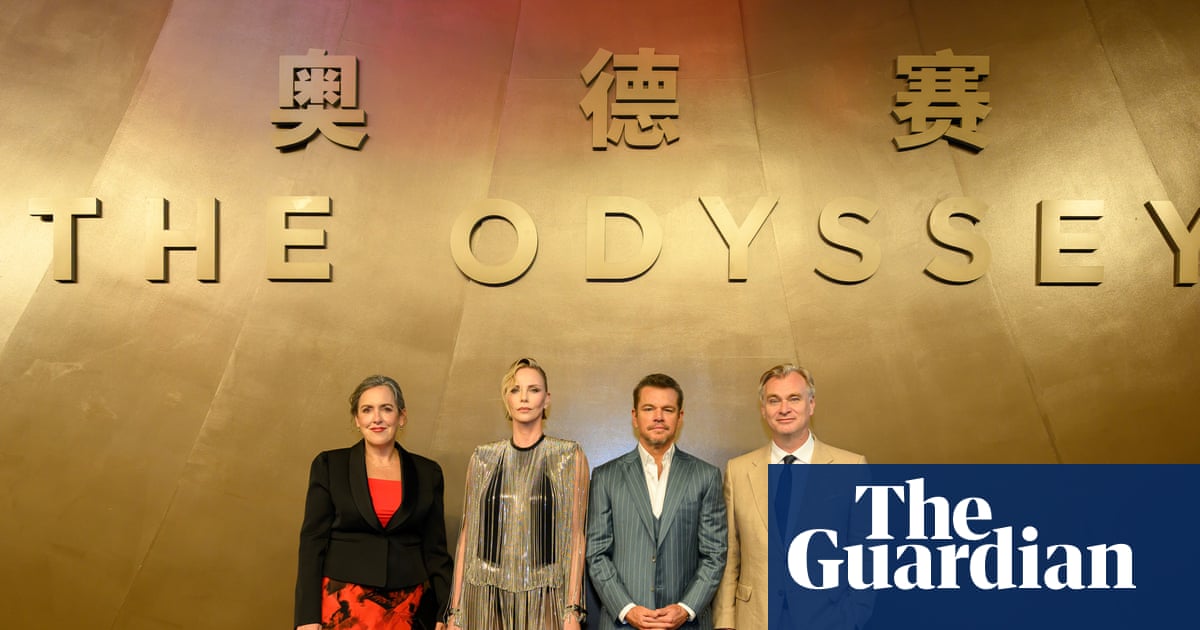
Christopher Nolan’s latest epic, The Odyssey, is set for release across China this Friday, marking a significant test for Hollywood’s enduring appeal in a market that has increasingly turned toward domestic productions. The film will be available on approximately 800 IMAX screens throughout the country, following a high-profile premiere in Beijing where Nolan appeared alongside stars Matt Damon and Charlize Theron at the China National Film Museum. Early indicators suggest strong interest, with weekend sneak previews selling out and the title topping anticipation rankings on Maoyan, the nation’s largest ticketing platform.
This launch occurs during a challenging period for Western films in China. For years, Hollywood viewed the Chinese market as a critical engine for global box office revenue, but rising geopolitical tensions and Beijing’s efforts to promote local cinema have significantly reduced the number of approved foreign titles. In recent years, domestic films have captured roughly 80 percent of annual box office revenue, reflecting a shift in audience preference toward homegrown content. Although American movies have returned to Chinese theaters as part of broader efforts to stimulate consumer spending, they have not regained their pre-pandemic levels of approval or market penetration.
Despite the general downturn for Western productions, Nolan occupies a unique position among Chinese viewers. Dr. How Wee Ng, a senior lecturer at the University of Westminster who studies cinema in the Sinosphere, notes that many educated, middle-class audiences treat Nolan as a distinct brand rather than just another Hollywood director. These viewers are increasingly demanding more sophisticated cinematic experiences beyond standard action thrillers. Nolan’s previous works, including Interstellar and Inception, have maintained enduring popularity, while Oppenheimer grossed approximately 450 million yuan ($66 million) in 2023, ranking among the highest-grossing films of that year in China.
However, predictions for The Odyssey vary widely among industry observers. Liu Nandou, a Beijing-based film critic, anticipates a modest financial return, estimating total earnings between 300 million and 800 million yuan ($44 million to $118 million). Liu argues that Nolan’s films have a built-in ceiling in China because the threshold for understanding The Odyssey is high, making it less accessible to the broad audience that typically drives blockbuster success. The complexity of adapting Homer’s ancient poem may limit its appeal compared to more straightforward narrative structures.
Conversely, independent critic Yu Yaqin holds a more optimistic view, suggesting that many viewers will attend specifically for Nolan’s direction, regardless of their familiarity with the source material. She points out that themes of returning home and family reunion resonate deeply with values rooted in East Asian cultures. Additionally, a recent viral interview between Nolan and Zhong Shu, a Chinese doctoral student and podcaster, has generated significant buzz. The conversation, which garnered tens of millions of views, impressed social media users with its depth and highlighted cultural parallels that may enhance the film’s reception.
One such parallel involves the Greek concept of Xenia, or hospitality, which Nolan described as an ancient law governing how strangers should be treated. Dr. Ng notes that this idea shares similarities with the Confucian concept of Li, which emphasizes proper conduct, courtesy, and respect for others. This cultural resonance may help bridge the gap between Western storytelling traditions and Chinese audience expectations, potentially boosting interest in a film that might otherwise seem distant or inaccessible.
The film’s arrival also intersects with significant financial pressures facing China’s cinema industry. A sluggish economy and a series of underperforming domestic blockbusters have left many theaters struggling to remain solvent. According to data from Top Data, a Chinese film analytics firm, 806 cinemas closed in 2024, and another 740 suspended operations in 2025. In response, Chinese authorities issued a notice in July encouraging theater operators to diversify their revenue streams by incorporating restaurants and exhibition spaces into their venues.
Despite these challenges, American films remain commercially vital for many exhibitors. Yu Yaqin emphasizes that cinemas under mounting financial pressure cannot afford to reject major Hollywood releases capable of driving ticket sales. As the industry navigates a difficult economic landscape, The Odyssey represents both an opportunity for theaters to attract crowds and a litmus test for whether Western blockbusters can still compete in a market increasingly dominated by local content. The outcome may influence future decisions regarding foreign film approvals and distribution strategies in China.
As the release date approaches, attention will focus on whether Nolan’s reputation alone is sufficient to overcome the structural headwinds facing Hollywood in China. While early enthusiasm suggests a strong opening, long-term success will depend on how well the film’s complex narrative translates to a broad audience base. The results could provide valuable insights into the evolving dynamics of global cinema and the shifting preferences of Chinese moviegoers.
Ultimately, The Odyssey’s performance in China will be watched closely by industry stakeholders on both sides of the Pacific. It serves as a case study in how cultural nuances, economic conditions, and directorial prestige intersect in an increasingly fragmented global market. Whether it achieves blockbuster status or falls short of expectations, the film’s reception will offer critical data points for understanding the future of international co-productions and cross-cultural storytelling.
Sources behind this briefing
Go to the original reporting
- The Guardian US↗With Hollywood struggling in China, can the Odyssey draw a crowd?

