The short version
- Nikon disqualified Ning Xu from Tsinghua University after an investigation found his winning video violated rules regarding generative artificial intelligence.
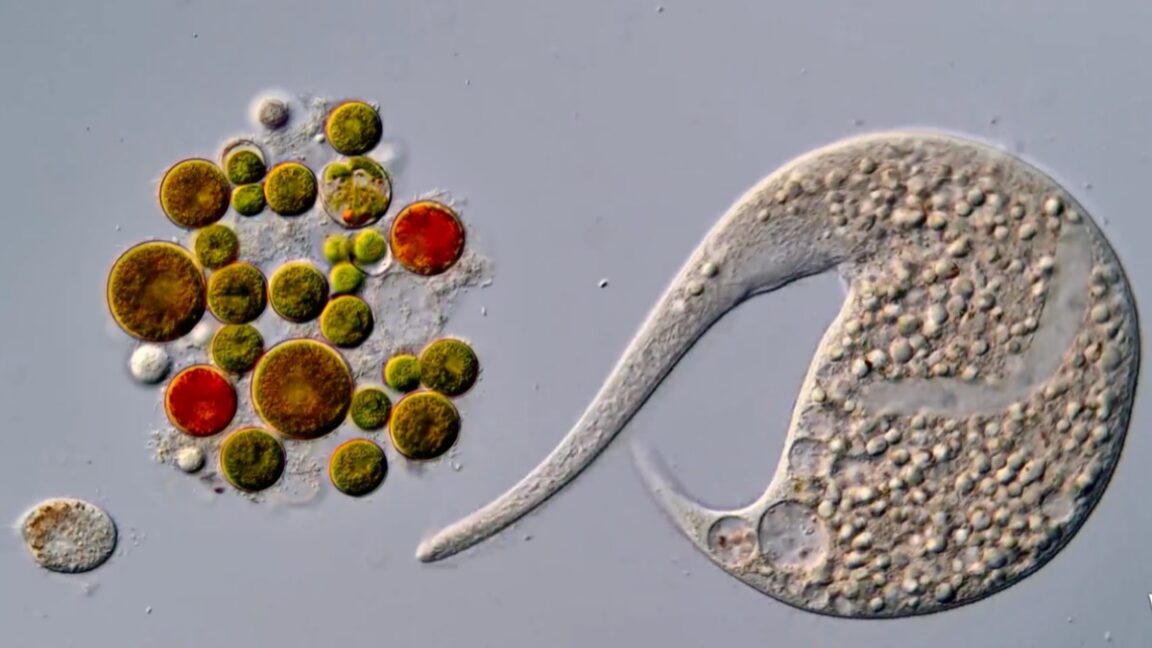
- Nguyen Nam Nhat of Vietnam was named the new winner for a submission featuring a roundworm and a single-celled organism, while other finalists moved up in rank.
- The controversy highlights growing challenges in scientific imaging as organizations struggle to define acceptable boundaries for AI-assisted visualization techniques.
Nikon has officially disqualified the initial winner of its Small World in Motion video competition, citing violations related to the use of generative artificial intelligence. The decision removes Ning Xu, a researcher from Tsinghua University in China, from the top spot after an internal investigation concluded that his entry did not adhere to the contest’s specific guidelines on digital manipulation and AI generation. This reversal marks a significant moment for scientific imaging competitions, which are increasingly grappling with the rapid integration of machine learning tools into research workflows.
Xu’s original submission captured cilia beating within the airways of a child suffering from a rare respiratory disorder. The video was initially celebrated for its artistic merit and scientific clarity. However, doubts emerged shortly after the announcement when other researchers pointed out structural abnormalities in the cellular features. Critics noted that certain elements appeared and disappeared in ways inconsistent with known biological behavior, raising questions about the authenticity of the footage.
Further scrutiny revealed what some observers identified as AI watermarks embedded within the source files. These technical anomalies prompted Nikon to launch a formal review. During the process, Xu stated that he employed artificial intelligence tools to distinguish and visualize features in reconstructed grayscale images. He explicitly denied using AI to generate the experimental movie itself, or to create the cilia and their motion from scratch. Despite these clarifications, Nikon determined that the methods used fell outside the permitted scope of the competition rules.
The organization emphasized that the disqualification is strictly a matter of eligibility under the current contest framework. Nikon stated that the decision should not be interpreted as a judgment on Xu’s professional reputation, scientific contributions, or intent. The company acknowledged that advances in imaging and artificial intelligence are evolving quickly, creating new challenges for institutions across various fields. This incident has underscored the need to revisit evaluation procedures to ensure fairness and integrity in future competitions.
With Xu removed from contention, Nguyen Nam Nhat of Vietnam has been named the new winner. His winning video features a tiny roundworm interacting with a single-celled organism known as Dileptus. The submission was praised for its clarity and adherence to the competition’s standards regarding unaltered microscopic footage. This shift in leadership highlights the competitive nature of the field, where precision and compliance are as critical as visual impact.
Other finalists also benefited from the re-ranking. Benedikt Pleyer from Bavaria, Germany, moved into second place with a video depicting jellyfish larvae suspended in water droplets. Andrew Moore from the Howard Hughes Medical Institute in the United States secured third place for his footage of synchronized cell division in neighboring cells. Patrick Hickey from Hypha Research Ltd. in Edinburgh, Scotland, placed fourth with a study of mitochondria and chloroplast dynamics in Turtle Vine leaf cells. Igor Adameyko took fifth place with a video of a colorful sea slug species called Cyerce kikutarobabai.
The Nikon Small World in Motion competition was established in 2011 as a spinoff of the company’s long-running Small World Photomicrography Competition, which began in 1974. Both contests aim to showcase the beauty and complexity of subjects viewed through light microscopes. The video category specifically leverages modern technological advances that allow users to create movies or time-lapse images, capturing dynamic biological processes that still photography cannot fully convey.
This controversy reflects a broader tension in scientific communication between innovation and tradition. As AI tools become more sophisticated, they offer powerful capabilities for enhancing image clarity and revealing hidden details. However, they also introduce risks of over-manipulation or fabrication, which can undermine public trust in scientific imagery. Nikon’s response signals a commitment to maintaining high standards while acknowledging the need for updated guidelines that address these emerging technologies.
Looking ahead, Nikon has indicated that it will review its rules and evaluation procedures to better accommodate or restrict AI usage in future entries. This proactive approach aims to balance the encouragement of technological innovation with the preservation of scientific integrity. The outcome of this review could set a precedent for other organizations hosting similar competitions, influencing how the scientific community defines acceptable practices in digital imaging.
For now, the focus remains on the revised winners and their contributions to the field. Their work demonstrates the enduring value of meticulous observation and technical skill in microscopy. As the debate over AI in science continues, incidents like this serve as important case studies for policymakers, educators, and researchers navigating the complex landscape of modern scientific visualization.
Sources behind this briefing
Go to the original reporting
- Ars Technica↗AI disqualification yields new Nikon Small World in Motion winner