The short version
- Nigerian security forces rescued 308 individuals held captive in Niger and Kwara states, described by the presidency as the largest single-day rescue operation to date.
- The freed group includes 163 survivors of the February Woro village attack where dozens were killed for refusing to renounce the Nigerian government.
- Officials attribute the success to improved coordination among military, police, and intelligence units, though it remains unclear if any suspects were detained during the raid.
Nigerian security forces have successfully rescued more than 300 individuals who had been abducted in separate incidents across Niger and Kwara states. The presidency announced that the operation, conducted at Kainji Lake National Park in Niger State, represents the largest single-day rescue effort undertaken by joint security agencies in the country's history. This development marks a notable moment in the government’s ongoing struggle against kidnapping and jihadist violence, which has increasingly affected regions beyond traditional conflict zones.
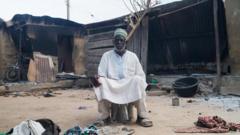
The rescued group comprises 163 people taken during a brutal attack on the Woro community in Kwara State this past February, as well as at least 145 others abducted in Niger State. The Woro incident drew international attention after reports emerged that dozens of residents were killed for refusing to abandon their allegiance to the Nigerian government and its constitution. Amnesty International documented severe brutality at the scene, noting that many victims were found with bound limbs, while others had been shot or had their throats slit.
President Bola Ahmed Tinubu welcomed the outcome through his spokesman, Bayo Onanuga, who emphasized the significance of the operation as a demonstration of enhanced cooperation among various security branches. The mission involved collaboration between the military, police forces, intelligence units, and the National Counter-Terrorism Centre. This multi-agency approach appears to be a strategic shift aimed at addressing the fragmented response that has previously hampered efforts to combat insecurity in north-central and southern Nigeria.
Despite the scale of the rescue, details regarding the apprehension of perpetrators remain sparse. It is not clear whether any suspects were detained during the operation at Kainji Lake. The absence of confirmed arrests leaves open questions about the current status of the groups responsible for the abductions. While the Nigerian government has blamed Boko Haram for the Woro attack, the jihadist organization has not issued any public statement claiming responsibility or commenting on the recent rescue.
The freed individuals were initially transported to a military facility where they received necessary medical care before being reunited with their families. This logistical step highlights the physical toll of captivity and the immediate needs of survivors following such prolonged detention. The successful extraction of these victims follows another significant event earlier this year, when 44 pupils and teachers were released from captivity in Oyo State after more than 50 days, following a month-long security operation.
The pattern of abductions across different regions has raised fresh concerns among analysts and officials about the spread of insecurity. Attacks are no longer confined to the northeastern strongholds of jihadist groups but are appearing in parts of north-central and southern Nigeria. This geographic expansion suggests that criminal networks and militant factions may be coordinating or operating with greater reach than previously observed, challenging the state's ability to secure all areas effectively.
The motivations behind the Woro attack appear rooted in an attempt to impose a parallel system of rule. Armed jihadists reportedly demanded that residents renounce the Nigerian government and adhere to their teachings instead. When the community refused, the attackers carried out a massacre, signaling a hardline approach to establishing control. This tactic underscores the ideological dimension of some attacks, distinguishing them from purely criminal kidnappings for ransom.
Looking ahead, the success of this operation may influence future security strategies in Nigeria. If the improved coordination among agencies proves sustainable, it could lead to more frequent and effective counter-terrorism operations. However, the lack of detainee information and the continued threat of abduction mean that vigilance remains critical. The government faces the ongoing challenge of balancing immediate rescue efforts with long-term stability in regions vulnerable to both criminal and ideological violence.
International observers will likely monitor whether this rescue translates into broader improvements in security governance. The involvement of multiple agencies suggests a recognition that siloed operations are insufficient against organized threats. As Nigeria continues to grapple with these complex security challenges, the fate of remaining captives and the prevention of future attacks will depend on the durability of these new collaborative frameworks.
Sources behind this briefing
Go to the original reporting
- BBC World↗Nigerian security forces rescue more than 300 abductees

