The short version
- Junior soldiers will see their monthly wages rise from $73 to $132, marking an 80% increase and a second pay adjustment within thirty days.
- The financial boost accompanies a major military expansion that includes recruiting 28,000 new troops and establishing four additional army divisions nationwide.
- Defense experts warn that the surge in annual wage costs may create long-term fiscal challenges for future administrations while highlighting ongoing equipment shortages.
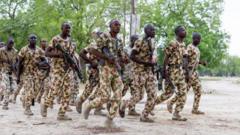
Nigerian President Bola Tinubu has authorized a substantial pay raise for the country's lowest-ranking military personnel, increasing their monthly compensation by 80 percent. This adjustment brings the wage for privates to $132 per month, effective in September. The move follows a previous increase issued just last month by the defense minister, which had raised salaries from $36 to $73. Tinubu framed the rapid succession of financial boosts as a gesture of deep appreciation for troops confronting severe security threats across the nation.
The decision arrives against a backdrop of intensifying violence that has become a central political issue ahead of the 2027 general elections. Nigerian forces are engaged in multiple conflicts simultaneously, battling Islamist militants in the northeast, separatist movements in the southeast, and criminal gangs known locally as bandits who operate primarily in the northwest and north-central regions. These groups have gained notoriety for kidnapping civilians for ransom, looting communities, and destabilizing large swathes of the country.
Beyond the salary adjustments, the administration is pursuing a significant structural expansion of the armed forces. Tinubu recently ordered the recruitment of 28,000 additional soldiers and the creation of four new army divisions. These reforms aim to improve coordination, enhance intelligence sharing, and reduce response times to attacks. The reorganization will result in twelve divisions spread across the country, a shift designed to address the geographic dispersion of security challenges that have plagued successive governments.
The financial implications of these measures are considerable. The military's annual wage bill is projected to jump from $484 million to $678 million. While the immediate goal is to reward service and improve retention, the long-term sustainability of such expenditures remains a point of contention. Bashir Galma, a retired major general and military expert, noted that while the pay raises address a long-standing demand, future administrations may struggle to maintain this level of funding given the sharp increase in costs.
Critics and analysts emphasize that financial compensation alone does not resolve the broader operational deficiencies within the armed forces. Galma argued that other security agencies involved in national defense should receive similar pay reviews, noting that maintaining safety is a collective effort. He also highlighted critical gaps in welfare provisions, pointing out that troops still lack adequate uniforms, boots, and, most importantly, modern rifles capable of effectively countering well-armed insurgents.
The security landscape in Nigeria remains fragmented and dangerous. In the northeast, groups affiliated with Boko Haram and the Islamic State West Africa Province continue to launch attacks despite years of military deployment. Meanwhile, farmer-herder clashes over land resources persist in central areas, adding another layer of complexity to the government's counterinsurgency strategy. The president has stated that his administration will prioritize troop welfare and modernization, including the acquisition of necessary weapons and technology.
Reaction from serving personnel has been cautious. Some soldiers have indicated they will withhold judgment on the effectiveness of the pay raises until the funds actually appear in their bank accounts. This skepticism reflects broader concerns about bureaucratic delays and implementation gaps that often accompany government announcements. The disconnect between policy declarations and ground-level reality remains a significant hurdle for the administration.
As Nigeria approaches the 2027 elections, the ability to curb violence will likely determine political outcomes. The current strategy relies heavily on increasing troop numbers and financial incentives to bolster morale. However, without addressing equipment shortages and ensuring equitable support across all security agencies, experts warn that the root causes of insecurity may remain unresolved. The coming months will test whether these reforms can translate into tangible improvements in public safety.
The government's emphasis on appreciation and support for military personnel underscores the high stakes involved in stabilizing the region. Tinubu has urged servicemen to view the salary hikes as a sign of national gratitude, asserting that together they can overcome enemies intent on destroying the nation's social fabric. Whether this renewed focus on welfare and expansion will yield lasting peace or merely sustain a costly cycle of conflict remains to be seen.
Sources behind this briefing
Go to the original reporting
- BBC World↗Nigeria's president orders a 80% salary increase for junior soldiers

