The short version
- Nigeria has no active Ebola cases after evacuating its first confirmed patient, a Swiss national, to specialized care in Switzerland.
- Health officials are monitoring fifty-two contacts in Nigeria while Kenya releases dozens of quarantined individuals following exposure assessments.
- The broader outbreak in the Democratic Republic of Congo continues to accelerate, raising concerns about the rapid spread of the Bundibugyo virus variant.
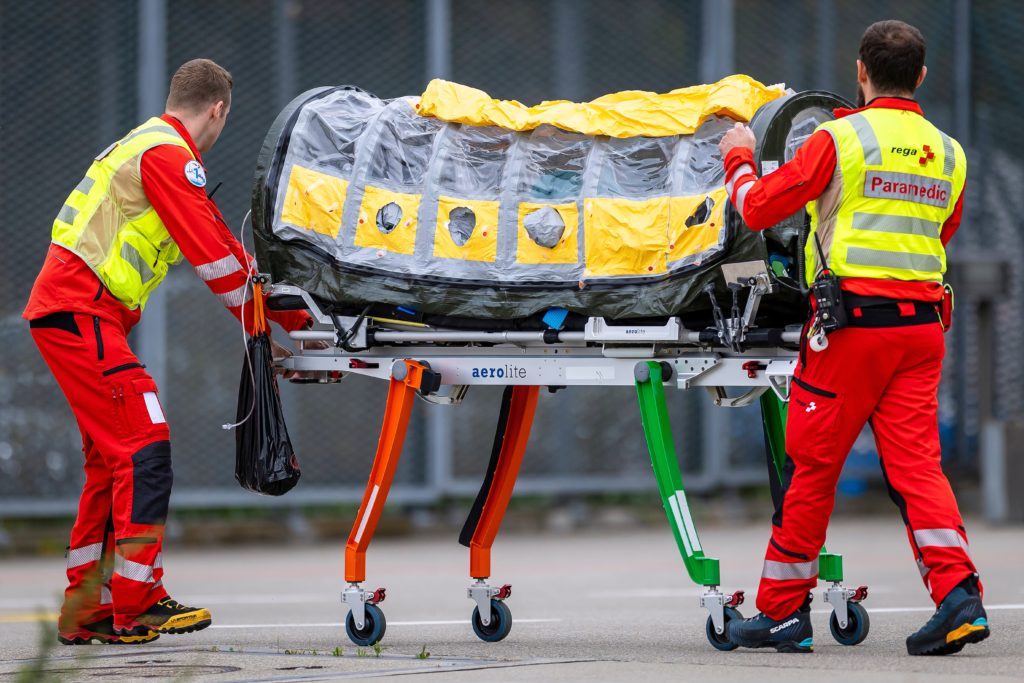
Nigerian health authorities have confirmed that the country currently has no active Ebola cases following the medical evacuation of its first identified patient during the current outbreak. The patient, a Swiss woman who had been receiving treatment in Abuja, was transported to Switzerland on Monday alongside her husband, a diplomat stationed in Nigeria. This development marks a significant shift in the local containment strategy, allowing officials to focus on monitoring contacts rather than managing active clinical cases within Nigerian facilities.
Nigerian Health Minister Muhammad Pate authorized the transfer after determining that the woman’s condition had stabilized significantly. Although she remains infectious, her status has improved enough for her to be conscious and communicative. The decision to evacuate was coordinated with international health partners, including the World Health Organization, which noted that Nigerian medical teams had successfully guided the patient through the most acute phase of the illness. The move reflects a collaborative approach to managing cross-border health threats while respecting the citizenship and care preferences of the affected individuals.
Upon arrival in Switzerland, the couple was separated for specialized care and isolation protocols. The woman is being treated at Geneva University Hospital, while her husband, who has shown no symptoms, is under observation at Zurich University Hospital. Swiss public health officials emphasized that both institutions are fully equipped to handle high-containment cases and assured the public that there is no risk of community transmission. The strict protocols in place underscore the continued danger posed by the virus, even as the patient’s immediate prognosis improves.
In Nigeria, health workers are continuing to monitor fifty-two individuals who had contact with the patient before her evacuation. These contacts remain under surveillance to ensure that any potential secondary cases are identified and isolated immediately. Minister Pate urged the public to maintain vigilance, noting that containment measures are still active despite the absence of confirmed cases. The focus has shifted from clinical treatment to epidemiological tracking, a critical phase in preventing resurgence.
The origin of the infection remains under investigation, though officials believe the woman contracted the virus while traveling through Uganda with her husband. She tested positive after returning to Abuja from Uganda, and authorities have not yet established the precise point of exposure. The Africa Centers for Disease Control and Prevention noted that both this patient and a separate case in Kenya had traveled through Entebbe International Airport in Uganda on October 3. This connection highlights the role of regional travel hubs in facilitating the spread of infectious diseases across borders.
Uganda had previously reported Ebola cases but later declared itself free of the virus, raising questions about how the infection persisted or re-emerged in travelers passing through its airspace. The uncertainty surrounding the transmission chain complicates efforts to implement targeted preventive measures. Health experts are closely examining travel patterns and airport protocols to identify potential gaps in screening and containment procedures that may have allowed the virus to move undetected.
Meanwhile, Kenya is managing its own response to the outbreak, having recorded nine cases, including two deaths, since confirming its first case earlier this month. On Monday, Kenyan health officials released twenty people from quarantine after they met strict release criteria, including a twenty-one-day period without symptoms following their last exposure. An additional ninety-eight contacts are expected to be released starting next Tuesday, signaling a gradual easing of restrictions as the risk window passes for these individuals.
The broader context of this regional crisis is the rapidly escalating outbreak in the Democratic Republic of Congo, which has become the fastest-spreading Ebola outbreak on record. Since beginning in May, the DRC has reported more than 9,900 cases and over 4,800 deaths. The World Health Organization warns that the death toll could surpass that of the devastating West Africa outbreak between 2014 and 2016, which claimed approximately 11,000 lives. The current strain involves the rare Bundibugyo virus, which has heightened fears among health authorities about its transmissibility and severity.
As Nigeria moves past its immediate case, the focus remains on regional coordination to prevent further cross-border transmission. The evacuation of the Swiss patient demonstrates the capacity for international cooperation in crisis management, but it also underscores the fragility of containment efforts in a highly connected region. Health officials continue to stress that vigilance is critical, as the virus remains a potent threat capable of reigniting outbreaks if surveillance lapses occur.
The coming weeks will be crucial in determining whether the current containment measures in Nigeria and Kenya can hold against the pressure from the DRC outbreak. With thousands of contacts still under monitoring and travel networks remaining active, the risk of new introductions persists. Global health agencies are likely to increase support for surveillance and rapid response teams in affected countries to mitigate the potential for a wider epidemic.
Sources behind this briefing
Go to the original reporting
- PBS NewsHour↗1st confirmed Ebola patient in Nigeria evacuated to Switzerland