The short version
- Newcastle City Council voted to ban climate activists from using public land for protests following warnings from state leaders about potential complicity in illegal activities.
- The decision targets Rising Tide, a group that has organized annual blockades of the port using watercraft, leading to hundreds of arrests and ongoing legal challenges over protest permits.
- Activists maintain they will continue their demonstrations despite the ban, arguing that the restriction highlights the effectiveness of their campaign against fossil fuel exports.
The city council in Newcastle, Australia, has formally prohibited a prominent climate activist group from utilizing municipal land for public gatherings. This decision marks a significant escalation in tensions between local government authorities and environmental campaigners who have repeatedly targeted the region’s massive coal export infrastructure. The ban was enacted after independent Lord Mayor Gavin Morris exercised his casting vote to reject any licensing applications from Rising Tide, a collective known for organizing large-scale disruptions at the port.
The move follows direct consultation with New South Wales Premier Chris Minns, who urged the council to take action. In correspondence preceding the vote, Minns argued that allowing the group to operate on public property would render the local government complicit in unlawful conduct. He emphasized that while the right to protest is fundamental, it must be exercised safely and without disrupting critical shipping operations. The premier suggested that endorsing such activities could endanger lives and hinder law enforcement efforts.
Lord Mayor Morris justified the prohibition by stating that Rising Tide had eroded community trust through its actions. In official minutes, he noted that the group had repeatedly defied police directives during previous demonstrations. This perspective aligns with concerns raised by Yasmin Catley, the state minister for the Hunter region and police, who supported the council’s stance. She characterized the activists as operating in bad faith, pointing to their disregard for statutory requirements regarding protected protests.
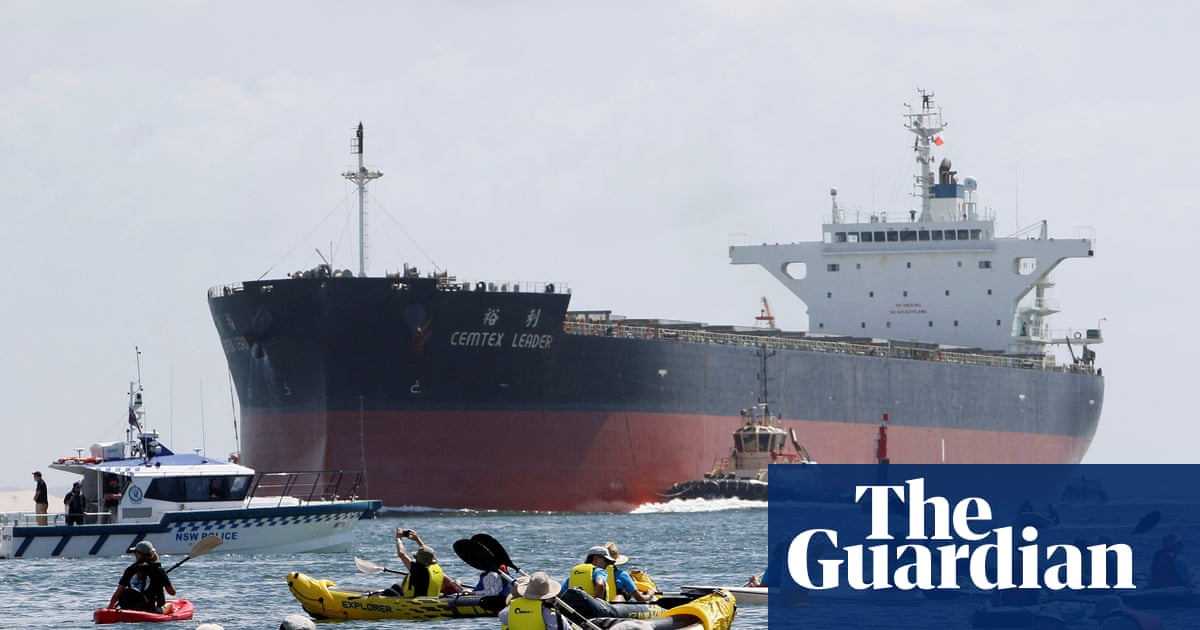
Rising Tide has become a focal point of climate activism in the region due to its annual blockade events. These demonstrations typically involve thousands of participants using kayaks and rafts to obstruct coal vessels entering or leaving the port. The protests often include camping on council-owned parks and feature music festivals with notable Australian performers. The group’s primary demands include an immediate halt to new fossil fuel projects, a complete cessation of coal exports from Newcastle by 2030, and a substantial tax on fossil fuel profits to support community transitions.
The history of these confrontations is marked by legal complexities and shifting government strategies. During the 2024 protest season, the state government attempted to prevent the blockade by establishing a maritime exclusion zone around the port. However, the Supreme Court invalidated this measure after Rising Tide challenged it, ruling that the government had acted improperly. Despite the court’s decision, authorities charged 173 individuals during that event, though charges were later withdrawn for 125 of them in August.
In contrast to the previous year, state authorities did not attempt to block the 2025 protest through maritime restrictions. Instead, police focused on arresting those who entered the water, resulting in 129 charges against protesters who successfully stopped three coal ships from accessing the port. These cases remain pending in the courts. The differing approaches between years highlight the ongoing struggle between maintaining public order and respecting civil liberties in the context of high-stakes environmental activism.
The immediate impact of the council’s ban affects a smaller paddle-out event scheduled for Saturday at Horseshoe Beach, which serves as a precursor to the main annual protest planned for February. Rising Tide had applied for a form 1 permit for this upcoming gathering, but police rejected the application. The group is currently before the NSW Supreme Court seeking review of this decision. The court is expected to determine whether the protesters are entitled to protection from charges under the Summary Offences Act.
Despite the legal and administrative hurdles, Rising Tide remains defiant. Spokesperson Zack Schofield framed the council’s ban as evidence of the group’s growing influence and the urgency of their cause. He asserted that attempts to suppress their activities only underscore the effectiveness of their pressure on the world’s largest coal port. The activists maintain that future protests will proceed regardless of municipal restrictions, driven by what they describe as an existential climate crisis.
This development underscores the broader challenges facing local governments in regions dependent on fossil fuel exports. As environmental concerns intensify, councils are increasingly caught between state government directives, economic interests, and community sentiments. The Newcastle case illustrates how legal mechanisms and administrative powers are being tested in the effort to balance public safety, commercial operations, and the right to dissent.
What comes next depends largely on the Supreme Court’s ruling regarding the permit rejection for the Saturday event. If the court supports the police decision, Rising Tide may face further legal penalties for proceeding without authorization. Conversely, a favorable ruling could set a precedent for how future protests are managed in the region. Regardless of the outcome, the conflict between climate activists and port authorities is likely to persist, reflecting deeper societal divisions over energy policy and environmental responsibility.
Sources behind this briefing
Go to the original reporting
- The Guardian World↗Rising Tide banned from using council land for protests at world’s largest coal port in Newcastle