The short version
- New Mexico faces severe provider shortages across almost all counties, with Latino representation in the physician workforce significantly lagging behind population demographics.
- Casa de Salud in Albuquerque has trained over three hundred bilingual apprentices since 2005, focusing on high school and college students from marginalized backgrounds.
- The program emphasizes cultural competence and trauma-informed care, resulting in a high rate of graduates entering the medical field and staying within their local communities.
A primary care clinic in Albuquerque is testing a model to address the acute shortage of healthcare workers in New Mexico by training students who already live in the underserved neighborhoods. Casa de Salud has operated a year-long apprenticeship program since 2005, enrolling more than three hundred high school and college students. The initiative focuses on recruiting bilingual individuals from marginalized backgrounds, with the explicit goal of keeping future providers within the communities where they grew up.
The need for such interventions is stark in New Mexico, where thirty-two of the state’s thirty-three counties report a shortage of healthcare personnel. While Latinos comprise roughly twenty percent of the population, they represent only about six percent of the nation’s physician workforce. This disparity is particularly problematic in rural areas and Spanish-speaking communities, where language barriers and cultural misunderstandings can hinder effective treatment. The clinic aims to bridge this gap by ensuring that providers not only speak the language but also understand the cultural context of their patients.
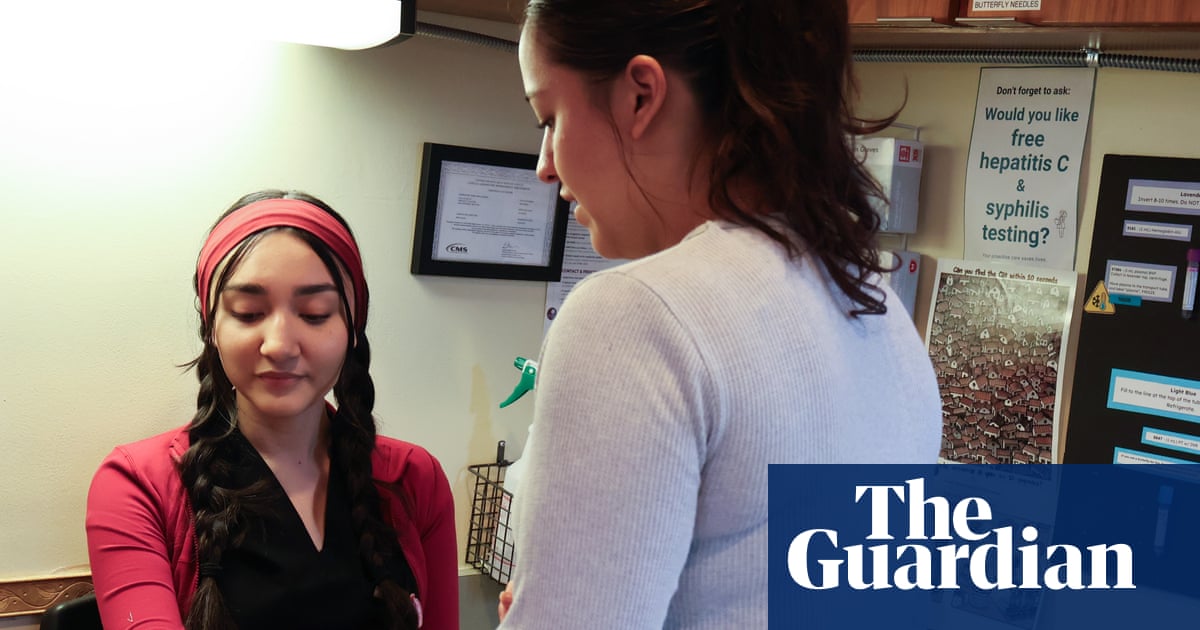
Participants in the program gain hands-on experience while pursuing higher education. Gisselle Martinez, a twenty-one-year-old college student, works as a bilingual health apprentice between classes. She performs tasks such as taking manual blood pressure readings using trauma-informed techniques and is certified in harm reduction practices, including running needle exchanges and distributing fentanyl test strips. Her role allows her to interact with patients in a way that acknowledges past neglect or trauma, fostering trust during clinical examinations.
Martinez’s personal history informs her professional approach. As a first-generation student whose parents speak Spanish, she frequently served as their medical interpreter. She recalled the difficulty of translating complex medical terminology and the burden of explaining anesthesia risks to her parents while she was under its effects herself. Now, she is working toward becoming a certified nurse anesthetist, a profession she wished had been more accessible to her family. Her experience highlights how personal history can drive a commitment to serving specific demographic groups.
The program’s developer, Colette Village Center, emphasizes that geographic and socioeconomic ties are strong predictors of where healthcare workers choose to practice. Individuals who grow up in a community are statistically more likely to remain there as professionals. By recruiting from local colleges, migrant assistance programs, and nearby high schools, the clinic ensures that its apprentices share the lived experiences of their future patients. Currently, all apprentices in the program are Latino, reflecting the demographic makeup of the area and the specific needs of the patient base.
Casa de Salud serves a population that is predominantly Spanish-speaking and eighty percent uninsured. The clinic’s origins are deeply rooted in community trust, having been founded in 2004 by a local physician and a group of promotoras, or traditional health liaisons. These founders, including Lorraine Cordova, were women who practiced curanderismo, a Mexican folk healing tradition involving spiritual cleansing, herbs, and prayer. They initially met to offer treatments such as limpias, massage, and reiki, recognizing the need to connect culturally grounded caregivers with the formal healthcare system.
The integration of traditional practices into modern care is a key component of the clinic’s philosophy. Many patients continue to use alternative medicines, which are sometimes dismissed or disrespected in conventional medical settings. By training providers who understand these traditions, the clinic aims to reduce stigma and improve patient compliance. Alejandra Casarrubias, one of the program’s first students, is now a registered nurse and clinical manager at Casa de Salud. She stresses that being bilingual is insufficient without bicultural competence, noting that patients from minoritized groups often have better health outcomes when treated by providers of the same race.
Data from the Association of American Medical Colleges supports the value of this approach, indicating that racial concordance between doctors and patients correlates with improved metrics such as lower infant mortality rates and higher adherence to healthcare plans. The apprenticeship program has shown promising results in terms of career placement. At least one-third of the students tracked by Casa de Salud have entered the healthcare field, with more than half of those pursuing medical school. This pipeline helps sustain a workforce that is both skilled and culturally attuned.
Sebastian Hernandez, a nineteen-year-old apprentice studying biochemistry and film production, represents the next generation of providers emerging from this model. He chose to participate because his family had used the clinic in the past, giving him familiarity with its mission. Hernandez hopes to become an internal medicine physician, continuing the cycle of local talent returning to serve local needs. As the healthcare workforce crisis deepens across the United States, programs like Casa de Salud offer a potential blueprint for retaining providers in areas where they are needed most.
The success of this model depends on sustained funding and continued community engagement. While the program has demonstrated effectiveness in training and retaining bilingual staff, scaling such initiatives requires addressing broader systemic issues in healthcare education and recruitment. The focus on trauma-informed care and cultural humility provides a framework for improving patient outcomes beyond mere language translation. By investing in local talent, clinics can build a more resilient and representative workforce capable of meeting the complex needs of diverse populations.
Sources behind this briefing
Go to the original reporting
- The Guardian US↗The US urgently needs more bilingual healthcare workers. This clinic might have the solution