The short version
- The administration mandates infrastructure growth to handle a projected surge in commercial and military orbital activities.
- Federal agencies are directed to identify additional land for heavy-lift capabilities and improve public access to launch schedules.
- Officials cite geographic resilience and current capacity limits at existing Florida and California sites as primary drivers for expansion.
The United States government has issued a new national space transportation policy designed to dramatically expand the country’s orbital launch and reentry capabilities. Signed by President Donald Trump, the memorandum replaces a framework established in 2013 under former President Barack Obama. While both documents emphasize support for the commercial space sector and secure access to orbit, the new directive reflects a significantly larger scale of operations. The policy sets an ambitious target for federal ranges to accommodate more than 1,000 launches and reentries annually by the year 2030.
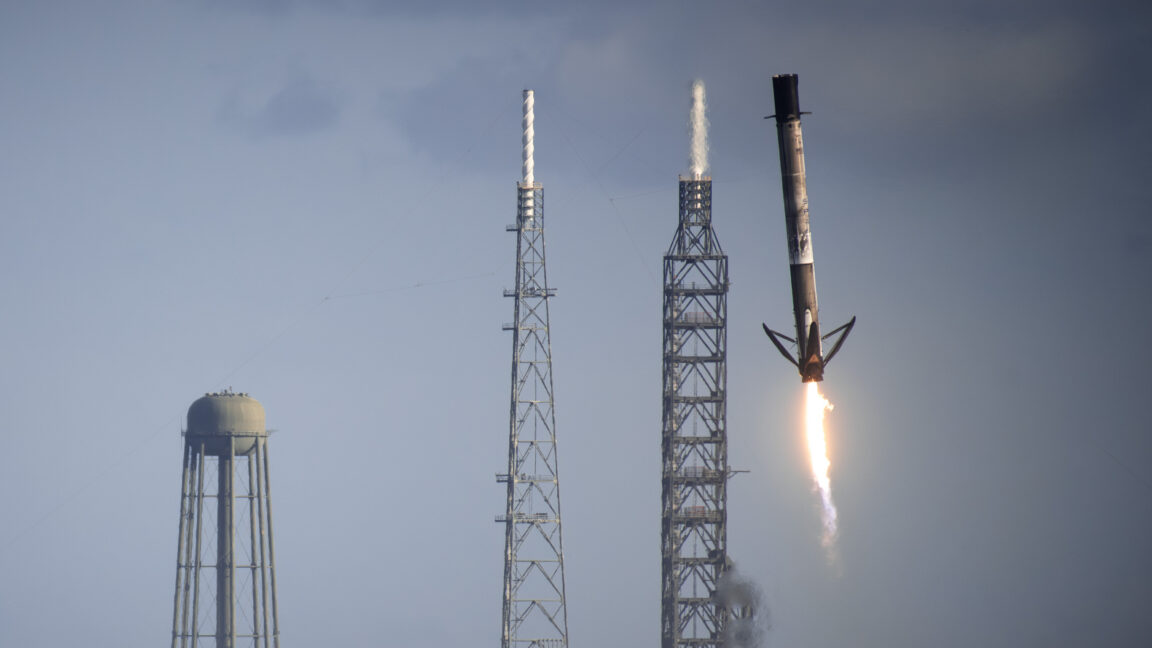
This projection represents a substantial increase from recent activity levels. In the previous year, there were 176 orbital launch attempts from U.S. soil, a figure nearly ten times higher than the volume recorded in 2013. SpaceX dominated this period with 165 orbital launches using its Falcon 9 vehicle, alongside five suborbital test flights of the larger Starship system. The anticipated growth is fueled by rising demand for communications services, overhead surveillance, space-based targeting systems, and orbital data centers from both commercial entities and military organizations.
To achieve these capacity goals, the memorandum directs the Department of Defense and NASA to prioritize infrastructure investments at federal launch ranges. Key facilities include Cape Canaveral Space Force Station and Kennedy Space Center in Florida, as well as Vandenberg Space Force Base in California and Wallops Flight Facility in Virginia. Currently, only the sites in Florida and California are equipped to handle heavy-lift launches. The new policy seeks to enhance the flexibility and capacity of these existing locations while balancing the needs of government missions with those of commercial users.
A significant shift in the new framework involves greater transparency in range scheduling. The directive instructs military and NASA officials to regularly publish launch schedules, ensuring that resource allocation is open to scrutiny and optimized for maximum capacity. Historically, most rocket launch timelines have remained private until shortly before the event, often revealed only days or weeks in advance. This change aims to provide clearer visibility into how federal assets are utilized.
Beyond optimizing existing sites, the White House is ordering the Department of the Interior to identify federal lands suitable for additional launch and reentry facilities. This move appears to align with findings from a recent Pentagon study, which suggested the necessity of a third heavy-lift launch site in the United States. Although the full report has not been released, Air Force Secretary Troy Meink indicated during a May hearing that current limitations at Cape Canaveral and the need for geographic resilience necessitate new infrastructure.
General Chance Saltzman, the top general in the Space Force, echoed these concerns during the same congressional testimony. He emphasized the requirement to increase overall capacity and noted that relying on just two primary launch ports creates vulnerabilities. Establishing separate locations would enhance the system’s ability to withstand disruptions and maintain consistent operational tempo. The Interior Department has also explored using submerged lands and abandoned offshore oil rigs for sea-based launch activities, following a recent request for public comment.
The policy also addresses the need for more responsive launch operations. It envisions the capability to deploy high-priority payloads into orbit within 48 hours of a request, potentially utilizing expeditionary locations distant from traditional ranges. Several private companies, including Rocket Lab and Astra, are already developing portable launch infrastructure that could support this rapid-response model. This flexibility is intended to meet urgent military and government needs without relying solely on fixed, large-scale facilities.
In addition to terrestrial expansion, the memorandum supports NASA’s ongoing efforts to develop commercial transportation systems for lunar missions. It also directs the agency to facilitate future commercial robotic and human expeditions to Mars. The government is already implementing other aspects of the policy, such as streamlining permitting processes, expediting environmental reviews, and charging user fees to commercial launch providers operating out of federal spaceports. These measures aim to reduce bureaucratic friction while ensuring fair compensation for the use of public infrastructure.
The transition from the 2013 policy to this new framework underscores a shift toward treating space access as a critical national utility requiring robust, diversified infrastructure. By mandating clearer scheduling, exploring new geographic options, and supporting rapid-response capabilities, the administration seeks to maintain American superiority in space. The success of these initiatives will depend on coordinated investment between federal agencies and the private sector, as well as the ability to integrate increased launch traffic into modernized airspace management systems.
Sources behind this briefing
Go to the original reporting
- Ars Technica↗Trump's space transportation policy calls for new spaceport on federal land
