The short version
- A new exhibition in Switzerland examines the origins and enduring influence of Jan Potocki’s The Manuscript Found in Saragossa, a novel known for its nested narratives and esoteric themes.
- Recent archival discoveries revealed that Potocki likely composed two distinct novels rather than one, overturning long-held assumptions about the text’s structure and authenticity.
- The work’s global humanism and cross-cultural references are drawing renewed attention from contemporary writers and artists, despite its historical obscurity in Western Europe.
A newly opened exhibition at the Fondation Jan Michalski in Montricher, Switzerland, is bringing fresh scholarly and public attention to The Manuscript Found in Saragossa, a sprawling novel written by Polish count Jan Potocki more than two centuries ago. While the book has maintained a dedicated cult following among figures such as Salman Rushdie and Jerry Garcia, it has largely remained on the periphery of the European literary canon. Curators argue that the work’s relevance today stems from its profound global humanism, a perspective that contrasts sharply with the colonial-centric narratives dominant in Paris and London during the Enlightenment era.
The novel is renowned for its intricate structure, often described as resembling a Chinese box with stories nested within one another. The narrative follows Alphonse van Worden, a young Walloon officer traveling through the Sierra Morena mountains to join the Spanish army. His journey is punctuated by surreal encounters, including erotic liaisons with demonic Moorish sisters, confrontations with shape-shifting apparitions, and interactions with a Jewish Kabbalist who attempts to decipher the universe through mystical formulas. This encyclopedic scope spans from the birth of Jesus Christ to the early 19th century, evoking settings across the Mediterranean, North Africa, Mexico, Peru, and the Philippines.
Potocki’s background helps explain both the book’s unique character and its historical obscurity in Western Europe. Born in Pików within the Polish-Lithuanian Commonwealth but educated in Orbe, Switzerland, Potocki was deeply influenced by Jewish culture cultivated by rabbis in eastern Poland, now part of Ukraine. François Rosset, one of the exhibition’s curators, notes that this fascination led Potocki into esoteric learning, including studies of ancient Egypt and Mesopotamia. The fact that the first fragments were published in French in St. Petersburg in 1804 further distanced the work from traditional Western literary centers.
Recent archival research has significantly altered the understanding of Potocki’s literary output. For decades, the most widely read English edition, translated by Ian Maclean, relied on René Radrizzani’s revised French version from 1990. However, in 2002, co-curator Dominique Triaire discovered eight miscataloged manuscripts in Polish archives. These findings established that Potocki had not left behind a single novel but two distinct works. This revelation overturned the notion that Radrizzani’s edition represented the most faithful text, suggesting that previous readers had been engaging with a composite or incomplete version of the author’s intent.
The personal life of Jan Potocki is as enigmatic as his writing. He died in 1815 at the age of 54 after shooting himself. An inventory of his possessions at his Uładówka home revealed a silver sugar bowl with a missing lid, leading to speculation that an ailing Potocki filed down the knob to cast the bullet used in his suicide. This detail has fueled outlandish theories, including suggestions that he believed he was a werewolf, adding a layer of mythos to his biography that mirrors the surreal nature of his fiction.
Despite its weirdness and complexity, The Manuscript Found in Saragossa has never achieved the canonical status of other roman-mondes like Don Quixote or Boccaccio’s Decameron. Nevertheless, it holds significant sway among contemporary literary figures. French Prix Goncourt winner Mathias Énard is a fervent admirer, while Polish Nobel laureate Olga Tokarczuk describes the book as part of her “literary first-aid kit.” Tokarczuk suggests that opening a page at random provides a dose of creative energy, citing the pure vital force of literature present in its pages.
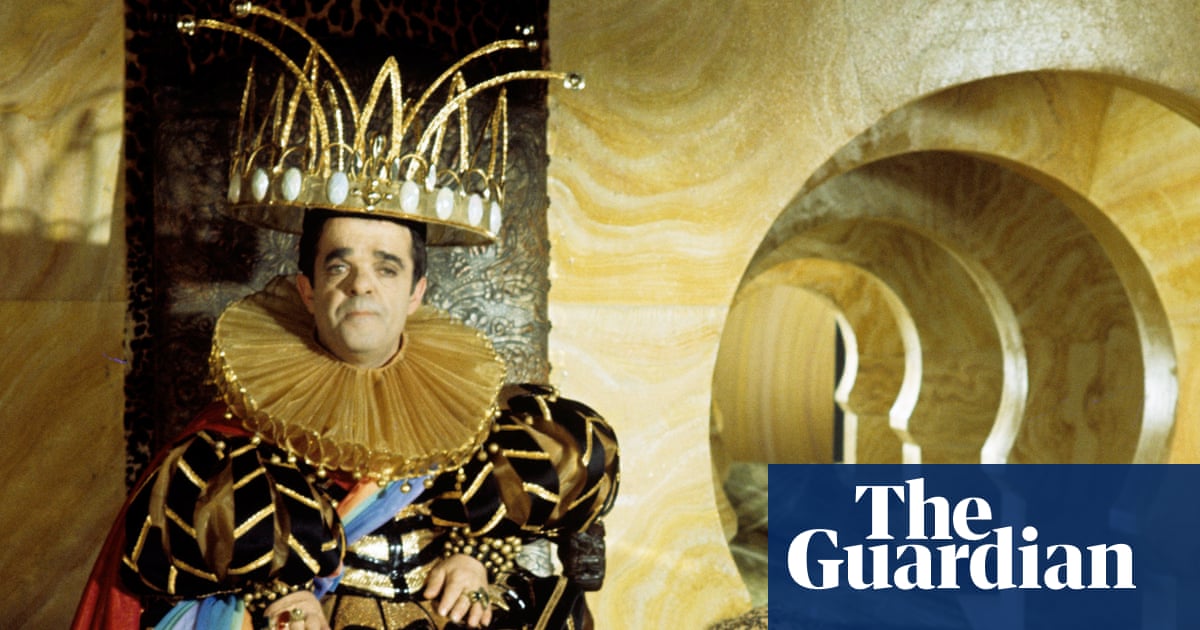
The exhibition also highlights the novel’s influence on visual arts and film. A video screen displays the opening minutes of Wojciech Has’s 1965 Polish film adaptation, which captures the book’s surreal and comic qualities with scenes of soldiers running through the ruins of Saragossa to Beethoven’s Ode to Joy. This black-and-white film developed a cult following that inspired a restoration in the 1990s, supported by Jerry Garcia, Francis Ford Coppola, and Martin Scorsese. Another screen shows excerpts from a 1973 French television adaptation, La Duchesse d’Avila, which employs a kitsch aesthetic to underscore the elasticity of Potocki’s narrative.
The resurgence of interest in Potocki’s work reflects a broader shift in how global literature is valued. By dreaming up a vision of unfettered human intercourse from the eastern reaches of Europe, Potocki created a text that feels remarkably modern. Rushdie has described it as redolent of brilliant modern novels, as if written yesterday. The exhibition serves not only to preserve the physical manuscripts but also to contextualize Potocki’s contribution to a more inclusive, interconnected literary tradition that challenges the boundaries of national and cultural identity.
As scholars continue to piece together the fragmented history of these texts, the distinction between the two novels Potocki left behind remains a subject of ongoing investigation. The discovery of the miscataloged manuscripts has opened new avenues for interpretation, allowing readers to see beyond the composite versions that dominated previous decades. This renewed scrutiny ensures that Potocki’s work will continue to evolve in public perception, moving from a curious footnote in literary history to a central text in discussions of Enlightenment globalism.
The Fondation Jan Michalski exhibition provides a tangible space for this reevaluation, connecting the physical artifacts of Potocki’s life with the enduring power of his imagination. By exploring the origins of the book and its varied adaptations, the curators invite visitors to consider how a work born in the early 19th century can still resonate with contemporary audiences. The narrative’s openness to interpretation ensures that it will remain a vital, if unconventional, part of the European literary landscape for years to come.
Sources behind this briefing
Go to the original reporting
- The Guardian US↗Was one of the great novels of the Enlightenment written by a man who thought he was a werewolf?


