The short version
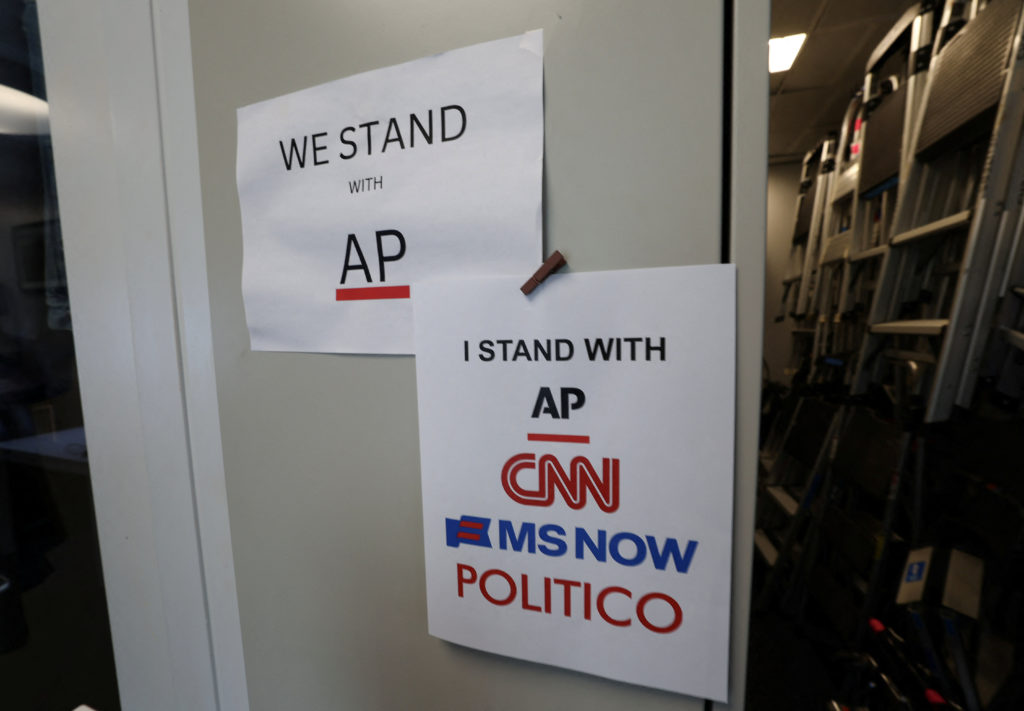
- ABC, CBS, NBC, and Fox News declined to cover the helipad ribbon-cutting in solidarity with banned outlets.
- CNN, Politico, and MS Now have filed lawsuits challenging the administration's restrictions on White House access.
- The ceremony coincided with preparations for a state visit by Chinese President Xi Jinping.
President Donald Trump inaugurated a new helicopter landing pad on the South Lawn of the White House on Monday, an event marked by the conspicuous absence of major television news crews. In a coordinated protest against the administration's recent decision to bar CNN from White House grounds, ABC, CBS, NBC, and Fox News collectively chose not to broadcast the ceremony. This unusual alignment among competing networks underscores the escalating tension between the executive branch and the press corps, transforming a routine infrastructure unveiling into a focal point for First Amendment debates.
The president arrived at the site under light rain, using oversized gold scissors to cut a tricolor ribbon before greeting officials and construction workers clad in green smocks. He sought to project an image of normalcy, shaking hands with crew members while attempting to downplay the surrounding controversy. However, the audio of any remarks he may have made was drowned out by the rotors of Marine One, which waited nearby for his departure. Rather than addressing reporters' shouted questions before boarding, Trump took to his social media platform to announce the maiden voyage from the newly constructed facility.
The boycott by major networks represents a significant break from standard protocol. CNN typically participates in a five-network rotation that provides pooled footage of daily White House events for broader broadcast. When the network was excluded from its assigned turn, the other four partners agreed to skip coverage entirely. This collective action highlights the severity of the dispute, as these outlets prioritize press access rights over exclusive visual content from the ceremony.
Legal challenges are already underway. CNN, Politico, and MS Now have filed lawsuits following the administration's announcement that it would restrict their journalists' access to the White House. These legal actions reflect a broader pattern of administrative and judicial efforts by the Trump administration to limit coverage deemed objectionable. The resulting constitutional questions regarding media access have overshadowed other political developments, including upcoming midterm elections and foreign policy initiatives.
The timing of the helipad completion appears linked to the imminent state visit of Chinese President Xi Jinping, who is scheduled to arrive on Wednesday. Trump has previously suggested that the new facility, featuring extensive granite work and a large presidential seal, would impress visiting dignitaries. He has emphasized the durability of the materials, claiming the granite will last for a millennium, although past refurbishment projects under his administration have faced criticism for rapid deterioration.
Construction on the landing pad began in June, replacing original Tennessee flagstone along the West Wing colonnade with black granite. Similar upgrades were made to the diplomatic entrance walkway and portions of the South Lawn driveway. The president has argued that the project was necessary because modern Marine One helicopters are too powerful for the existing lawn infrastructure, potentially damaging the grass. This justification contrasts with his frequent public emphasis on preserving the lawn's aesthetic appeal.
Funding for the project remains a point of contention and uncertainty. Trump stated in July that the work would be privately funded, estimating costs at up to $6 million. He attributed payment responsibility to Sikorsky Aircraft, a Lockheed Martin subsidiary, citing the manufacturer's role in producing the newer, larger helicopters. However, additional ground leveling efforts have complicated precise cost calculations, leaving the final expenditure unclear.
The South Lawn has undergone significant transformation this year, hosting a temporary UFC fighting cage for the president's 80th birthday before construction crews arrived for the helipad project. As Trump prepares to depart for the United Nations General Assembly in New York, the focus remains on the legal and political ramifications of the media ban rather than the physical improvements to the White House grounds. The incident serves as a stark illustration of the ongoing conflict between the administration's desire to control its narrative and the press's right to report on it.
Sources behind this briefing
Go to the original reporting
- PBS NewsHour↗Trump shows off new White House helipad, but networks skip coverage during First Amendment fight

