The short version
- Nepal has formally requested $20 million from the United Nations loss and damage fund to aid recovery from floods caused by a glacier collapse in late August.
- The disaster resulted in over 1,300 confirmed deaths and more than 5,500 missing persons, with total economic damages estimated at $5 billion or higher.
- Nepali officials argue that major polluting nations must accept shared responsibility for climate impacts in the Himalayas, which are warming significantly faster than the global average.
Nepal has initiated a formal request for twenty million dollars in climate compensation from the United Nations loss and damage fund, citing the catastrophic floods that devastated parts of the country in late August. The disaster was triggered by the partial collapse of a melting glacier, which unleashed a deadly landslide and flash flooding across regions bordering Chinese-controlled Tibet. Foreign Minister Shisir Khanal stated that the event serves as a critical warning signal regarding the escalating climate crisis in the Himalayas, urging the world’s largest economies to recognize their historical contributions to greenhouse gas emissions and assist in rebuilding efforts.
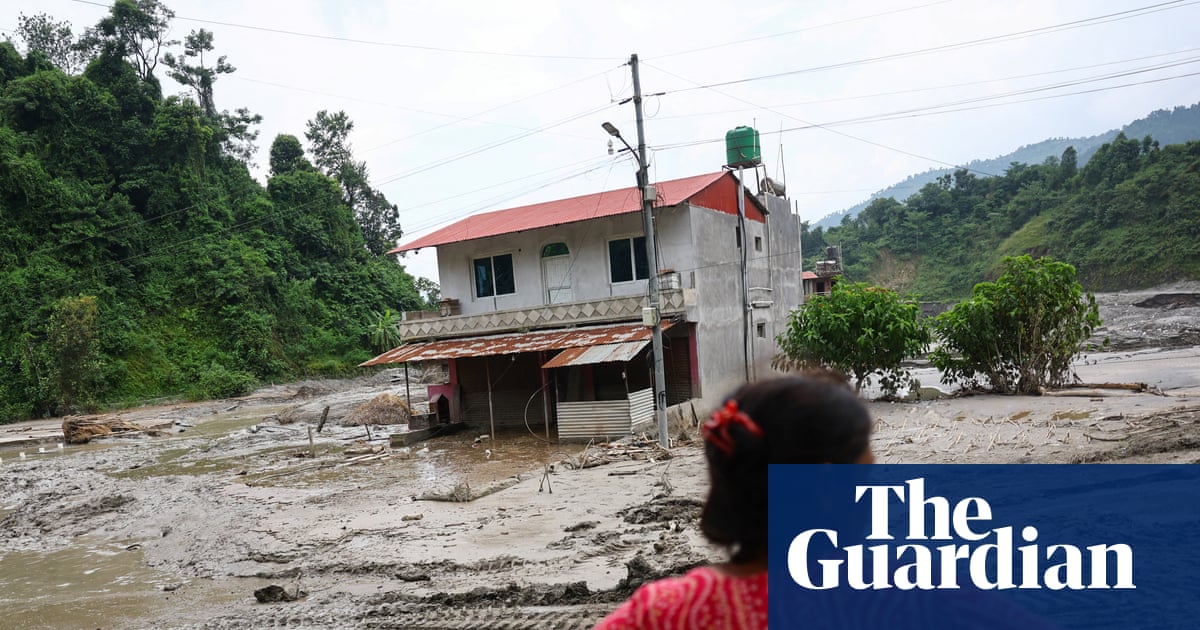
The human toll of the disaster remains severe and largely unresolved. Rescue operations have continued for twelve days, but hopes of finding survivors have diminished significantly. Current figures indicate that more than 1,300 people are confirmed dead, while over 5,500 individuals remain missing. The scale of destruction has been described by officials as comparable to the devastation wrought by the 2015 earthquake that left much of the nation in ruins. Entire towns, villages, and major highways were wiped out by waves of debris, mud, and rocks moving at speeds approaching one hundred eighty kilometers per hour.
Scientific assessments suggest that the climate crisis played a significant role in intensifying the disaster. The Himalayan region, which spans Nepal, India, China, and Bhutan, is warming at a rate nearly fifty percent faster than the global average. According to United Nations data from 2023, the mountains have lost close to one-third of their ice cover in just over thirty years due to global heating. This rapid loss of glacial stability increases the frequency and severity of glacial lake outburst floods, a phenomenon that experts believe contributed to the extreme nature of the recent event.
Nepal’s contribution to global greenhouse gas emissions is less than 0.1 percent, yet it faces disproportionate risks from climate change. Foreign Minister Khanal emphasized that the compensation request is not merely about financial reimbursement but also about establishing a robust mechanism for supporting vulnerable economies. He argued that nations benefiting from larger, more polluting industries must accept shared responsibility for the impacts felt by smaller countries. The minister noted that while the requested amount is insufficient to cover total damages, it represents a necessary step toward acknowledging global equity in climate justice.
Estimates of the total economic damage caused by the floods exceed five billion dollars, with some projections suggesting even higher figures. Rebuilding efforts will likely involve reconstructing upwards of twenty thousand homes and restoring critical infrastructure, including the main highway that connects remote regions. Some villages located in vulnerable areas along riverbanks were washed away entirely and may need to be relocated to higher, safer ground. The financial burden on Nepal is substantial, given its limited resources and the extensive nature of the destruction.
The United Nations loss and damage fund, established in 2022 under the Paris climate agreement, faces significant financing challenges. While approximately one hundred nineteen countries have submitted requests totaling $2.8 billion, the international community has contributed only around $400 million so far. The United States, despite being one of the largest historical emitters, has contributed just $17 million following its withdrawal from the Paris agreement under former President Donald Trump. This funding gap highlights the difficulties in mobilizing adequate resources for climate-related disasters in developing nations.
Foreign Minister Khanal initially highlighted India and China as key neighbors that should contribute to relief efforts, given their status among the world’s biggest emitters. However, he later clarified that the issue is not about assigning blame to specific countries but rather fostering global cooperation. He stressed that the disaster should be viewed within the broader context of changing climate patterns in the Himalayas, which will likely become a recurring scenario for communities worldwide. The minister called for funds to support not only immediate disaster response but also long-term preparedness and mitigation strategies.
Political challenges remain in securing the requested compensation, with some nations potentially denying the link between climate change and extreme weather events. Khanal dismissed such skepticism by comparing it to denying basic scientific facts, such as the shape of the Earth. He emphasized that the global community must move beyond debate and focus on practical solutions to help vulnerable populations adapt to a warming world. The situation in Nepal underscores the urgent need for stronger international frameworks to address loss and damage caused by climate-related disasters.
Sources behind this briefing
Go to the original reporting
- The Guardian World↗Nepal says big polluters must ‘wake up’ as it calls for climate compensation over flood disaster

