The short version
- The confirmed death toll has reached 669 with nearly 3,000 people missing, while rescue teams continue to locate survivors in remote areas.
- Forty-one Australians remain unaccounted for, prompting a surge of relatives traveling to Nepal to assist in identification and search efforts.
- Morgues are filling rapidly, forcing officials to prioritize DNA collection and dignified burials for unidentified victims before health risks escalate.
Four days after a catastrophic glacial collapse sent a massive wall of water, ice, and mud through the Himalayas, the scale of the disaster in Nepal continues to expand. The confirmed death toll has risen to 669, while nearly 3,000 individuals remain missing. On the Chinese side of the border, more than 550 people are also unaccounted for. Among those lost are forty-one Australians, a figure that has drawn significant international attention and prompted a wave of relatives to travel to Kathmandu in hopes of finding their loved ones.
The search operation is hampered by severe logistical challenges. Nepalese authorities have deployed approximately 15,000 personnel, including army and police units, to navigate the devastated valley. However, many areas remain completely cut off due to destroyed roads, washed-away bridges, and the threat of a new lake that could burst. Despite these arduous conditions, rescuers report finding survivors in jungle areas and on mountainsides, some of whom are being evacuated by helicopter. Sagar Shrestha, director of the Disaster and Crisis Management Department at the Nepal Red Cross Society, indicated that the death toll could eventually climb into the thousands.
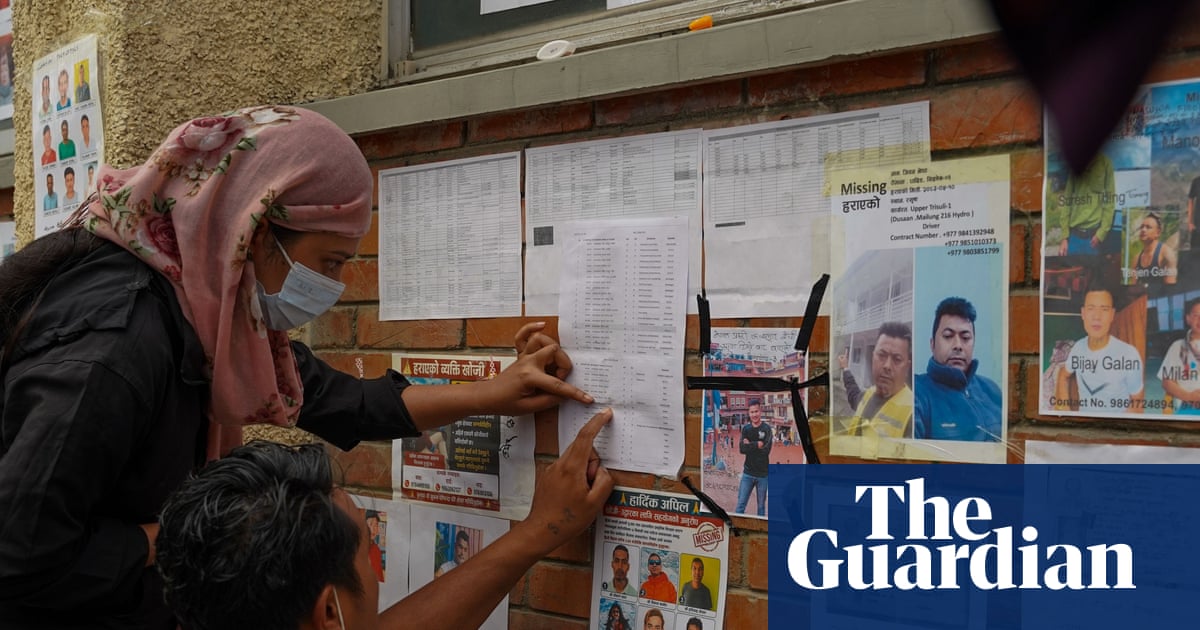
A critical challenge facing authorities is the management of the deceased. Morgues and hospitals in affected areas are filling up rapidly, creating an urgent need for dignified handling of bodies before health issues arise. In Kathmandu, a teaching hospital has become a focal point for identification efforts, with walls covered in photographs of unidentified victims. Authorities are collecting DNA samples from bodies that are beginning to decay and can no longer be visually recognized. In the Chitwan district, officials plan to collect DNA from 229 such bodies before proceeding with burials.
For families, the process is agonizing. Relatives gather in crowds, often numbering over a hundred, to watch as new photos are posted. They compare images, take videos to send to distant kin, and try to discern features obscured by mud and trauma. Saluja, a young woman whose 31-year-old cousin works at a hydro power plant, described the difficulty of identifying faces under these conditions. Her cousin’s older brother, a doctor in Australia, along with his dentist wife, are traveling back to Nepal to support the family and assist in search efforts.
The presence of international visitors has swelled Kathmandu’s population, though these are not tourists but desperate relatives chasing leads. The confusion surrounding the timing of the floods initially led some families to believe their loved ones were safe in the capital. For example, Michael Keats, a man from New South Wales, was confirmed dead after it was revealed he had reached the Nepal-Tibet border just ten minutes before the disaster struck. His family stated that they had believed he was preparing to fly home, highlighting the chaotic communication breakdowns in the immediate aftermath.
Hydropower plants along the river are a particular concern for rescue teams. There are 14 such facilities in the area, six of which were under construction at the time of the collapse. It is believed that people may still be alive inside the majority of these structures. Sagar Pandey, chief executive of the Himalaya Glacier Company, reported that 47 people from his trekking service are lost, including 15 Australians. He detailed how groups were separated, with some near the Tibet border and others driving toward checkpoints, all potentially trapped as vehicles disappeared in the flood.
The situation remains fluid as rescue teams battle against time and terrain. While hope persists for finding more survivors, the focus is increasingly shifting to the grim task of identification and burial. The combination of decaying bodies, overwhelmed medical facilities, and the sheer number of missing persons creates a complex humanitarian crisis. Authorities warn that failure to manage the dead properly could lead to secondary health issues, adding another layer of urgency to the ongoing response.
As families wait for news, the emotional toll is evident in the streets and hospitals of Kathmandu. The convergence of local grief and international concern underscores the global reach of this natural disaster. With search conditions remaining difficult and many areas still inaccessible, the coming days will likely see further updates on the death toll and identification efforts. The resilience of rescue workers is being tested as they continue to extract survivors from remote locations while managing the overwhelming influx of bodies.
The incident highlights the vulnerability of infrastructure in high-risk geological zones. The collapse of the glacier not only caused immediate destruction but also disrupted critical transportation and communication networks. As the world watches, the Nepalese government faces the dual challenge of saving lives and maintaining public health standards amidst chaos. The story of Michael Keats and others like him serves as a stark reminder of how quickly circumstances can change in disaster zones, leaving families with little more than uncertainty and hope.
Looking ahead, the priority remains locating the missing and providing closure for families. The deployment of additional resources and international aid will be crucial in supporting Nepal’s capacity to handle this crisis. Until then, the images on the hospital walls will continue to grow, each one representing a life cut short and a family left waiting. The race against time continues, with every hour bringing both new discoveries and new losses.
Sources behind this briefing
Go to the original reporting
- The Guardian World↗Families balance hope and despair in race to find survivors in Nepal as 41 Australians still missing

