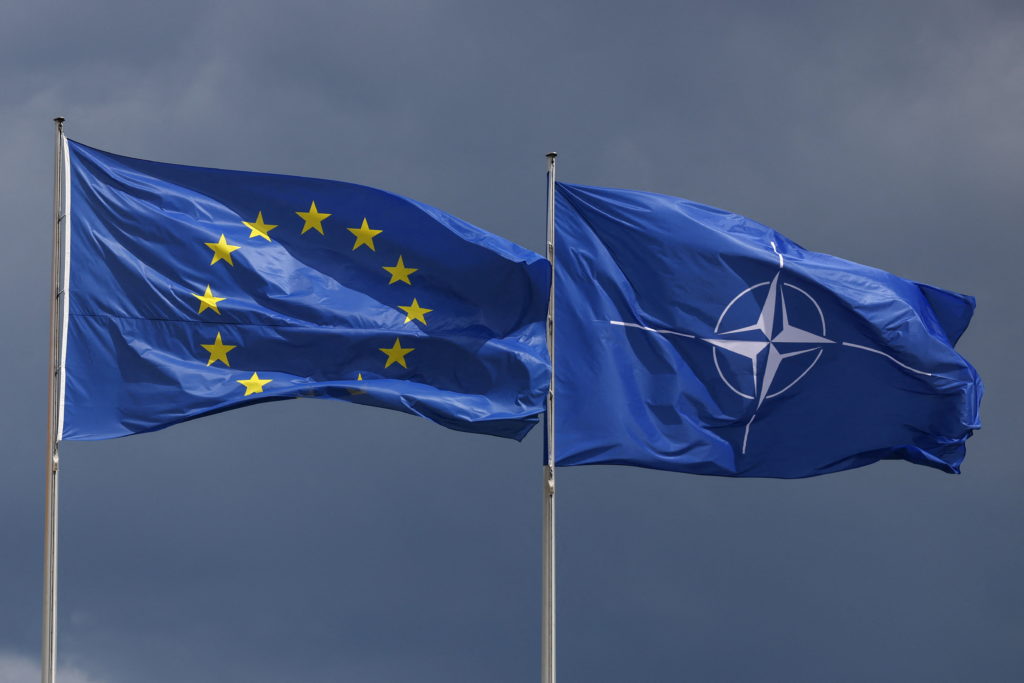
The short version
- NATO's deputy commander in Europe describes Russian leadership as increasingly dangerous and willing to accept higher risks as the conflict in Ukraine continues.
- European leaders are divided on whether recent drone incursions and sabotage attempts represent deliberate tests of Article 5 or accidental byproducts of electronic warfare.
- U.S. and Baltic officials caution against overreacting to hybrid threats, arguing that Moscow aims to provoke a disproportionate response rather than seek direct military confrontation.
The strategic posture of Russia toward the North Atlantic Treaty Organization is shifting in ways that have alarmed senior Western defense officials. Air Chief Marshal Sir John Stringer, NATO’s deputy supreme allied commander for Europe, stated that Russian President Vladimir Putin is becoming more cavalier and open to risk as the war in Ukraine persists. Speaking at a security conference in Tallinn, Estonia, Stringer characterized the current geopolitical climate as febrile, warning that Moscow seeks to divide Western allies by provoking an overreaction. This assessment suggests a deliberate strategy to exploit fractures within the alliance rather than a simple miscalculation of military boundaries.
The nature of these threats has evolved beyond traditional border skirmishes into a complex hybrid campaign involving sabotage, espionage, and cyberattacks. Data tracking these incidents reveals a sharp escalation in activity, with reports rising from fifty-nine cases in March 2025 to more than two hundred by the present time. These events range from vandalism and propaganda efforts to arson and infrastructure targeting. In August, German authorities accused Moscow of orchestrating a plot involving an explosive-laden drone near Leipzig airport, while British officials reported disrupting a scheme to sabotage a drone manufacturing facility outside London. Such incidents underscore the difficulty in distinguishing between accidental incursions and calculated aggression.
European political leaders are responding with varying degrees of alarm. Polish Prime Minister Donald Tusk has warned that Russia might launch deliberate missile or drone strikes against NATO members while claiming they were accidents. French President Emmanuel Macron has instructed his government to develop plans for protecting critical infrastructure against such threats, including cyberattacks and aerial incursions. These preparations reflect a growing consensus among some capitals that Moscow is testing the limits of collective defense. However, not all European officials share this heightened sense of imminent danger, with many calling for restraint and careful analysis before escalating military postures.
In contrast to the warnings from Stringer and leaders in Poland and France, other key allies advocate for a more measured approach. U.S. Ambassador to NATO Matthew Whitaker dismissed concerns that Russia is actively testing the alliance’s resolve, asserting that Putin does not desire direct conflict with NATO. He attributed recent drone incursions into countries like Romania and Poland largely to electronic warfare and unintentional navigation errors caused by GPS jamming. While acknowledging that hybrid activities such as sabotage are concerning, Whitaker emphasized that overreacting would serve Russian interests by validating their narrative of Western instability and aggression.
Baltic nations, which share borders with Russia, have also expressed caution regarding the prospect of immediate military escalation. Latvian President Edgars Rinkevics noted that there is no observable buildup of Russian forces near their borders, suggesting that fears of a direct attack may be overstated. He argued that most observers would agree that the perspective of an imminent conventional invasion is incorrect. This view aligns with assessments from British defense officials who believe Putin remains focused on absorbing resources in Ukraine rather than opening new fronts against NATO members. The divergence in threat perception highlights the challenge of maintaining a unified alliance response.
The ambiguity surrounding Russian intentions is compounded by the methods used in hybrid warfare. Many individuals involved in sabotage plots are recruited online by Russian intelligence services, often without full knowledge that they are acting on behalf of Moscow. This decentralized approach makes attribution difficult and complicates efforts to gather concrete evidence for public condemnation. When questioned about allegations of a covert campaign against the West, Putin demanded proof, stating he could not name any proven facts. The fine line between accidental incursions caused by electronic countermeasures and deliberate targeting remains a central point of contention among security experts.
NATO Secretary-General Mark Rutte emphasized the importance of demonstrating strength and unity to deter further aggression. He noted that Putin understands the deep integration between the United States and Europe, implying that any reckless action would be met with a tough collective response. The alliance’s strategy appears focused on ensuring preparedness without crossing thresholds that could trigger unintended escalation. By maintaining a firm but controlled posture, NATO aims to signal resolve while avoiding the trap of reacting impulsively to provocations designed to fracture Western cohesion.
As the situation develops, the focus remains on balancing vigilance with restraint. The increase in hybrid incidents and drone incursions presents significant challenges for intelligence agencies and policymakers alike. Determining whether these actions are part of a broader escalation strategy or isolated attempts to disrupt NATO operations requires careful analysis. The coming months will likely see continued debate over how best to respond to these threats, with the ultimate goal of preserving alliance unity while deterring further Russian aggression. The outcome of this strategic balancing act could define the security landscape in Europe for years to come.
The current environment demands a nuanced approach that acknowledges both the real dangers posed by Russian activities and the risks of misinterpreting them. While some officials warn of a more dangerous and risk-accepting adversary, others insist that direct confrontation remains unlikely. This tension underscores the complexity of modern security challenges, where traditional military metrics are insufficient to gauge intent. As NATO navigates this uncertain terrain, the emphasis on communication, coordination, and measured response will be critical in maintaining stability and preventing unintended escalation.
Sources behind this briefing
Go to the original reporting
- PBS NewsHour↗Senior NATO commander warns Putin is becoming more cavalier and open to risk as Ukraine war drags on

