The short version
- The National Park Service report states the arch would alter character-defining spatial relationships among dozens of historic sites.
- Legal challengers argue the project lacks necessary congressional authorization for construction on federal land.
- White House officials maintain the structure will enhance visitor experience and honor military sacrifices.
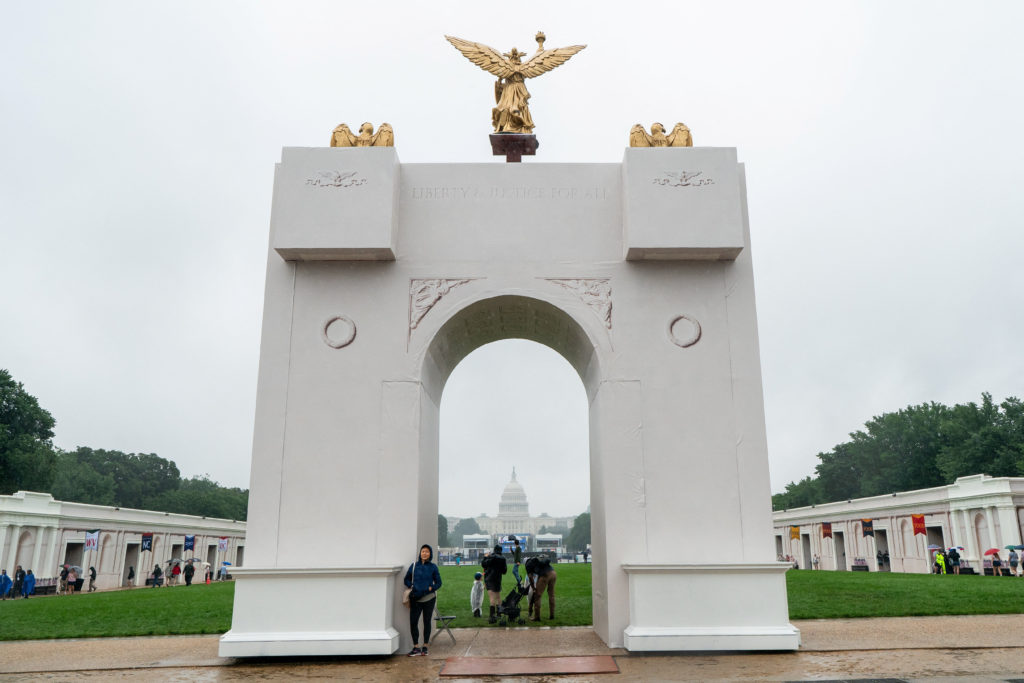
A recent assessment by the National Park Service indicates that President Donald Trump’s proposed memorial arch could significantly disrupt the historical integrity of numerous sites in Washington, D.C. The report highlights concerns that the towering structure would alter established visual and spatial relationships between key monuments, potentially undermining the carefully planned symbolism of the nation's capital.
The proposed arch, standing 250 feet tall and gilded, is situated within the Memorial Avenue Corridor cultural landscape. This area extends from the Lincoln Memorial to Arlington National Cemetery and is recognized as a nationally significant historic designed landscape. The NPS evaluation suggests that introducing such a prominent feature would impact the character of this corridor.
One specific concern cited in the report involves the alignment between the Lincoln Memorial, Memorial Bridge, and Arlington House, formerly the home of Confederate General Robert E. Lee. The existing layout was intended to physically and symbolically unite the North and South through a coordinated monumental composition across the Potomac River. The new arch would break this established visual connection.
Beyond the immediate corridor, the report lists dozens of other historic properties that would be directly affected. These include the National Mall, the U.S. Capitol, the Washington Monument grounds, and Lady Bird Johnson Park. The assessment emphasizes that these sites have been planned over decades to reflect significant moments in national history through their interconnected sightlines.
This federal evaluation presents a potential obstacle for a project that has previously advanced through several approval stages. The design received initial approval from the U.S. Commission of Fine Arts, whose commissioners were appointed by President Trump. Additionally, the National Capital Area Planning Commission approved the site and preliminary plans in July, with further consideration scheduled for September.
White House officials have defended the project, describing it as an iconic landmark that will enhance the visitor experience at Arlington National Cemetery. Spokesman Davis Ingle stated via email that the arch would serve as a visual reminder of the sacrifices made by American heroes throughout the nation's 250-year history. The administration asserts it will follow all legal requirements during construction.
However, the project faces legal opposition from a group comprising three veterans and a historian. They have filed a lawsuit challenging the construction, arguing that building a monument on National Park Service land in the core of Washington requires an act of Congress. Attorney Nicolas Sansone, representing the plaintiffs, contends that no such authorization exists.
Sansone noted that the NPS assessment supports the plaintiffs' claims regarding the project's impact on the symbolic nature of the area. He emphasized the significance of the federal agency acknowledging the potential disruption to the solemn character of the site. The legal challenge adds uncertainty to a project already marked by political controversy and differing interpretations of its historical value.
The debate over the arch reflects broader tensions regarding how Washington's landscape is managed and altered. While proponents view it as a tribute to military service, critics and federal assessments point to the potential erosion of historic sightlines that have defined the city's aesthetic for generations. The outcome of the legal proceedings and further planning commission reviews will likely determine the project's future.
As the National Capital Area Planning Commission prepares to revisit the matter in September, stakeholders are closely watching how the NPS findings influence decision-making. The intersection of legal authority, historical preservation, and political vision remains central to the discussion surrounding this ambitious architectural proposal.
Sources behind this briefing
Go to the original reporting
- PBS NewsHour↗Trump's arch could disrupt the significance of many of Washington's historical sites, National Park Service says

