The short version
- The robotic rescue mission for NASA's Swift Observatory has been terminated due to attitude control failures in the Link satellite.
- Swift is expected to burn up in Earth's atmosphere later this year, ending a nearly two-decade run of gamma-ray burst detection.
- Despite the failed capture, officials view the rapid development and launch of the experimental spacecraft as a valuable step for future satellite servicing.
NASA and Katalyst Space Technologies have officially ended efforts to save the Neil Gehrels Swift Observatory from orbital decay. The decision comes after the Link rescue satellite, launched in early July, suffered critical technical failures that prevent it from performing its primary mission. Without intervention, the aging gamma-ray telescope is on a trajectory to reenter Earth's atmosphere and burn up later this year.
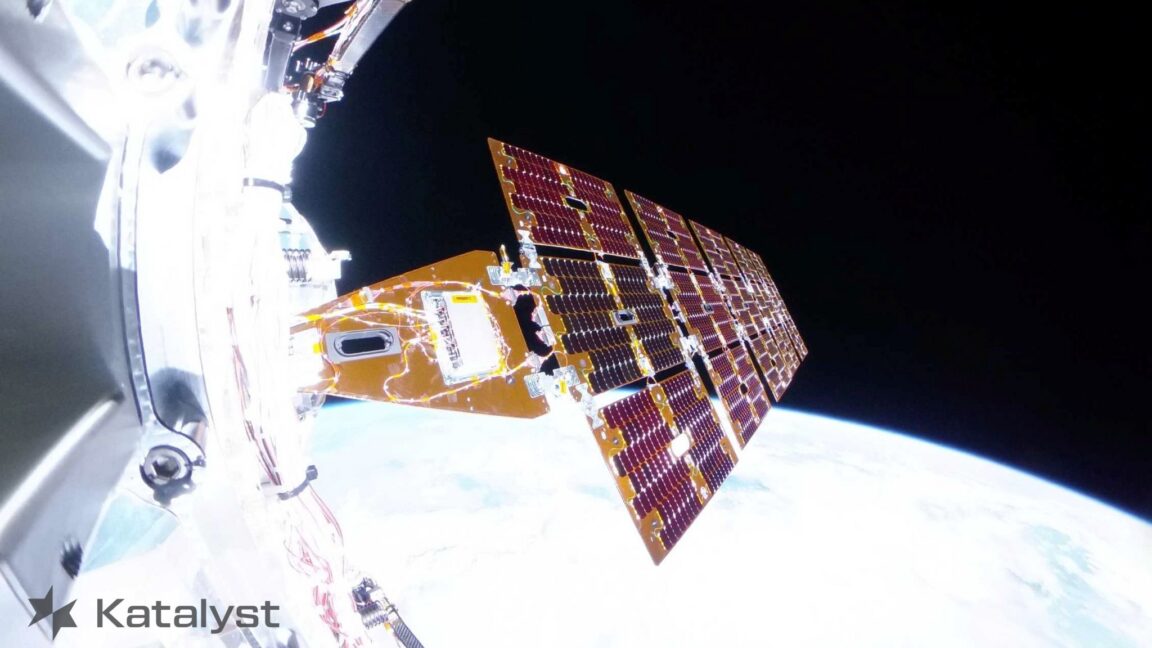
The Link spacecraft was designed to approach Swift, capture it using three robotic arms, and use its own propulsion system to boost the observatory into a higher, safer orbit. The mission represented a significant test of in-space servicing capabilities, aiming to extend the life of a scientific asset that had far outlasted its original two-year design lifespan. However, ongoing issues with attitude control have made the capture maneuver impossible.
Problems began emerging in late July when the Link satellite suddenly lost stable orientation. Two of its three reaction wheels, which are essential for maintaining precise pointing, ceased functioning. Additionally, cold gas thrusters intended for fine adjustments failed to perform as expected. These failures left the spacecraft relying solely on low-impulse plasma thrusters to manage its orientation while traveling at approximately five miles per second around Earth.
Katalyst stated that while the satellite remains operational, it cannot complete the rescue sequence. The company plans to utilize the remaining capacity of Link to demonstrate close-in navigation systems near Swift. This secondary objective aims to extract technical value from the mission despite the failure to secure the observatory. Engineers are assessing which milestones can still be achieved before the end of Link's operational life.
The timeline for this rescue effort was exceptionally aggressive. NASA awarded Katalyst a $30 million contract less than a year ago, requiring the startup to design, build, and launch the satellite within nine months. This compressed schedule forced engineers to accept higher technical risks than would typically be tolerated in standard space missions. The rapid development cycle was intended to reach Swift before its orbit decayed beyond recovery.
NASA Administrator Jared Isaacman emphasized that the agency supports taking calculated risks for high-reward outcomes. He noted that while the outcome was not the desired one, the attempt itself validated the strategy of moving quickly on innovative projects. The administration views the mission as a necessary experiment in extending the utility of existing space assets through commercial partnerships.
Ghonhee Lee, CEO of Katalyst, described the project as a high-risk challenge that yielded significant lessons for the industry. He highlighted the team's pride in reaching launch milestones and solving problems under pressure. The company intends to use data from this mission to build a repeatable framework for future rendezvous and proximity operations, strengthening the pipeline for satellite servicing technologies.
The loss of Swift marks the end of a productive era for gamma-ray astronomy. For nearly 22 years, the observatory has detected and studied gamma-ray bursts, some of the most powerful explosions in the known universe. Its unique ability to quickly locate these events allows other telescopes to follow up with detailed observations. Swift lacked its own thrusters to maintain orbit, making external rescue the only viable option for its survival.
Shawn Domagal-Goldman, director of NASA's astrophysics division, acknowledged the disappointment of losing the observatory but praised the team's dedication. He noted that the mission advanced in-space servicing capabilities in new ways and contributed to a record-setting year for NASA launches. The focus now shifts to analyzing the technical data gathered during Link's operational period.
This event underscores the growing importance of satellite servicing as a sector within the space industry. Several US companies are developing technologies to refuel, repair, or upgrade satellites in orbit. While this specific mission did not achieve its primary goal, the sensors and robotic systems tested on Link provide critical insights for future endeavors. The lessons learned will inform how agencies and private entities approach asset preservation in low Earth orbit.
Sources behind this briefing
Go to the original reporting
- Ars Technica↗NASA calls off mission to rescue Swift gamma-ray observatory

