The short version
- Early pioneers in Crested Butte and Marin County modified vintage bicycles to handle rough terrain, establishing the sport's foundational techniques.
- Technological innovation transitioned from repurposed motorcycle parts to advanced carbon-fiber frames and suspension systems over fifty years.
- Participation has surged significantly, with nine million Americans riding annually as of 2024 and a global increase in registered events.
Fifty years after its inception, mountain biking has evolved from a niche pursuit of American Western pioneers into one of the fastest-growing outdoor recreation activities worldwide. The sport’s trajectory reflects a broader cultural shift, moving from countercultural experimentation to mainstream athletic competition and leisure. Recent data indicates that approximately nine million people in the United States rode off-road at least once annually as of 2024. This surge in participation is mirrored internationally, with the number of registered mountain bike events increasing by roughly 50 percent between 2020 and 2024.
The origins of the discipline are rooted in the improvisation of two distinct groups during the late 1970s. In Crested Butte, Colorado, a community of transplants including ski enthusiasts and homesteaders sought reliable transportation for both town streets and mountain trails. Known as the Grubstake Gang, these riders assembled heavy cruisers using parts from World War II-era Schwinn bicycles. Their primary motivation was practicality; they needed vehicles capable of navigating potholed roads and unpaved paths that standard bicycles could not handle.
Simultaneously, teenagers in Marin County, California, were modifying bikes for recreational racing on the steep slopes of Mount Tamalpais. This group, calling themselves the Larkspur Canyon Gang, focused on speed and technical handling rather than mere utility. In October 1976, they organized what is widely recognized as the first timed mountain bike race, an event dubbed the Repack. The name referenced the necessity for riders to replace overheated axle grease between runs due to the limitations of hub-based braking systems on steep descents.
Technological advancement was driven by the physical demands of these early rides. In 1976, fifteen cyclists from Crested Butte attempted to ride their modified bikes over Pearl Pass to Aspen. The journey proved disastrous for most participants; only two riders completed the 38-mile route on the next day, while the remaining bicycles were destroyed by the steep, rocky terrain. This failure highlighted the need for more durable equipment, prompting further innovation in frame construction and component strength.
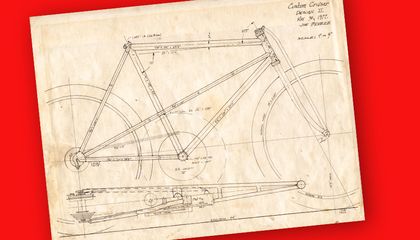
Joe Breeze, a member of the Marin County group, responded to these challenges by creating the first purpose-built mountain bike in 1977. The prototype, known as the Breezer 1, combined a steel-alloy frame with robust components designed specifically for off-road conditions. It featured steel rims, cantilever brakes, and brake levers adapted from motorcycles. A prototype of this historic machine is now preserved in the Smithsonian’s National Museum of American History, marking a pivotal moment in cycling engineering.
Despite geographic separation, the Colorado and California communities eventually converged. In 1978, members of the Larkspur Canyon Gang traveled to Crested Butte for the Pearl Pass Tour, fostering a bond between the two groups. While both regions claim status as the birthplace of mountain biking, historians often view them as complementary origins: one providing a freewheeling social atmosphere and the other driving technical innovation and adrenaline-focused competition.
Modern mountain biking bears little resemblance to its crude beginnings. Contemporary bicycles utilize carbon-fiber frames, sophisticated front and rear suspension systems, and disc brakes derived from automotive and motorcycle technology. The sport has also diversified into specialized disciplines, including downhill racing and freeride events. Competitions like the Red Bull Rampage in Utah attract nearly 100,000 viewers annually, showcasing professional riders performing complex aerial maneuvers over steep canyon walls.
The legacy of early pioneers continues to influence the sport’s culture and competitive landscape. Figures such as Greg Minnaar, Hans Rey, and Brandon Semenuk have defined different eras of mountain biking through championship wins, technical trials riding, and freeride innovation. Their achievements underscore the sport’s evolution from a local pastime to a global phenomenon that retains its adventurous spirit while embracing high-performance engineering.
As mountain biking marks this half-century milestone, it stands as a testament to grassroots innovation. What began as a solution for navigating difficult terrain in remote Western towns has become a structured industry with significant economic and cultural impact. The enduring appeal of the sport lies in its ability to blend physical challenge with exploration, maintaining the outlaw ethos of its founders while adapting to modern athletic standards.
Future growth may depend on balancing accessibility with the preservation of trail systems and natural environments. With participation rates climbing and event numbers rising, organizations face increasing pressure to manage resources sustainably. The history of mountain biking suggests that continued innovation, both in equipment and community engagement, will be essential for maintaining its momentum in the decades ahead.
Sources behind this briefing
Go to the original reporting
- Smithsonian Magazine↗Before Mountain Biking Became One of the Most Popular Recreational Sports, Adventurous Souls of the American West Had to Invent a Rugged Bike