The short version
- Russia has threatened the United Kingdom with unspecified consequences after reports confirmed British-made drones were used in strikes on Russian territory.
- Ukrainian forces have significantly increased long-range attacks on military and industrial sites, including major logistics hubs for Russia’s largest online retailer.
- The UK Ministry of Defence rejected Moscow’s warnings, stating Britain remains committed to supplying necessary defensive equipment against the invasion.
Tensions between London and Moscow have escalated sharply following reports that Ukrainian forces utilized drones manufactured by British companies to strike targets on Russian soil. The Russian embassy in the United Kingdom issued a stern warning on Monday, accusing Britain of deliberately choosing to escalate the crisis. Officials in Moscow characterized the UK’s actions as those of an accomplice to terrorist attacks, asserting that London is seeking to inflict maximum damage on Russia through proxy warfare.
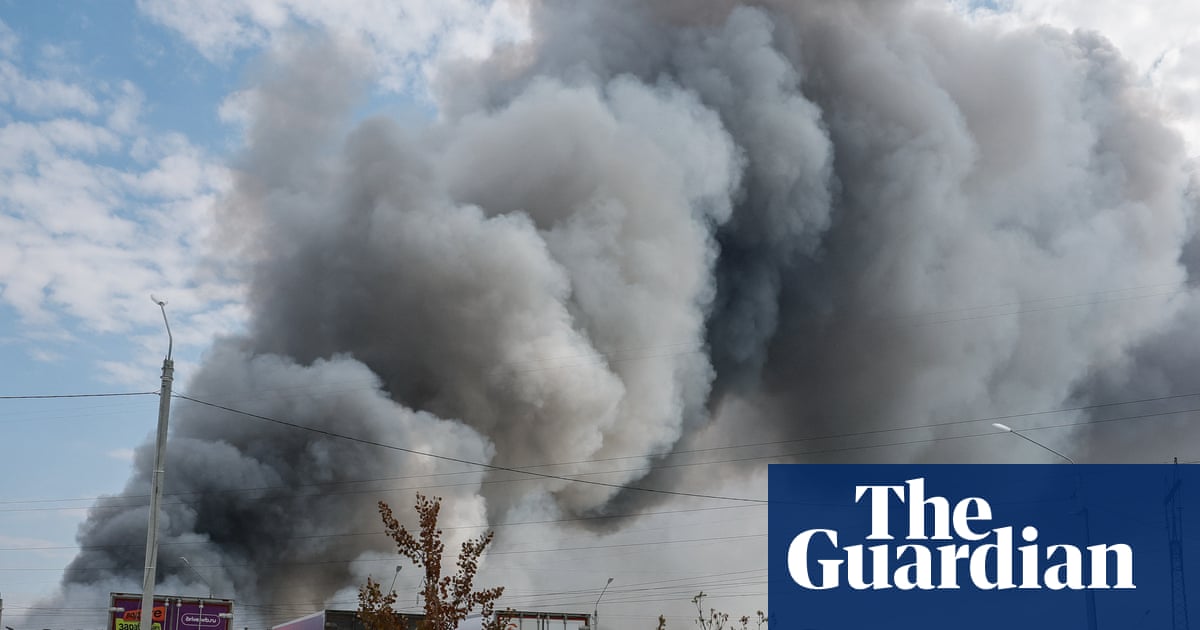
The diplomatic row centers on the use of unmanned aerial systems built by two separate UK firms. These devices have been deployed in a broader campaign targeting military infrastructure and industrial facilities deep within Russian borders. Among the specific sites hit are warehouses belonging to Wildberries, which operates as Russia’s largest online retail platform. Ukrainian officials claim that seven out of ten of the company’s largest logistics centers have been disabled, causing significant economic disruption.
In response to Moscow’s threats, a spokesperson for the UK Ministry of Defence firmly rebuffed the accusations. The government stated that Britain stands alongside Ukraine and remains dedicated to providing the equipment required for Kyiv to defend itself against what it describes as an illegal invasion. The spokesperson emphasized that Russia should have no doubt regarding the resolve of the British government to oppose aggression, both in Ukraine and against its own allies.
The diplomatic friction coincides with a marked intensification of cross-border violence. Data from independent conflict monitors indicates that Ukraine launched three times as many long-range strikes in July compared to January. These operations have expanded to include swarms of drones and missiles targeting energy facilities, oil refineries, and military depots. The strategy appears designed to stretch Russian air defenses across a wider geographic area while reducing Moscow’s revenue streams for the war effort.
Recent nights have seen particularly heavy exchanges. Russian officials reported that approximately 620 drones were directed toward the region surrounding Moscow in one recent barrage, with air defenses destroying more than 180 of them. Earlier in the week, a massive attack saw hundreds of drones aimed at the capital, resulting in several casualties and damage to infrastructure. A Wildberries facility near Podolsk sustained minor damage during one such incident, though fires were quickly extinguished.
The impact of these strikes extends beyond military targets. By hitting commercial logistics hubs, Kyiv aims to bring the realities of the war closer to the Russian public. Reports suggest that billions of pounds worth of merchandise have been destroyed in these attacks. This approach contrasts with earlier phases of the conflict, where frontline combat dominated the narrative. Now, the reach of Ukrainian weaponry allows it to challenge targets up to 1,500 miles from its own border.
Ukraine’s ability to conduct such deep strikes has grown through rapid development of homegrown technologies. Systems like the Flamingo cruise missile and long-range fixed-wing drones have enabled Kyiv to match some of the deep-strike capabilities Russia possessed at the start of the war. However, Ukraine still lacks the high-speed ballistic missiles that Moscow frequently employs, creating an asymmetry in offensive power despite improvements in drone technology.
The human cost of this escalation remains high on both sides. Russian officials stated that overnight attacks killed seven people in Russia, while Ukrainian authorities reported civilian deaths from retaliatory strikes. In Kharkiv oblast, a missile attack damaged residential buildings and public facilities, killing ten people. The strain on air defense systems for both nations is becoming apparent, with resources stretched thin as they attempt to intercept increasing numbers of incoming projectiles.
As winter approaches, concerns are growing about the sustainability of these defensive efforts. Both sides face exhaustion in their air defense capabilities, which may lead to increased civilian casualties in the coming months. The UK’s continued support for Ukraine, including a recent announcement of tens of thousands of drones, signals a long-term commitment that Moscow views as a direct threat. The diplomatic standoff underscores the widening scope of the conflict beyond immediate battlefields.
Looking ahead, the interaction between Western military aid and Russian retaliation will likely define the next phase of the war. London’s refusal to back down from its support policy suggests that further escalations are possible. Meanwhile, Kyiv’s strategy of targeting economic and logistical nodes aims to erode Russia’s capacity to sustain its military operations. The coming weeks will test the resilience of both Ukrainian offensive capabilities and Russian defensive networks.
Sources behind this briefing
Go to the original reporting
- The Guardian World↗Russia warns UK of ‘consequences’ over reports Ukraine using British drones in attacks
- BBC News↗Russia says UK 'will pay' for supplying drones to Ukraine

