The short version
- Moroccan police arrested 111 individuals attempting to cross into Spain's enclave of Ceuta following social media calls for a new mass migration event.
- Spain has deployed additional security forces and installed maritime barriers in response to the previous surge that resulted in dozens of deaths and thousands of irregular entries.
- Spanish officials stated that most migrants who entered irregularly would be returned to Morocco, with only rare exceptions granted legal status or access to mainland Spain.
Moroccan authorities arrested 111 people on Saturday as they attempted to cross into the Spanish territory of Ceuta. The detentions occurred amid significantly tightened security protocols on both sides of the border, implemented after social media posts circulated calls for another mass crossing event. This incident follows a period of intense instability at the frontier, specifically two weeks after more than 72,000 migrants surged into Ceuta in late July. That earlier crisis caused diplomatic friction within the European Union and fueled anti-immigration rhetoric among far-right political parties globally, while also resulting in at least 96 deaths as people tried to reach European soil.
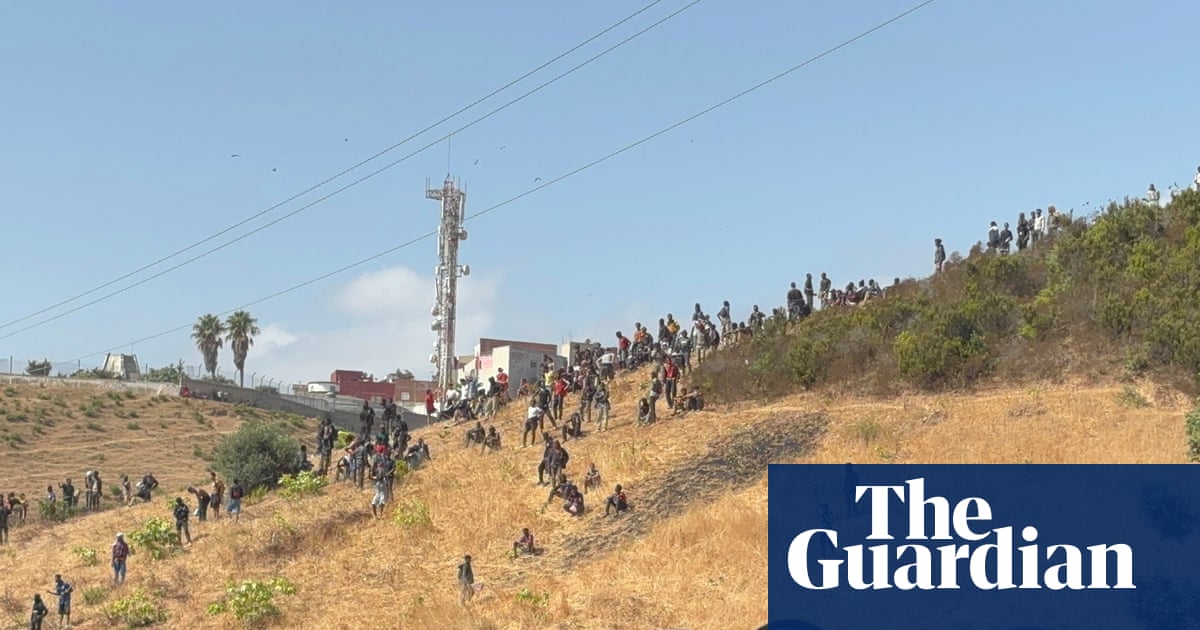
According to a source within Morocco’s interior ministry speaking to Reuters, the group detained included 109 migrants from sub-Saharan Africa. Two Moroccan citizens were also arrested in or around Fnideq, the city located near the border with Ceuta. Spanish news agency EFE reported that Moroccan police used teargas to disperse groups of migrants who had gathered on hills approximately 3 kilometers from the border crossing. Later observations by Reuters journalists showed hundreds of police officers returning from these areas outside Fnideq. Some officers were equipped with riot gear, while others wore plainclothes, indicating a multi-layered security response.
The atmosphere in Ceuta itself appeared calmer compared to the chaotic days immediately following the July 30 crossing attempt. Spanish soldiers were observed guarding supermarkets, and police patrolled the main streets of the enclave. Despite the relative calm, the presence of security forces remains heavy. Madrid has installed a maritime barrier and deployed more than 500 additional police officers from mainland Spain to the territory. This reinforcement raises the total number of security personnel in Ceuta to more than 1,600. The Spanish interior ministry stated that these reinforcements would remain in place for as long as necessary to maintain order.
Fernando Grande-Marlaska, Spain’s interior minister, emphasized the government's commitment to preventing a recurrence of the July events. He stated on Thursday that authorities would continue deploying whatever personnel were needed to restore normality as soon as possible. Regarding the migrants currently in Ceuta, approximately 5,000 individuals remain in the territory. Reuters journalists observed hundreds of these people sheltering from the intense heat under makeshift bamboo structures on the urban beach of El Trampolin. The conditions highlight the ongoing humanitarian challenge alongside the security concerns.
Spanish officials have clarified the legal status and future prospects for those who entered irregularly. Grande-Marlaska indicated that migrants who crossed without authorization would not be permitted to stay in Ceuta, travel to mainland Spain, or obtain legal status. Exceptions would only be made in rare cases involving extreme vulnerability. Those without a right to remain are expected to be returned to Morocco. This policy underscores the strict approach adopted by Madrid in the wake of the recent surge, aiming to deter further irregular migration while managing the current population within the enclave.
In Rabat, authorities have been actively monitoring digital communications for signs of organized movement. Earlier this week, Moroccan officials stated they were tracking social media posts and messages of unknown origin that called for a mass crossing on August 15. The government warned that it would prosecute both organizers and participants involved in such activities. This proactive stance reflects an effort to disrupt coordination before physical movements begin. The focus on digital surveillance complements the physical security measures deployed along the border.
Security reinforcements were visible near the border, including police vans equipped with wire shields and road checkpoints. Local media reported similar security enhancements near Melilla, another Spanish territory in North Africa. Authorities prevented several groups from boarding trains and buses to northern Morocco in cities such as Casablanca, Fez, and Kenitra. These measures aimed to intercept migrants before they could reach the border zones. However, witnesses told Reuters that some migrants from sub-Saharan Africa managed to bypass security checkpoints by taking mountain routes towards Fnideq, suggesting that despite heavy policing, alternative paths remain a concern.
The logistical impact of the security deployment was evident in local infrastructure usage. One witness reported that schools in Fnideq had been converted into accommodation for security forces deployed near the border. This repurposing of civilian facilities highlights the scale of the operation and the strain on local resources. Additionally, Morocco’s interior ministry ordered journalists from EFE and Spanish state broadcaster TVE to leave Fnideq immediately without providing an explanation. This restriction on media access complicates independent verification of events on the ground and limits public understanding of the situation in the immediate border area.
Sources behind this briefing
Go to the original reporting
- The Guardian US↗Moroccan police arrest more than 100 people as they attempt to enter Ceuta

