The short version
- Missouri Secretary of State Denny Hoskins rejected a referendum petition challenging the state's new congressional map, declaring such challenges unconstitutional under state law.
- Hoskins also dismissed a separate ballot measure designed to strengthen citizen initiatives, arguing it violated rules against combining multiple constitutional subjects into one amendment.
- Advocacy groups plan to sue over both decisions, raising questions about whether primary elections held under the new map will stand if courts later intervene.
Missouri’s top election official has blocked a citizen-led effort to place a referendum on the state’s new congressional redistricting plan before voters in November. Secretary of State Denny Hoskins, a Republican, declared the petition void on Tuesday, asserting that Missouri law does not permit voters to challenge congressional maps through referendums. This decision effectively shields the newly drawn districts from immediate public vote, despite supporters submitting hundreds of thousands of signatures to qualify the measure for the ballot.
The redistricting plan in question was approved by the Republican-led state legislature and aligns with a broader strategy endorsed by former President Donald Trump to redraw districts in favor of the GOP. Missouri became the second state, following Texas, to undertake mid-decade redistricting with the goal of securing a slim House majority for Republicans in upcoming midterm elections. The new map significantly alters the composition of several districts, including the fifth congressional district based in Kansas City, which is currently held by Democratic Representative Emanuel Cleaver.
Under the revised boundaries, the fifth district stretches into rural central Missouri, shifting its political tilt toward Republicans. This change aims to help GOP candidates unseat incumbents or win open seats, building on the party’s existing control of six of the state’s eight congressional seats. Hoskins argued that the referendum process was never intended for redistricting matters and that allowing such a vote would violate both state and federal constitutional frameworks.
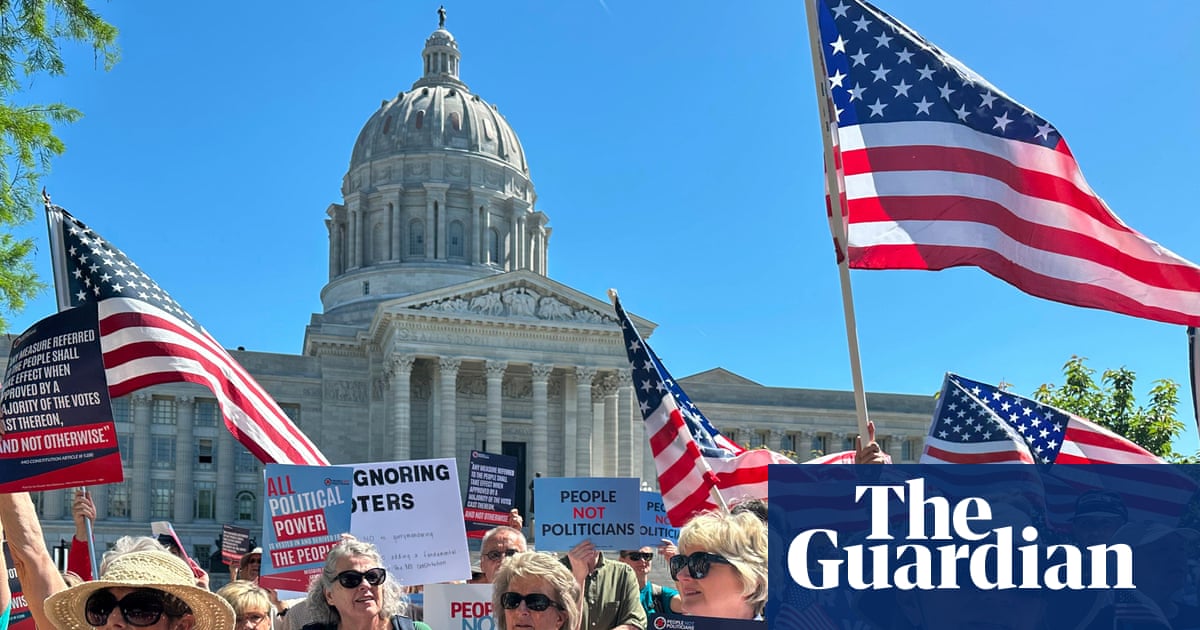
Advocates for the referendum have vowed to contest Hoskins’ ruling in court. Richard von Glahn, executive director of People Not Politicians Missouri, criticized the secretary’s decision as an attempt to silence public input. The group submitted more than 300,000 signatures in December, well exceeding the approximately 111,000 required for ballot qualification. Local election officials had already verified the validity of these signatures, but Hoskins waited until the final day permitted by state law to announce his rejection, ensuring the new districts could be used in the ongoing primary elections.
In addition to the redistricting referendum, Hoskins rejected a separate petition seeking to amend the state constitution to protect the citizen initiative process. The proposed amendment would prevent the legislature from making it harder to qualify initiatives for the ballot and would require an 80% supermajority vote in both legislative chambers to reverse or amend voter-approved measures. Currently, a simple majority suffices for such changes. Hoskins dismissed this petition as well, citing a constitutional prohibition against combining multiple subjects and sections into a single amendment.
The Respect Missouri Voters coalition, which sponsored the initiative protection measure, also plans legal action. Bob Johnson, a coalition member and former Republican state senator, condemned the rejection as a disregard for the will of the people. Both decisions were supported by opinions from Catherine Hanaway, the Republican attorney general, who provided the legal rationale for Hoskins’ actions. These rulings highlight the ongoing tension between legislative authority and direct democracy in Missouri.
The legal battles surrounding Missouri’s redistricting effort have been extensive, with approximately a dozen lawsuits filed over the past year. Hoskins had previously sought to block the referendum petition in federal court last fall, but a judge dismissed the lawsuit as premature, noting that Hoskins had the authority to reject the petition himself if he deemed it unconstitutional. This earlier judicial interaction set the stage for the current standoff.
If courts ultimately rule against Hoskins and order the redistricting referendum onto the ballot, significant logistical questions remain regarding the 2026 elections. It is unclear whether candidates who win primaries under the new districts will continue to run in those same districts during the general election while voters decide on the map’s validity. Alternatively, courts might require a redo of the congressional primaries using the previous district boundaries. These uncertainties underscore the high stakes and complex legal landscape surrounding Missouri’s electoral changes.
The timing of Hoskins’ decisions has drawn criticism from opponents who argue that delaying the announcement allowed the new districts to be used in primary filings without public input. Candidates began filing for office in February under the new map, with Hoskins stating at the time that they were doing so under the revised boundaries. As legal challenges proceed, the outcome could reshape not only Missouri’s congressional representation but also the broader debate over the role of citizen initiatives in state governance.
This situation reflects a national trend of mid-decade redistricting efforts aimed at gaining partisan advantage, often accompanied by intense legal scrutiny. In Missouri, the combination of rejected petitions and pending lawsuits creates a volatile environment for upcoming elections. Voters and candidates alike face uncertainty as the judicial system weighs in on the constitutionality of both the redistricting map and the mechanisms for direct democracy.
Sources behind this briefing
Go to the original reporting
- The Guardian US Politics↗Missouri rejects citizens’ bid for vote on Trump-backed redistricting plan