The short version
- Scott Colom has been confirmed as Mississippi’s next U.S. Senator, ending a 44-year streak of Republican victories in the state's Senate races.
- The election represents a historic milestone, as Colom is the first Black person to represent Mississippi in the Senate since Blanche K. Bruce served a single term in the late 19th century.
- Supporters and civil rights veterans gathered at Tougaloo College to celebrate, viewing the win as a vindication of long-standing efforts to secure voting access and political representation.
Scott Colom has officially secured his position as Mississippi’s next United States Senator, marking a profound transformation in the state’s political landscape. The confirmation follows an extended period of ballot curing and vote counting that stretched over more than a week, underscoring the tightness of the race and the meticulous scrutiny applied to the final tally. Colom’s victory ends a forty-four-year drought for Democrats in Mississippi Senate elections, with the last Democratic win occurring in 1982 when John C. Stennis claimed his seventh term.
The historical weight of this outcome cannot be overstated. Colom is the first Black senator from Mississippi since Blanche K. Bruce, who was born into slavery and served a single term ending in 1881. Before Bruce, Hiram Revels became the first Black man to serve in the U.S. Senate, also representing Mississippi during Reconstruction. For more than a century, the state has not sent a Black representative to the upper chamber of Congress, making Colom’s election a significant break from a long-standing pattern of exclusion and segregationist politics.
Celebrations erupted at Tougaloo College, a historically Black institution in Jackson, where approximately one thousand supporters gathered on the Woodworth Chapel Lawn. The atmosphere resembled a community reunion, with attendees spanning generations. Elders who had participated in the civil rights movement stood alongside young voters, many of whom were dressed in apparel representing various colleges and universities across the state, including Alcorn State, Millsaps, Jackson State, and Mississippi State. Members of all nine National Pan-Hellenic Council organizations, commonly known as the Divine 9, were present, displaying their fraternity and sorority letters with pride.
For many attendees, the event was deeply personal and intergenerational. Rev. Maxine Bolden, a Tougaloo graduate born in the 1960s, expressed that witnessing this moment honored her parents, who were active in the civil rights struggle but did not live to see this day. She described the gathering as proof of their lifelong work and noted the significance of young people participating in the democratic process. The presence of babies and toddlers alongside these veterans highlighted the continuity of the fight for voting rights and political inclusion.
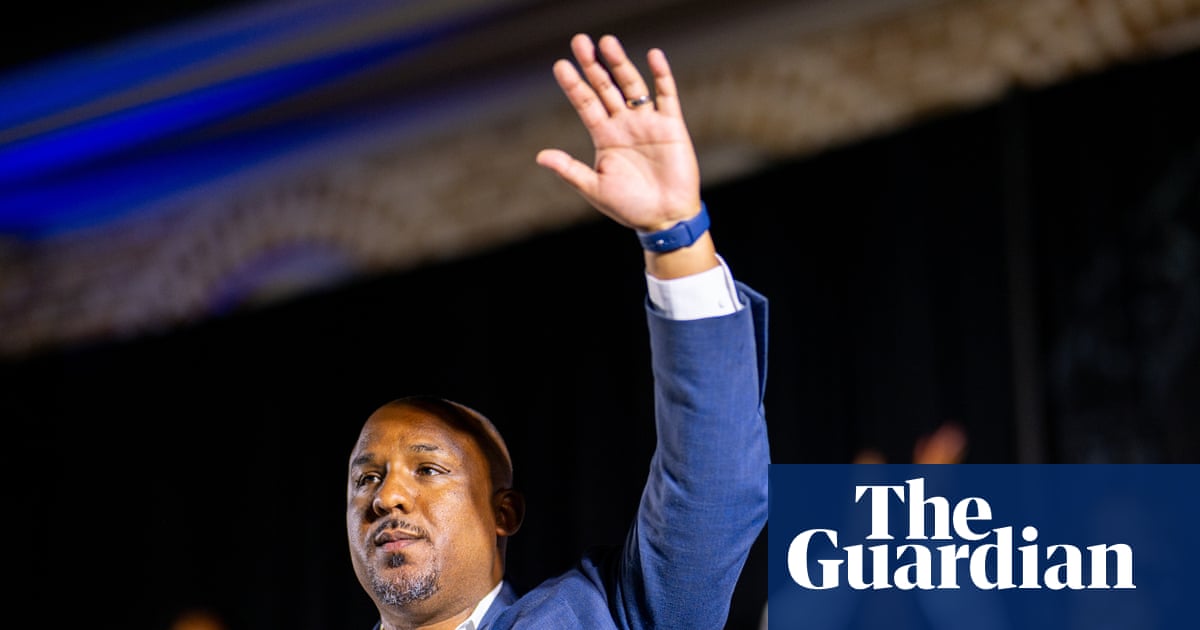
Colom’s campaign was notably family-oriented, featuring his wife, Nadia, and daughters, Lucy and Maddie, in advertisements and public appearances. At the victory event, his daughters led the pledge of allegiance while his wife addressed the crowd. When Colom finally arrived, he entered to the sound of T.I.’s song 'Let ‘Em Know,' drawing a roar from the energized audience. He spoke from behind a sign referencing his viral campaign ad, emphasizing courage and belief in Mississippi’s potential to influence national politics.
In his remarks, Colom acknowledged the state’s complex history, citing civil rights icons such as Medgar Evers, Fannie Lou Hamer, and Frank Figgers. He urged the crowd to honor the veterans of the movement present at the rally. His message centered on the idea that Mississippi matters and that its citizens can demonstrate a new direction for the country. The campaign’s success was bolstered by early support from prominent figures, including Bennie Thompson, who served as Mississippi’s lone Black and Democratic congressional representative for decades.
Thompson, also a Tougaloo graduate, described Colom as a partner in Washington who understands critical issues facing the state, including healthcare, education, housing, and the economic impact of tariffs. He emphasized that Colom listens to constituents, a quality Thompson felt had been missing from Mississippi’s federal representation for a long time. This partnership marks a shift in the state’s congressional delegation, which has been predominantly Republican and white for many years.
The election occurred against the backdrop of ongoing legal battles over voting rights, particularly following the Supreme Court decision in Louisiana v. Callais, which weakened protections under the Voting Rights Act. Activists like Aznii Welchlin had worked tirelessly to mobilize voters in the months leading up to the election. Dr. Charles Holmes, a longtime educator, suggested that while not everyone may fully grasp the historical entanglement of this win with Reconstruction and Jim Crow eras, those present are actively participating in history. The result signals a potential realignment in Southern politics, driven by increased voter engagement and strategic mobilization efforts.
As Colom prepares to take office, the focus will likely shift to policy priorities that resonate with his base, including social services and economic equity. The victory challenges the narrative of inevitable Republican dominance in Mississippi and offers a glimpse into a more diverse political future. However, the long-term impact remains uncertain, as the state’s political dynamics have historically been resistant to rapid change. This election serves as both a celebration of progress and a reminder of the ongoing struggle for equitable representation.
The coming months will reveal how Colom navigates the Senate landscape and whether this win can be sustained in future elections. The mobilization efforts that contributed to his success may set a precedent for other Southern states, where demographic shifts and increased voter turnout could alter political outcomes. For now, the celebration at Tougaloo College stands as a testament to the power of community organizing and the enduring legacy of civil rights activism in Mississippi.
Sources behind this briefing
Go to the original reporting
- The Guardian US Politics↗Promises and pride: Scott Colom rejoices with young and old on historic night in Mississippi