The short version
- Early voting turnout is projected to exceed previous midterm cycles, with polling places opening largely without the widespread disruptions feared by election officials.
- Federal courts have blocked multiple Trump administration efforts to interfere in state election processes, including attempts to invalidate ballots and share voter lists with immigration agencies.
- Voters in the Southwest face significant access challenges due to heavy rains and flash flooding, while postal concerns prompt advice to use drop boxes for late absentee ballots.
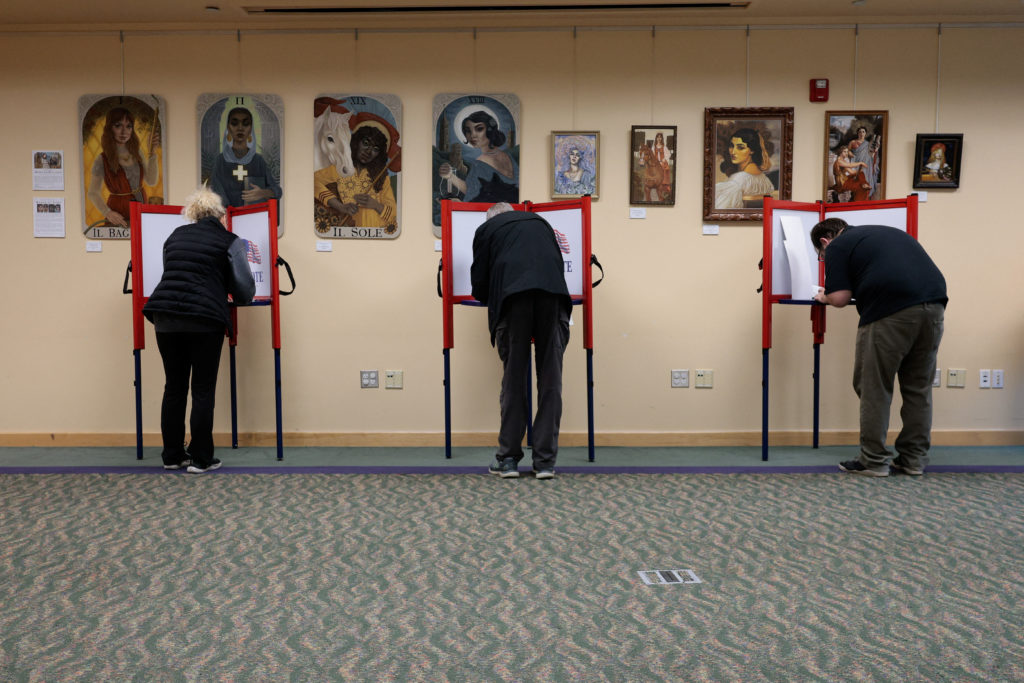
The final day of voting in the 2026 midterm elections began Tuesday against a backdrop of heightened uncertainty, yet polling places across the nation opened with relatively few disruptions. Early voting participation has surged, with turnout figures on pace to surpass those recorded in previous midterm cycles. This high level of engagement comes after a year marked by intense political maneuvering from the White House, which sought to influence how states administer their elections and cast doubt on the legitimacy of results should Republicans fail to maintain control of Congress.
President Donald Trump has utilized executive power throughout the campaign season to challenge state election procedures. His administration launched extensive efforts to identify noncitizen voters, including a high-profile predawn operation in California that resulted in more than two dozen arrests. The Department of Justice also planned its largest-ever monitoring effort for Election Day polling places, a move countered by substantial mobilization from Democratic groups and allied organizations. Despite these aggressive postures, the administration has insisted that no armed federal officials would be present at voting sites on Tuesday.
Judicial intervention has significantly curtailed the administration’s most controversial initiatives. On Monday night, the U.S. Supreme Court rejected a push to force California to set aside thousands of ballots as part of the search for noncitizen voters. In a separate ruling that same evening, a federal judge ordered the Trump administration to cease sending lists of alleged noncitizen voters to state election officials. These decisions align with previous judicial setbacks, including a Supreme Court ruling less than two months prior that blocked an attempt to limit mail balloting through changes at the Postal Service.
The legal defeats underscore a broader pattern in which courts have largely blocked the Republican administration’s efforts to federalize aspects of elections traditionally managed by states. Research and state investigations have consistently shown that instances of noncitizens casting ballots are extremely rare, a fact reflected in the administration’s own record of arrests and charges. The executive orders signed during Trump’s second term attempted to override state authority, but constitutional protections for state control over election rules have thus far held firm against these challenges.
While federal interference attempts were largely neutralized by the courts, logistical issues emerged at the local level. In Westchester County, New York, election officials reported technical difficulties with voting machines accepting paper ballots in a competitive U.S. House race. To ensure security and accuracy, ballots were placed in emergency bags for later counting while voters continued to cast their votes. Officials emphasized that the process remained secure and monitored, with no indication of widespread failure or disenfranchisement resulting from the glitch.
Weather conditions posed more significant physical barriers to voting in other regions. Heavy rains and flash flooding across the Southwest made it difficult for residents in parts of Colorado, Arizona, Utah, and New Mexico to reach polling places. Election administrators in the Navajo Nation announced changes to several polling locations to accommodate these challenges. In Utah’s rural San Juan County, officials permitted electronic voting on Tuesday for residents who might otherwise be unable to travel to designated sites due to road closures or hazardous conditions.
Concerns about postal delays also influenced voter behavior ahead of Election Day. Recent operational changes at the U.S. Postal Service raised fears that late-arriving mail ballots might not be counted, a problem that disenfranchised tens of thousands of voters in California, Oregon, and Washington during this year’s primaries. In response, election administrators and voting rights advocates advised those casting late absentee ballots to use drop boxes or deliver them in person rather than relying on the mail. This guidance aimed to mitigate risks associated with postmarking delays and ensure that all valid votes were processed.
As voting concludes, the focus shifts to the certification process and the potential for further legal challenges. The Trump administration had previously sued to block the certification of Alaska’s Senate results if Democrats won, signaling a willingness to contest outcomes through litigation. However, with early voting largely complete and polling places operating smoothly in most areas, the immediate threat of widespread disruption appears diminished. The coming days will reveal whether the high turnout translates into significant shifts in congressional control and how the administration responds to the final results.
The 2026 midterms have tested the resilience of American election infrastructure under unprecedented political pressure. While the Trump administration’s efforts to sow doubt and interfere with state processes were largely checked by the judiciary, logistical hurdles from weather to technology required adaptive responses from local officials. The outcome will not only determine the balance of power in Congress but also set a precedent for how federal authority interacts with state election administration in future cycles.
Voting rights groups and Democratic allies remain vigilant as results are tallied, prepared to address any irregularities that may arise. The relative calm of Election Day stands in stark contrast to the rhetoric of chaos promoted by some political leaders. As Americans head to the polls or submit their final ballots, the integrity of the process has thus far held firm, reflecting both the robustness of existing safeguards and the effectiveness of judicial oversight in protecting democratic norms.
Sources behind this briefing
Go to the original reporting
- PBS NewsHour↗Election Day underway after a surge in early voting, as Trump sows doubt on results


