The short version
- Democrats aim to reclaim both chambers of Congress to check presidential authority amid declining approval ratings for the administration.
- Republicans hold narrow advantages in key Senate races, while polls suggest Democrats are well-positioned to win the House majority.
- Campaign drama includes a controversial endorsement by a Michigan Democrat and legal challenges regarding ballot integrity in Alaska.
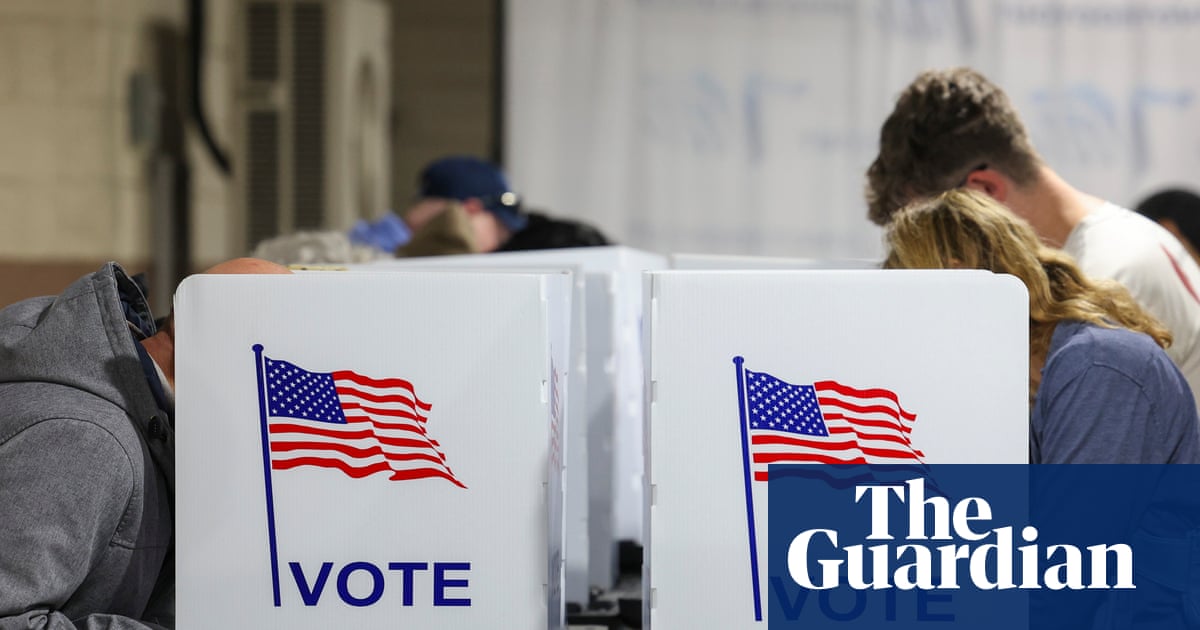
Americans cast ballots on Tuesday in midterm elections that have become a decisive test of Donald Trump’s second presidency. The contests determine control of the Senate and House of Representatives, both currently held by Republicans, alongside gubernatorial races in thirty-six states and numerous local offices. Political analysts and campaign strategists describe the vote as a referendum on the president’s untrammeled power and his administration’s aggressive policy shifts.
The White House party typically loses congressional seats during midterm cycles, a historical trend Democrats hope to exploit given Trump’s declining popularity. Opposition campaigns are seeking a blue wave that would allow them to wrest control of Congress and impose legislative checks on the executive branch. Such a sweep has not occurred in a midterm election since 2006, making the stakes exceptionally high for both parties.
Democrats have centered their messaging on economic affordability, arguing that current policies favor wealthy donors and foreign conflicts over domestic needs. Campaigns emphasize reducing costs for everyday citizens by ending tariffs, cutting military spending abroad, and redirecting resources to social programs. This pitch mirrors concerns that helped Trump defeat Kamala Harris two years ago, but now serves as the foundation for Democratic opposition.
Polling data indicates Democrats are well-positioned to win the House of Representatives. However, regaining the Senate presents a steeper challenge because most competitive seats are located in states that supported Trump in the previous presidential election. Recent surveys from the New York Times and Siena University show Democratic candidates leading in five of seven key battleground contests, including Texas and Kansas, where Democrats have not won Senate seats in decades.
The campaign’s final days were marked by internal party conflicts and legal disputes. In Michigan, a crucial state for Senate control, Democratic Congresswoman Haley Stevens endorsed Republican Mike Rogers after losing her primary to Abdul El-Sayed. The move drew sharp condemnation from Senate Minority Leader Chuck Schumer, who called it a betrayal, while El-Sayed dismissed the controversy as a distraction tactic designed to divert attention from economic issues.
Tensions also flared in Alaska, where reports emerged that the Democratic campaign for Mary Peltola attempted to recruit a challenger with a name similar to Republican Senator Dan Sullivan. Although Peltola denied any knowledge of such efforts, the Department of Justice filed a lawsuit to block certification of results if Republicans lost, citing potential voter confusion. A judge dismissed the suit, but the administration is expected to appeal the decision.
Voting procedures have largely proceeded without major incident across the fifty states and the District of Columbia. Minor disruptions occurred in Kansas due to ballot shortages, in Florida where flooding forced polling site relocations, and in New York suburbs where machine issues were reported. Officials assured voters that all ballots cast would ultimately be counted despite these localized technical difficulties.
Trump has remained highly visible throughout the campaign, staging dozens of rallies across the country to mobilize his base. He urged supporters to treat the midterm as if his name appeared on every ballot, leveraging his personal popularity to bolster Republican candidates. This strategy reflects an effort to maintain congressional support for his administration’s controversial initiatives, including mass deportations, tariffs, and military actions abroad.
The outcome of these elections will significantly shape the trajectory of Trump’s remaining term. A Democratic victory in Congress could halt or modify ongoing policies related to immigration, trade, and foreign intervention. Conversely, a Republican hold on both chambers would allow the president to continue his agenda with minimal legislative obstruction. Voters are deciding not just who controls Washington, but how much power the executive branch retains.
As ballots are counted, attention turns to whether Democrats can overcome structural disadvantages in Senate races while capitalizing on enthusiasm in House districts. The results will reveal whether public dissatisfaction with current policies translates into tangible political gains for the opposition. Regardless of the final tally, the election underscores a deeply divided electorate grappling with the scope of presidential authority.
Sources behind this briefing
Go to the original reporting
- The Guardian US Politics↗Americans head to polls in midterm elections seen as referendum on Trump