The short version
- The Michigan Democratic Senate primary serves as a critical indicator of party direction, pitting a progressive candidate against an establishment-backed incumbent in a race heavily influenced by foreign policy disagreements.
- Republican candidates in Michigan and Georgia are leveraging substantial personal wealth to challenge or secure nominations, testing the traditional influence of presidential endorsements within the GOP.
- Democrats in Virginia face structural disadvantages after a court ruling blocked redistricting efforts, forcing them to rely on candidate quality rather than map manipulation to compete in upcoming general elections.
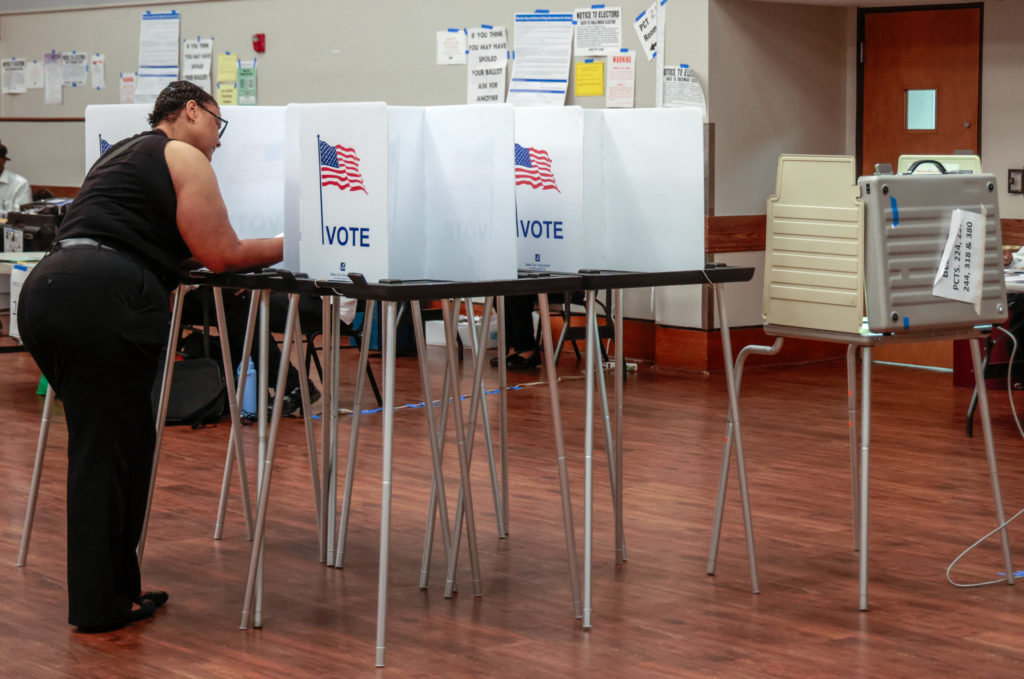
Michigan voters are casting ballots in primary elections that offer a definitive measure of the Democratic Party’s current political trajectory. The contest for the U.S. Senate seat vacated by retiring Senator Gary Peters has emerged as the most significant race on the ballot, drawing national attention due to the state’s pivotal role in presidential politics. The outcome will determine whether the party leans toward progressive activism or establishment continuity as it prepares for the general election against Republican nominee Mike Rogers.
The Democratic Senate primary features a sharp ideological divide between Abdul El-Sayed and Representative Haley Stevens. El-Sayed, who has secured the endorsement of Senator Bernie Sanders, represents the progressive wing of the party. Stevens, a four-term congresswoman, is backed by Senate Majority Leader Chuck Schumer and has received substantial financial support from the American Israel Public Affairs Committee and affiliated groups. This spending, which totals nearly $30 million, underscores the intense competition for influence within the Democratic base.
Foreign policy, specifically U.S. support for Israel during the conflict in Gaza, has become a central fault line in this race. Michigan is home to the largest Arab American population in the country, making these issues particularly resonant with local voters. El-Sayed has framed the contest as a struggle between grassroots organizing and outside financial influence. The bitterness of the campaign reflects broader fractures within the party, similar to pressures faced by Senator Elissa Slotkin in 2024 when activists urged her to adopt a harder stance on Israel.
Regardless of which Democrat wins the nomination, the victor will face the difficult task of reunifying splintered factions to defeat Mike Rogers. Rogers, a former congressman, is running unopposed in the Republican primary. The stakes are high for Democrats, who are under pressure to retain this seat to maintain their chances of controlling the Senate. The race highlights the challenges of balancing donor expectations with activist demands in a politically diverse battleground state.
In the gubernatorial race, Republican voters will select their nominee to succeed term-limited Governor Gretchen Whitmer. President Donald Trump has endorsed Representative John James, whose backing typically carries significant weight in Republican politics. However, the race features a complicating dynamic involving businessman Perry Johnson, who has loaned his own campaign more than $30 million according to state finance records.
The influence of self-financing candidates is reshaping Republican primary dynamics beyond Michigan. In Georgia, Rick Jackson spent approximately $100 million of his own money to overcome Trump-backed candidate Burt Jones in a runoff for governor. This trend suggests that personal wealth can sometimes outweigh presidential endorsements in determining primary outcomes, creating uncertainty about the cohesion of the Republican ticket in key states.
On the Democratic side in Michigan, Secretary of State Jocelyn Benson is facing a challenge from Genesee County Sheriff Chris Swanson. While the Senate and gubernatorial races draw national scrutiny, this contest for secretary of state adds another layer of complexity to the primary ballot. Voters are deciding on nominees across multiple levels of government, reflecting the broad scope of the election cycle.
In Virginia, Democrats are grappling with the aftermath of a state supreme court decision that overturned a voter-approved referendum to redraw congressional districts. The measure had aimed to create four new winnable seats for the party, but its failure left Republicans with a clear advantage in the number of competitive House seats. This structural setback has forced Democrats to rely on traditional electoral strategies rather than map manipulation.
Virginia Democrats are focusing on three specific districts where they believe their candidates have the best chance of winning the nomination and potentially flipping seats in November. Former Representative Elaine Luria is seeking to return to her Virginia Beach-centered swing seat, which she narrowly lost in 2022. She faces three other Democrats without prior elected office experience. Meanwhile, former Representative Tom Perriello is running for his old district in central Virginia, hoping to compete despite the area shifting further to the right since his previous tenure.
These primaries across Michigan, Virginia, and other states illustrate the strategic challenges facing both parties. Democrats must navigate internal divisions over foreign policy and donor influence while overcoming structural disadvantages in redistricting. Republicans are testing the limits of personal wealth in primary contests, potentially altering the traditional dynamics of presidential endorsements. The results will provide critical insights into the political landscape heading into the fall general elections.
Sources behind this briefing
Go to the original reporting
- PBS NewsHour↗What to watch in the Aug. 4 primaries in Michigan and beyond

