The short version
- Mexico has withdrawn support from its regional governing body, Concacaf, to publicly endorse FIFA President Gianni Infantino despite widespread criticism of his leadership.
- European football authorities maintain they have lost confidence in Infantino and warn that a World Cup boycott remains possible unless further assurances are provided.
- The dispute centers on a failed proposal to sell stakes in World Cup tournaments to private investors, which triggered accusations of poor governance and unilateral decision-making.
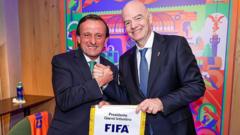
A significant fracture has emerged within the global football community as Mexico, one of the co-hosts for the upcoming 2026 World Cup, has publicly aligned itself with FIFA President Gianni Infantino. This move places the Mexican Football Federation at odds with Concacaf, the regional governing body for North and Central America and the Caribbean, which had previously called for a comprehensive review of Infantino’s presidency. The divergence highlights the growing polarization among football confederations regarding the future leadership of the world’s governing body.
The conflict originated from FIFA’s aborted plan to sell stakes in its tournaments, including the men’s and women’s World Cups, to private investors through a subsidiary known as the FIFA Forward Enterprise. Infantino had offered $40 million to member associations that supported the proposal, but the plan faced intense backlash for lacking transparency and excluding key stakeholders from the decision-making process. Following widespread condemnation, FIFA executives acknowledged mistakes in how the initiative was handled, stating that it was not their intention to exclude member associations or make them feel sidelined.
Despite these acknowledgments, European football authorities remain unmoved. UEFA, the governing body for European football, has stated unequivocally that it has lost confidence in Infantino’s leadership. The organization described the proposed deal as opaque and criticized the unilateral nature of the decision-making process. UEFA emphasized that assurances must be provided to prevent similar attempts to alter the structure of the game in the future. Without such guarantees, the possibility of a European boycott of the 2026 World Cup remains a tangible threat.
In contrast, Infantino retains strong support from other regions. The Confederation of African Football has unanimously backed him, while South America’s governing body, Conmebol, has echoed Mexico’s stance by rejecting any attempts to remove Infantino without a vote involving all 211 FIFA members. Argentina’s football association praised Infantino for acknowledging his errors and highlighted his decade-long tenure as focused on global development and institutional strength. These endorsements underscore the geographical divide in opinions about his leadership style and vision for the sport.
Concacaf, however, continues to express dissatisfaction with Infantino’s approach. While it stopped short of declaring a complete loss of confidence, the organization criticized the recent events as symptomatic of leadership that no longer prioritizes football above other interests. It pointed to a pattern of missteps and poor governance, arguing that the failed proposal exemplified a departure from collaborative decision-making. This criticism reflects broader concerns among some members about the direction of FIFA under Infantino’s stewardship.
Individual national associations have also begun to distance themselves from Infantino. The English Football Association recently withdrew its support, joining Wales, Albania, and Croatia in turning away from the 56-year-old president. These moves signal a shift within Europe, where trust in Infantino appears to be eroding further. Meanwhile, UEFA reiterated that statements of support from individuals employed by Infantino do little to change its position, emphasizing that the core issue lies with his leadership rather than isolated incidents.
The Asian Football Confederation had initially expressed solidarity with UEFA and Concacaf before Infantino withdrew the controversial proposal. However, the damage to relations may already be done, as many stakeholders view the episode as indicative of deeper systemic issues within FIFA. The acknowledgment of errors by FIFA executives did little to quell concerns about transparency and inclusivity in decision-making processes. For critics, this incident reinforces fears that power is being concentrated in ways that undermine democratic principles within the organization.
As tensions persist, the question of who might replace Infantino if he were to step down looms large. While no clear successor has emerged, the current rift suggests that any transition would need to address longstanding grievances about governance and accountability. Until then, the football world remains divided, with some viewing Infantino as a stabilizing force and others seeing him as emblematic of outdated practices. The outcome of this crisis could reshape not only FIFA’s leadership but also the broader landscape of international sports administration.
Looking ahead, the focus will likely remain on whether Infantino can restore trust among his detractors or if the divisions will deepen further. With the 2026 World Cup approaching, the stakes are particularly high for all parties involved. A boycott by European teams would deal a significant blow to the tournament’s prestige and financial viability, making resolution of this dispute critical. For now, the football community watches closely as these competing narratives play out, aware that the decisions made in the coming months could have lasting implications for the sport.
Ultimately, the situation underscores the challenges faced by global organizations striving to balance diverse interests while maintaining unity. Whether Infantino can navigate this crisis successfully depends on his ability to demonstrate genuine commitment to reform and collaboration. Until then, the football world remains caught between admiration for his achievements and frustration with his methods, leaving uncertainty about what lies ahead for both FIFA and its president.
Sources behind this briefing
Go to the original reporting
- BBC News↗Mexico break ranks to join Argentina in backing Infantino

