The short version
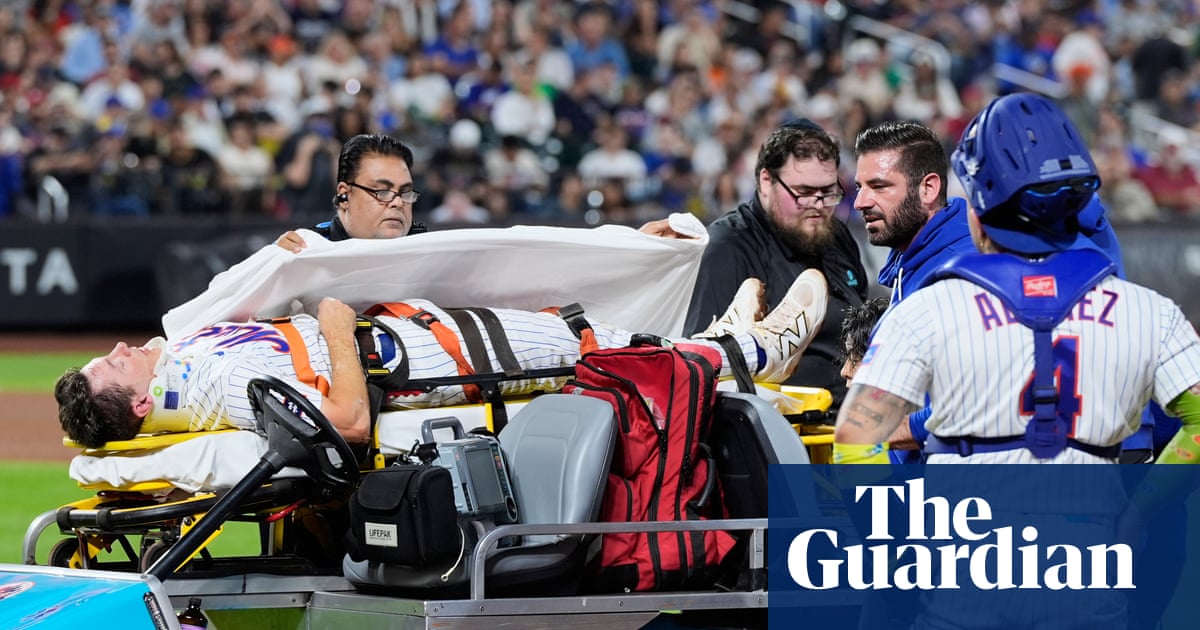
- Jared Young was carted off the field after being struck in the head by Nolan McLean during a collision at first base.
- Hospital imaging showed no structural brain injury, though the player continues to exhibit concussion symptoms.
- Manager Andy Green stated that while the incident was frightening, the most severe potential outcomes appear to have been avoided.
New York Mets first baseman Jared Young suffered a significant head injury during Thursday night’s contest against the Philadelphia Phillies, requiring immediate medical attention and removal from the field. The incident occurred in the sixth inning of a game the Mets ultimately lost 3-0. Young was knocked unconscious after colliding with teammate Nolan McLean as both players converged on a slow ground ball hit by Justin Crawford. The collision resulted in Young falling face-first to the dirt, remaining motionless for a period that alarmed teammates and staff alike.
The sequence began with McLean breaking toward first base upon contact. Young initially retreated toward the bag but then extended his right hand to field the ball while attempting to maintain contact with the base. McLean resumed his sprint at that moment, leading to a direct impact with Young’s head. The pitcher tripped over the first baseman as Crawford safely crossed the bag. The force of the blow rendered Young unconscious, prompting an immediate response from the coaching staff and medical personnel.
Mets manager Andy Green described the scene as terrifying, noting that it took considerable time for Young to regain consciousness. Upon waking, Young reportedly asked what had happened, indicating a period of confusion or memory loss associated with the trauma. Green emphasized that while the negative CT scan results were encouraging, the player is still experiencing genuine concussion symptoms. However, the manager confirmed that Young retains full use of his extremities, suggesting no immediate spinal or limb injuries.
The emotional toll of the accident was evident across the field. Teammates gathered around Young as he lay on the ground, with shortstop Francisco Lindor expressing fear at seeing a colleague unresponsive. Catcher Francisco Alvarez appeared to be praying, and players from both teams watched with concern from the dugouts. Philadelphia’s interim manager Don Mattingly described the situation as weird and unsettling, noting that he heard reports of the severity but hoped for a positive outcome for the young player.
Nolan McLean, who was involved in the collision, appeared visibly shaken by the event. Despite the trauma, he remained in the game long enough to record a called third strike against Garrett Stubbs, ending the inning. Green acknowledged that keeping McLean in the lineup was perhaps not the optimal decision given the circumstances, but noted that the pitcher demonstrated resilience by completing the out before being replaced by reliever Tobias Myers at the start of the seventh inning. The manager suggested that the human element of the accident weighed heavily on McLean.
Young, a 31-year-old in his first full season as a regular big leaguer, has been a consistent presence for the Mets this year. He has hit .266 with nine home runs and 39 RBIs across 103 games, having previously missed six weeks due to a left knee injury. His role as a reliable first baseman has made him a respected figure within the clubhouse. Lindor highlighted Young’s importance to the team’s dynamic throughout the season, underscoring the collective appreciation for his contributions.
Medical protocols were followed swiftly after the incident. An athletic trainer and Green rushed from the dugout, and a cart was summoned to immobilize Young for transport. He flashed a thumbs-up gesture before being wheeled behind the left-center field fence. The negative CT scan is a critical first step in ruling out more severe traumatic brain injuries such as bleeding or fractures. However, the presence of concussion symptoms means that further evaluation and rest will be necessary.
The incident serves as a stark reminder of the physical risks inherent in baseball, particularly during plays at the base paths where collisions can occur unexpectedly. While structural damage was ruled out, the lingering effects of concussions can vary widely among athletes. The Mets organization will likely monitor Young’s condition closely before determining his availability for future games. For now, the focus remains on his recovery and ensuring that no long-term neurological issues arise from the collision.
As the team processes the event, the mood surrounding the loss to Philadelphia has been overshadowed by concern for Young’s well-being. The quick response from medical staff and the negative initial scan provide some relief, but the road to full recovery from a concussion is often unpredictable. Fans and teammates alike are hoping that Young will return to health without lasting complications, allowing him to continue his promising season with the Mets.
The collision highlights the split-second decisions players must make on the field and the potential for unintended consequences. McLean’s attempt to reach the base and Young’s effort to secure the ball led to a tragic accident that neither player could have anticipated. The baseball community will be watching closely as more information becomes available regarding Young’s prognosis and return timeline.
Sources behind this briefing
Go to the original reporting
- The Guardian US↗Mets’ Jared Young knocked out after taking knee to head in ‘terrifying’ collision

