The short version
- Metropolitan Police Commissioner Sir Mark Rowley publicly questioned the Prison Service’s decision to release Simon Levy after he assaulted a female officer, arguing the move lacked justification.
- Government ministers and victims’ advocates have condemned the institutional failures that allowed Levy to remain free while committing multiple sexual assaults and two murders between 2023 and 2025.
- Whitehall sources maintain the Prison Service lacked legal authority to detain Levy indefinitely, highlighting a jurisdictional conflict between police expectations and statutory prison powers.
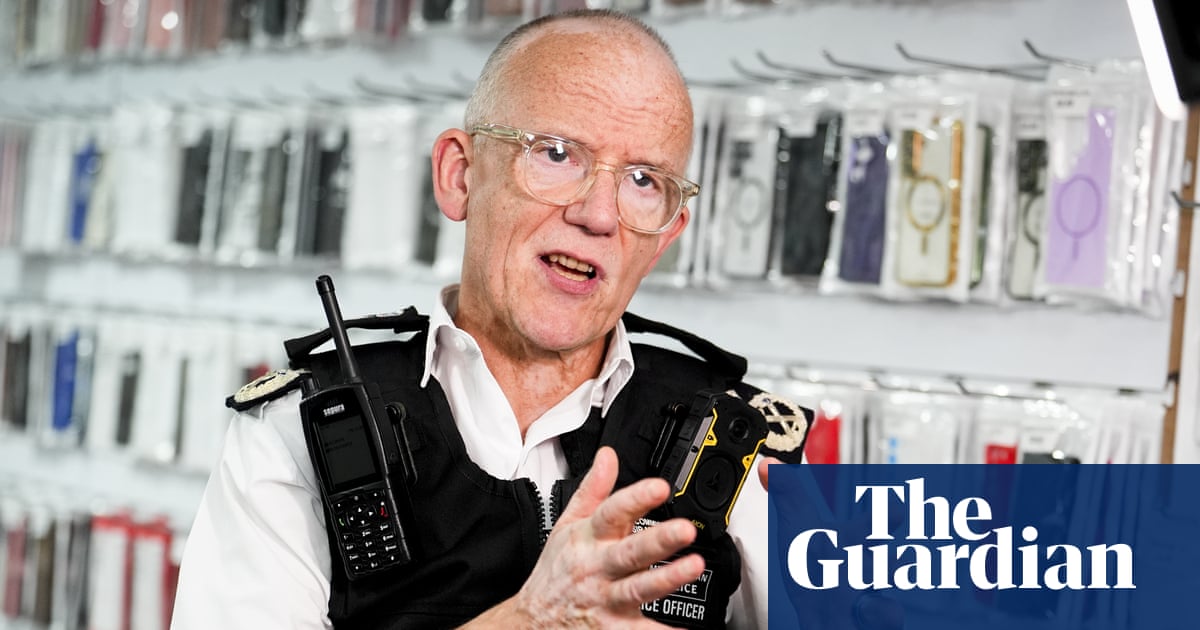
Sir Mark Rowley, commissioner of the Metropolitan Police, has ignited a contentious debate within the UK’s criminal justice system by publicly questioning why Simon Levy was released from HMP Brixton after sexually assaulting a female prison officer. The incident occurred in April 2022, yet Levy remained on license and was eventually freed, allowing him to commit further violent crimes. Rowley stated he did not understand the decision to release an individual who had already demonstrated such severe violence against staff members.
The consequences of that release were catastrophic. While at large, Levy murdered Carmenza Valencia-Trujillo in March 2025 and Sheryl Wilkins five months later. He also violently raped a third woman and was subsequently convicted of sexually assaulting eleven other women, primarily on London’s transport network between 2023 and 2025. This week, Levy received a whole-life sentence for his crimes, marking the end of a period during which he attacked thirteen additional victims after his initial prison offense.
Rowley acknowledged that the Metropolitan Police made mistakes in handling the case but firmly rejected suggestions that the force failed to build a case regarding the first murder. He emphasized that two officers have been referred to the Independent Office for Police Conduct for investigation, demonstrating a commitment to accountability within his own organization. However, he contrasted this internal discipline with what he perceives as a lack of similar rigor from other agencies involved in Levy’s supervision.
The core of Rowley’s criticism targets the Prison Service. He argued that releasing an individual who had indecently assaulted staff was indefensible, regardless of procedural constraints. This stance has drawn sharp pushback from Whitehall sources, who contend that the Prison Service did not possess the legal power to keep Levy incarcerated indefinitely without specific judicial orders. The disagreement highlights a significant gap between police expectations for public safety and the statutory limitations governing prison releases.
Mina Smallman, whose daughters Bibaa Henry and Nicole Smallman were murdered by Danyal Hussein in 2020, has been vocal about her frustration with the Metropolitan Police’s handling of high-profile cases. She contacted Rowley directly after learning of his comments on Levy, expressing skepticism about the force’s capacity for meaningful reform. Smallman argued that the Met is too large and bureaucratic to effectively manage day-to-day operational integrity, citing issues ranging from inactivity to systemic misogyny and racism.
Smallman pointed out a disturbing pattern in how police prioritize cases based on victim demographics. She noted that Levy’s first murder victim was a sex worker whose case was not thoroughly investigated until he killed a mother of four. Only then were the two cases linked, suggesting a bias in determining which lives warrant immediate and serious police attention. Smallman described this selective enforcement as ridiculous and deeply offensive to the families of all victims.
Sarah Jones, the crime and policing minister, has echoed these concerns, describing Levy as a monster and labeling the institutional failures that allowed him to remain free as deeply concerning. She indicated that the government would permit relevant institutions and police watchdogs to conduct thorough investigations into what went wrong. The focus is on establishing urgent answers to how such devastating harm could be inflicted after an offender was freed by both police and courts.
Rowley maintained that the inference that the Metropolitan Police did not try to solve the first murder is untrue, asserting that significant efforts were made. Despite this defense, the broader narrative emerging from the case is one of systemic fragmentation. The disconnect between police oversight, prison management, and judicial review has allowed a dangerous offender to operate with impunity for years. As investigations continue, the pressure mounts on all agencies to demonstrate how they can prevent similar failures in the future.
The Prison Service has been approached for comment regarding Rowley’s criticisms but has not yet provided a detailed response. The situation underscores the complex interplay between legal mandates and public safety expectations. While Rowley seeks accountability for the release decision, the underlying issue remains whether current laws provide sufficient tools to detain individuals deemed high-risk when standard licensing procedures are followed. This tension is likely to fuel ongoing political and operational debates within the UK justice system.
As the Metropolitan Police faces scrutiny over its internal culture and operational effectiveness, the Levy case serves as a stark reminder of the stakes involved in criminal justice administration. The combination of delayed charges, jurisdictional disputes, and perceived biases in victim prioritization has eroded public trust. Moving forward, the challenge for policymakers and law enforcement leaders will be to reconcile legal constraints with the urgent need to protect vulnerable communities from known threats.
Sources behind this briefing
Go to the original reporting
- The Guardian World↗Met chief questions why Simon Levy was freed after assaulting prison officer

